


Sustainable Labels and Tags: Eco-Friendly Materials for Circular Packaging
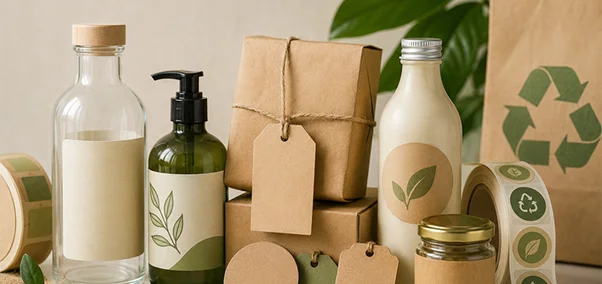
Something has quietly shifted in how products show up on shelves. Glossy plastic labels are being replaced with kraft paper textures, muted earth tones, and small badges that read "recyclable" or "compostable." This isn't just a design trend. It's a response to a packaging industry that's finally being forced to answer a hard question: what happens to a product after someone throws it away?
Labels and tags might seem like the smallest part of packaging, but they're often the biggest obstacle to recyclability. A perfectly recyclable bottle can be rejected by a recycling facility simply because its label is made from the wrong material or uses the wrong adhesive. That's why sustainable labels have become one of the most talked-about topics in packaging design, and why brands, converters, and consumers alike are searching for real answers about eco-friendly labels and how they fit into circular packaging systems.
Why Labels Matter More Than People Think
Most people assume packaging sustainability starts and ends with the container itself — the bottle, the box, the pouch. In reality, the label is often the deciding factor in whether that container ever gets a second life. Recycling machinery uses optical sensors to sort materials, and a label made from an incompatible plastic or coated with certain inks can throw off the entire sorting process, sending an otherwise recyclable item straight to landfill.
This is why sustainable labeling materials are no longer a niche concern for eco-conscious startups. Major consumer goods companies, food and beverage brands, and even pharmaceutical packagers are re-evaluating their label supply chains from the ground up. The goal is simple: make sure the label doesn't undo the sustainability work already built into the rest of the package.
What Makes a Label "Sustainable"?
There's no single definition, but most eco-friendly tags and labels fall into a few overlapping categories based on how they're made, what they're made from, and what happens to them after use.
1. Recyclable Labels
Recyclable labels are designed to be processed alongside the container they're attached to, without contaminating the recycling stream. This usually means the label's substrate and adhesive are chemically compatible with the base material — for example, a polypropylene label on a polypropylene bottle. When materials match, the whole package can be recycled as a single unit, which is a core principle of circular packaging labels.
2. Compostable Labels
Compostable labels break down completely in composting conditions, leaving no microplastic residue behind. These are typically made from plant-based fibers or certified compostable films and are especially popular for food packaging, produce stickers, and organic product lines where the entire package — container, label, and adhesive — is designed to return to the earth.
3. Biodegradable Labels
Often confused with compostable options, biodegradable labels break down naturally over time through microbial activity, though not necessarily within the controlled timeframe or conditions required for industrial composting. They're a useful middle-ground solution for brands that want to reduce long-term environmental persistence without committing to full compostability certification.
4. Plastic-Free Labels
Plastic-free labels eliminate synthetic polymer films entirely, relying instead on natural fiber substrates. These labels appeal to brands trying to cut virgin plastic use across their entire packaging system, not just the primary container.
5. Paper Labels for Packaging
Paper labels for packaging remain one of the most accessible and cost-effective sustainable options. Modern paper labels use water-based adhesives and coatings, making them widely recyclable through standard paper recycling streams. They're especially common in wine, craft beverage, and specialty food packaging, where a natural, tactile finish also reinforces brand storytelling around authenticity and craftsmanship.
6. Recycled Content Labels
Recycled content labels are made partially or entirely from post-consumer or post-industrial recycled materials, such as recycled PET or recycled paper fibers. These labels reduce demand for virgin raw materials and close the loop on existing waste streams, directly supporting circular economy goals.
7. Wash-Off Labels
Wash-off labels are engineered with adhesives that release cleanly when exposed to hot water and mild alkaline solutions — a feature critical for glass container recycling and reuse systems. Breweries and beverage companies using refillable glass bottles rely heavily on wash-off labels because they allow bottles to be cleaned, relabeled, and reused multiple times without adhesive residue interfering with the process.
Sustainable Label Materials: A Closer Look
When people search for sustainable label materials, they're usually trying to understand the raw substrate options available. The most common include:
- Kraft paper — natural, recyclable, often sourced from FSC-certified forests
- Recycled PET (rPET) — made from post-consumer plastic, fully recyclable
- PLA (polylactic acid) — a bioplastic derived from renewable resources like corn starch, often compostable
- Stone paper — made from calcium carbonate, water-resistant and tree-free
- Cotton and hemp fiber blends — biodegradable and durable for premium applications
Choosing the right material depends on the product's end-of-life pathway. A frozen food label needs moisture resistance; a produce sticker needs to be compostable alongside the food scraps it's attached to; a spirits bottle label might need to survive an ice bucket while still being wash-off compatible for bottle reuse programs.
How Sustainable Packaging Labels Support the Circular Economy
Sustainable packaging labels aren't just about individual product choices — they're a structural piece of the broader circular economy. A truly circular system requires that every component of a package, not just the primary material, can be recovered, reprocessed, or safely returned to nature. When labels are designed with this in mind, they stop being a weak link and start becoming an active contributor to closed-loop recycling.
This is where eco-friendly labeling solutions come in as a category of their own. These solutions typically combine three things: a compatible or compostable substrate, a low-impact adhesive system, and inks or coatings free from heavy metals and harmful solvents. Together, they ensure the label doesn't compromise the recyclability or compostability that the rest of the packaging has already achieved.
Choosing the Right Sustainable Label for Your Product
Brands evaluating a switch to eco-friendly labeling should consider a few practical questions:
- What is the base packaging material? Match label substrate and adhesive chemistry to avoid contamination during recycling.
- What's the expected shelf environment? Refrigeration, moisture, or outdoor exposure can limit compostable or paper-based options.
- Is bottle or container reuse part of the model? If so, wash-off labels are likely non-negotiable.
- What certifications matter to your customers? Look for recognized standards such as FSC certification for paper, or industrial/home compostability certifications for compostable films.
- What's the realistic end-of-life infrastructure in your market? A compostable label is only useful if composting facilities are accessible to the end user.
Frequently Asked Questions
What are sustainable labels made of?
Sustainable labels are typically made from materials like kraft paper, recycled PET, PLA bioplastics, or natural fiber blends, paired with water-based or low-impact adhesives.
Are compostable labels the same as biodegradable labels?
No. Compostable labels break down fully within a defined composting timeframe and leave no toxic residue, while biodegradable labels break down naturally but without a guaranteed timeframe or certification.
Can recyclable labels go on plastic bottles?
Yes, as long as the label material matches the resin type of the bottle, or is designed to separate cleanly during the recycling process without contaminating the material stream.
Why are wash-off labels important for glass packaging?
Wash-off labels allow glass bottles to be cleaned and reused multiple times, which supports refillable packaging systems and reduces overall material consumption.
Do eco-friendly labels cost more than traditional labels?
Pricing varies, but many sustainable label materials — especially paper-based and recycled content options — are now competitively priced with conventional labels as demand and production scale have increased.
Final Thoughts
The shift toward sustainable labels and eco-friendly tags reflects a broader truth about modern packaging: sustainability only works when every layer of the package is designed with the same end goal in mind. A recyclable bottle with an incompatible label, or a compostable pouch with a plastic-laminated tag, undermines the very system it's trying to support.
As circular packaging becomes less of an aspiration and more of a regulatory and consumer expectation, labels and tags will keep moving from an afterthought to a core design decision. Brands that get this right — pairing the right sustainable label materials with the right end-of-life pathway — won't just reduce their environmental footprint. They'll build packaging that consumers can trust, start to finish.
 Our Services
 Media Pack Download
 Newsletters
 Industrial Events