


Smart Food Packaging: How AI and Digital Technologies Are Transforming Food Safety and Consumer Experience
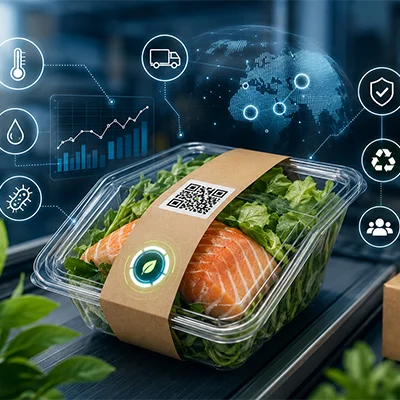
The food package sitting on a supermarket shelf no longer serves a single purpose. It is no longer just a protective layer designed to preserve freshness or display branding. Increasingly, packaging has become a digital touchpoint, a quality assurance system, a supply chain communicator, and even a silent brand ambassador.
For food manufacturers, retailers, logistics providers, and technology companies, this shift represents one of the most significant innovations in the modern food industry. As consumer expectations evolve and regulations become more demanding, smart food packaging is emerging as a strategic investment rather than a value-added feature.
Artificial intelligence, IoT connectivity, printed electronics, cloud analytics, and intelligent sensors are collectively transforming ordinary packages into active participants throughout the product lifecycle. Instead of merely containing food, packaging is beginning to monitor, communicate, authenticate, and interact.
The result is a new generation of intelligent food packaging that delivers measurable improvements in safety, transparency, sustainability, and customer engagement.
Packaging Is Becoming a Data Platform
For decades, food packaging was designed around three primary goals:
- Product protection
- Shelf-life extension
- Brand visibility
Today's food industry demands much more.
Global food supply chains involve multiple stakeholders—from ingredient suppliers and processors to distributors, retailers, regulators, and consumers. Every stage introduces risks ranging from contamination and temperature abuse to counterfeit products and inventory losses.
Modern digital food packaging addresses these challenges by continuously collecting, storing, and communicating valuable information throughout the product journey.
Rather than asking whether a package arrived, manufacturers can now determine:
- Was the cold chain maintained?
- Has the package been tampered with?
- Is the product approaching spoilage?
- Where did every ingredient originate?
- Has the consumer verified product authenticity?
These capabilities transform packaging into an intelligent source of operational data.
AI Is Making Food Packaging Smarter Than Ever
Artificial intelligence has expanded far beyond production lines and warehouse automation. It is now becoming an integral part of packaging systems.
Instead of reacting to food quality issues after products reach retailers, AI-powered food safety enables predictive decision-making throughout the supply chain.
AI systems combine information collected from:
- Intelligent sensors
- Environmental monitoring
- Transportation data
- Production history
- Inventory movement
- Consumer feedback
Using machine learning, these systems identify patterns that humans would likely miss.
For example, AI can recognize that products transported under specific humidity conditions consistently experience shorter shelf life. Manufacturers can then modify logistics routes before significant product losses occur.
| Read More: Sustainable Food Packaging: Innovations in Recyclable, Compostable, and Bio-Based Materials |
This demonstrates how AI is transforming food packaging from passive protection into proactive risk management.
Intelligent Packaging Sensors Are Changing Food Safety
One of the fastest-growing innovations is the use of intelligent packaging sensors.
Unlike conventional expiration dates, these sensors monitor the actual condition of food products rather than relying solely on estimated shelf-life calculations.
Depending on the application, sensors can detect:
- Temperature fluctuations
- Oxygen exposure
- Moisture levels
- Gas emissions
- Microbial activity
- Physical impact during transportation
When integrated with cloud platforms, these sensors provide real-time insights across distribution networks.
Instead of discovering spoiled products after customer complaints, manufacturers receive early warnings while products remain in transit.
This significantly improves food safety technology while reducing unnecessary waste.
Food Traceability Is Becoming a Competitive Advantage
Consumers increasingly want to know more than nutritional information.
They ask:
Where was this produced?
Was it sustainably sourced?
How long was it transported?
Has it remained refrigerated throughout distribution?
Modern food traceability solutions answer these questions with unprecedented transparency.
Digital identities assigned to every batch—or even every individual package—allow manufacturers to trace products from farm to shelf.
Combined with blockchain and AI analytics, traceability enables companies to:
- Identify contamination sources rapidly
- Execute targeted recalls
- Reduce financial losses
- Improve regulatory compliance
- Strengthen consumer trust
Rather than recalling an entire product category, manufacturers can isolate affected batches with remarkable precision.
QR Codes Are Evolving Beyond Marketing
A few years ago, QR codes primarily linked consumers to promotional websites.
Today, QR code food packaging has become an essential component of intelligent packaging strategies.
Scanning a package can instantly provide:
- Ingredient sourcing
- Production location
- Batch information
- Nutritional details
- Storage recommendations
- Expiration verification
- Sustainability certifications
- Allergy alerts
- Recipe suggestions
For businesses, every scan creates valuable behavioral insights.
Manufacturers gain visibility into:
- Geographic purchasing trends
- Consumer engagement levels
- Repeat purchase behavior
- Popular product variants
- Marketing effectiveness
This transforms packaging into a continuous communication channel rather than a one-time sales tool.
Consumer Engagement Starts After Purchase
Historically, brand interaction ended once customers left the store.
Today's consumer engagement packaging extends the relationship well beyond checkout.
Consumers increasingly expect personalized experiences that combine convenience with useful information.
Interactive packaging can deliver:
- Cooking tutorials
- Personalized recipes
- Loyalty rewards
- Product authentication
- Recycling guidance
- Feedback collection
- Promotional campaigns
- Nutritional education
For premium food brands, packaging becomes part of the overall customer experience.
Instead of relying solely on advertisements, companies build long-term relationships through every package consumers purchase.
Sustainability Is Driving Intelligent Packaging Innovation
Environmental responsibility has become one of the strongest catalysts for packaging innovation.
However, sustainability extends beyond recyclable materials.
Sustainable smart packaging focuses on reducing waste across the entire product lifecycle.
AI-driven analytics help manufacturers optimize:
- Packaging dimensions
- Material consumption
- Transportation efficiency
- Shelf-life prediction
- Inventory rotation
- Waste reduction
Smart freshness indicators also prevent perfectly safe food from being discarded due to conservative expiration estimates.
For retailers, this means fewer products reaching landfill.
For manufacturers, it translates into lower production losses and improved profitability.
Retailers Benefit from Real-Time Visibility
Retail operations become significantly more efficient when products communicate their condition.
Rather than relying solely on manual inspections, retailers can monitor inventory health using connected packaging technologies.
Packages equipped with intelligent monitoring capabilities enable retailers to:
- Prioritize products nearing the end of freshness
- Optimize stock rotation
- Improve replenishment planning
- Reduce shrinkage
- Enhance food safety compliance
AI-generated alerts help store managers respond before products become unsellable.
The result is improved margins alongside better customer satisfaction.
The Cold Chain Is Becoming Smarter
Maintaining temperature-sensitive products remains one of the greatest challenges in food logistics.
Frozen foods, dairy products, seafood, meat, vaccines, and ready-to-eat meals all require continuous monitoring.
Traditional temperature logs often reveal problems only after transportation has concluded.
Modern AI-powered food safety solutions provide continuous visibility during transit.
When intelligent packaging detects temperature excursions, AI platforms immediately notify logistics teams.
This enables corrective action before product quality deteriorates.
Instead of documenting failures, organizations can actively prevent them.
Smart Packaging Supports Regulatory Compliance
Food safety regulations continue to evolve worldwide.
Authorities increasingly expect comprehensive documentation covering production, transportation, storage, and product traceability.
Digital packaging simplifies compliance by automatically recording critical data throughout the supply chain.
Rather than maintaining separate paper-based records, organizations can generate digital audit trails containing:
- Environmental conditions
- Batch history
- Distribution records
- Sensor readings
- Inspection reports
This improves both regulatory readiness and operational efficiency.
Counterfeit Food Products Are Easier to Detect
Counterfeit food products remain a serious concern in premium markets.
High-value products such as infant nutrition, specialty coffee, olive oil, honey, nutritional supplements, and organic foods are particularly vulnerable.
Digital authentication technologies integrated into smart packaging solutions help brands verify authenticity.
Consumers can confirm product legitimacy using secure QR codes or NFC-enabled packaging.
Meanwhile, manufacturers monitor suspicious scanning patterns that may indicate counterfeit distribution networks.
This protects both consumers and brand reputation.
The Business Value Goes Beyond Technology
The strongest business case for intelligent packaging for food industry isn't simply technological innovation.
It is measurable business performance.
Organizations adopting smart packaging frequently experience improvements in:
- Product quality assurance
- Customer trust
- Recall efficiency
- Inventory management
- Waste reduction
- Supply chain visibility
- Brand differentiation
- Consumer loyalty
These improvements create competitive advantages that extend across manufacturing, logistics, retail, and marketing functions.
Rather than operating as isolated initiatives, smart packaging projects increasingly become enterprise-wide digital transformation programs.
Challenges Still Require Strategic Planning
Despite rapid innovation, successful implementation requires thoughtful planning.
Companies must address considerations such as:
- Integration with existing ERP and supply chain systems
- Data security
- Sensor reliability
- Technology costs
- Global regulatory compliance
- Consumer privacy
- Packaging recyclability
The most successful organizations begin with targeted pilot projects before expanding across product portfolios.
This phased approach allows businesses to validate ROI while minimizing implementation risks.
Looking Ahead: Packaging Will Continue to Get Smarter
The next decade is likely to redefine what food packaging can accomplish.
Emerging technologies such as printed electronics, AI vision systems, biodegradable sensors, edge computing, digital twins, and advanced predictive analytics will continue expanding packaging capabilities.
Future packages may automatically:
- Predict spoilage before it occurs
- Recommend optimal consumption timing
- Communicate with smart refrigerators
- Update inventory systems in real time
- Support automated replenishment
- Personalize nutritional recommendations
- Verify sustainability credentials instantly
Rather than acting as disposable materials, packaging will increasingly become part of the digital infrastructure connecting manufacturers, retailers, logistics providers, regulators, and consumers.
Conclusion
The evolution of smart food packaging represents far more than an incremental packaging upgrade. It reflects a broader transformation in how the food industry approaches safety, transparency, sustainability, and customer relationships.
From AI-powered food safety and intelligent packaging sensors to food traceability solutions, QR code food packaging, and advanced consumer engagement packaging, organizations are discovering that packaging can generate value long after products leave the production line.
For B2B stakeholders, the opportunity extends beyond compliance or operational efficiency. Smart packaging solutions enable companies to build resilient supply chains, strengthen consumer confidence, reduce waste, and unlock actionable insights that support smarter business decisions.
As AI, connected devices, and digital technologies continue to mature, the distinction between packaging and technology will continue to blur. The package of the future will not simply protect food—it will monitor it, verify it, communicate with it, and create richer experiences for everyone across the value chain.
For forward-looking food manufacturers, investing in intelligent food packaging is no longer about staying current with innovation. It is about building a more connected, transparent, and competitive food ecosystem for the years ahead.
 Our Services
 Media Pack Download
 Newsletters
 Industrial Events