


Sustainable Food Packaging: Innovations in Recyclable, Compostable, and Bio-Based Materials
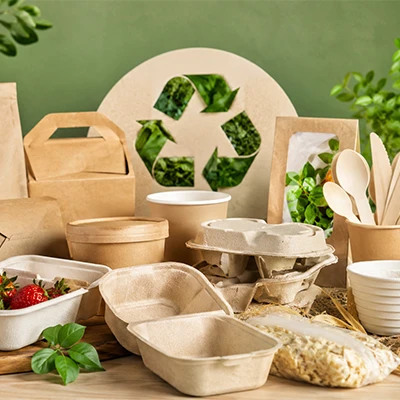
Packaging Is No Longer Just Packaging
For decades, food packaging served one primary purpose: protect products from contamination, damage, and spoilage until they reached consumers. Today, that responsibility has expanded dramatically. Packaging has become a strategic business decision that influences brand perception, regulatory compliance, operational efficiency, supply chain sustainability, and corporate ESG performance.
Consumers are increasingly evaluating products beyond taste and price. They want to know whether the packaging is recyclable, whether renewable resources were used, and whether the materials contribute to landfill waste or support a circular economy. At the same time, food manufacturers are navigating evolving regulations, retailer sustainability mandates, and ambitious corporate carbon reduction goals.
As a result, sustainable food packaging has moved from being a niche innovation to becoming a competitive differentiator.
Rather than asking whether sustainable materials can replace conventional plastics, industry leaders are now asking a different question:
Which sustainable packaging solution best fits each product, supply chain, and market?
The answer is driving rapid innovation across recyclable materials, compostable alternatives, renewable feedstocks, and intelligent packaging design.
| Also Read: Next-Generation Food Labelling: Digital Labels, Traceability, and Global Compliance |
Sustainability Begins with Material Intelligence
Replacing plastic with paper is rarely enough.
True sustainability requires balancing multiple performance factors simultaneously:
• Product protection
• Shelf-life preservation
• Food safety
• Manufacturing efficiency
• Transportation performance
• Consumer convenience
• End-of-life recovery
This has accelerated investment in eco-friendly food packaging designed specifically around circularity rather than simple material substitution.
Modern packaging development teams increasingly evaluate entire life cycles—from raw material sourcing through disposal or recycling—to identify opportunities for environmental improvement without sacrificing product quality.
Instead of focusing solely on reducing plastic usage, manufacturers are designing packaging systems that maximize material recovery, minimize carbon emissions, and reduce overall environmental impact.
Recyclable Packaging Is Becoming More Sophisticated
Among today's sustainability strategies, recyclable food packaging continues to be one of the most scalable solutions.
The challenge, however, lies in designing packaging that fits existing recycling infrastructure.
Traditional multilayer laminates often combine plastic, aluminum, adhesives, and barrier films that cannot easily be separated during recycling. These structures provide excellent protection but frequently end up in landfills.
Packaging engineers are now redesigning these formats using:
• Mono-material polyethylene structures
• Recyclable polypropylene solutions
• High-performance paper laminates
• Simplified packaging architectures
These innovations improve recyclability while maintaining moisture resistance, oxygen barriers, and mechanical strength.
For many food manufacturers, improving recyclability offers the fastest route toward sustainability goals because existing collection and recycling systems can often support these materials with fewer infrastructure changes.
Compostable Materials Are Expanding New Possibilities
Not every food package is suitable for recycling.
Food residue, grease contamination, and short product lifecycles can make recycling difficult. This is where compostable food packaging is gaining momentum.
Unlike conventional plastics, compostable materials are designed to break down into natural organic matter under controlled composting conditions.
Emerging compostable packaging materials now include:
• PLA-based films
• Cellulose packaging
• Starch-based polymers
• Agricultural residue fibers
• Seaweed-derived materials
• Bamboo pulp products
These materials are particularly valuable in:
• Fresh produce
• Foodservice packaging
• Takeaway containers
• Coffee capsules
• Disposable cutlery
• Bakery applications
However, successful implementation depends on local composting infrastructure and proper consumer disposal practices.
Leading brands increasingly pair compostable packaging with clear disposal instructions to maximize environmental benefits.
Bio-Based Materials Are Reshaping Packaging Innovation
One of the fastest-growing areas within sustainable packaging is the adoption of bio-based packaging materials.
Rather than relying on fossil fuel feedstocks, these materials originate from renewable biological resources including:
• Corn
• Sugarcane
• Wheat straw
• Bamboo
• Bagasse
• Wood pulp
• Agricultural by-products
These renewable packaging materials significantly reduce dependence on petroleum while supporting lower lifecycle greenhouse gas emissions.
Importantly, bio-based does not automatically mean biodegradable.
Some bio-based polymers are fully recyclable, while others are compostable. Selecting the right material depends on product performance requirements and available waste management systems.
For manufacturers, bio-based materials also provide opportunities to strengthen sustainability messaging without compromising production efficiency.
Fiber-Based Packaging Is Experiencing a Renaissance
Paper has been used in food packaging for generations.
Today's fiber-based packaging, however, bears little resemblance to traditional paperboard.
Advanced fiber technologies now deliver impressive strength, lightweight performance, excellent printability, and increasingly sophisticated barrier capabilities.
Applications continue expanding across:
• Frozen foods
• Fresh produce
• Ready meals
• Dry foods
• Beverage carriers
• Quick-service restaurant packaging
By combining renewable fibers with advanced coatings, manufacturers are replacing rigid plastics across numerous food categories.
The result is packaging that is both functional and easier to recover through established paper recycling streams.
Molded Fiber Is Moving Beyond Egg Cartons
Perhaps no material has evolved more dramatically than molded fiber packaging.
Historically associated with egg cartons and protective inserts, molded fiber has become one of the most innovative segments of sustainable food packaging.
Modern manufacturing techniques produce:
• Precision-formed trays
• Fresh produce containers
• Beverage cup lids
• Meal trays
• Premium takeaway packaging
• Retail food containers
High-density molding technologies now create smooth, premium surfaces that rival plastic packaging while maintaining renewable material content.
For brands seeking plastic-free packaging, molded fiber offers both environmental advantages and strong consumer appeal.
Paper-Based Packaging Is Entering High-Performance Applications
Demand for paper-based food packaging continues to accelerate as material science addresses historical performance limitations.
Traditional paper struggled with:
• Oil resistance
• Moisture barriers
• Heat sealing
• Oxygen protection
Today's innovations have dramatically expanded paper's capabilities.
Advanced coating technologies now enable paper packaging for:
• Frozen foods
• Snack foods
• Dairy products
• Confectionery
• Bakery products
This allows manufacturers to reduce plastic usage while preserving food quality and shelf life.
As converting technologies improve, paper is becoming increasingly viable across applications once considered impossible.
Sustainable Barrier Coatings Are Solving a Critical Challenge
Barrier performance remains one of the greatest technical challenges in sustainable packaging.
Food products require protection against:
• Oxygen
• Water vapor
• Grease
• Aroma loss
• Light
• Microbial contamination
Historically, these barriers depended heavily on multilayer plastics.
Today's sustainable barrier coatings are changing that equation.
Researchers have developed coatings derived from:
• Water-based polymers
• Cellulose
• Natural waxes
• Bio-based latex
• Mineral coatings
These technologies improve moisture and oxygen resistance while maintaining recyclability or compostability.
The ability to create high-performance barriers without compromising end-of-life recovery represents one of the industry's most significant breakthroughs.
Plastic-Free Packaging Is Becoming Product-Specific
The conversation has shifted from eliminating plastic entirely to eliminating unnecessary plastic.
Effective plastic-free packaging strategies focus on identifying applications where renewable alternatives genuinely outperform conventional materials.
Examples include:
• Fiber trays replacing PET produce trays
• Paper pouches replacing multilayer films
• Molded fiber beverage carriers
• Compostable produce bags
• Paper-based snack wrappers
Instead of pursuing universal replacement, manufacturers are adopting material portfolios tailored to individual product requirements.
This balanced approach delivers stronger sustainability outcomes while minimizing operational disruption.
Circular Packaging Is Driving Design Decisions
The concept of circular packaging solutions extends far beyond recyclability.
Circularity considers the complete packaging lifecycle:
• Responsible raw material sourcing
• Manufacturing efficiency
• Transportation optimization
• Consumer use
• Material recovery
• Reuse or recycling
Packaging engineers increasingly design products with end-of-life pathways established before production begins.
Digital lifecycle assessment tools now help brands compare environmental impacts across multiple material options, allowing sustainability decisions to be supported by measurable data rather than assumptions.
This systems-based thinking is rapidly becoming standard practice across the food packaging industry.
Sustainability Must Also Make Business Sense Environmental performance alone does not determine packaging success.
Procurement teams evaluate sustainable materials against several commercial metrics:
• Cost competitiveness
• Production scalability
• Machinery compatibility
• Supply chain resilience
• Packaging efficiency
• Regulatory compliance
• Brand differentiation
Fortunately, many sustainable materials are becoming increasingly cost-effective as production volumes rise.
Automation improvements and larger manufacturing capacities continue reducing the cost gap between conventional plastics and renewable alternatives.
For many businesses, sustainable packaging investments now generate measurable returns through:
• Reduced material consumption
• Improved retailer acceptance
• Stronger consumer loyalty
• Lower regulatory risks
• Enhanced ESG reporting
Sustainability is increasingly viewed as an operational investment rather than an added expense.
Collaboration Is Accelerating Innovation
No single organization can transform food packaging independently.
Material suppliers, packaging converters, food manufacturers, retailers, recycling companies, and policymakers are working together to build scalable solutions.
Industry collaboration is driving advancements in:
• Standardized material testing
• Recycling infrastructure
• Composting certification
• Packaging design guidelines
• Consumer education
• Circular supply chains
Open innovation models are helping commercialize sustainable technologies much faster than traditional development approaches.
As sustainability challenges become increasingly interconnected, collaborative ecosystems will remain essential for continued progress.
The Future of Sustainable Food Packaging
The next generation of biodegradable food packaging and renewable materials will be defined less by replacing one material with another and more by intelligent packaging design.
Future innovations are expected to include:
• High-barrier bio-based films
• Fully recyclable flexible packaging
• Compostable multilayer structures
• Advanced fiber composites
• Carbon-negative packaging materials
• AI-assisted packaging optimization
• Smart material selection platforms
Manufacturers will increasingly evaluate packaging through environmental performance, economic viability, consumer experience, and regulatory readiness simultaneously.
The companies leading this transformation are recognizing that sustainability is no longer a standalone initiative—it is becoming central to product development, supply chain strategy, and long-term business resilience.
Looking Ahead: While sustainable packaging is transforming how food products are protected, the next wave of innovation focuses on the information packaging delivers.
In our next article, we'll examine how digital labelling technologies are enhancing traceability, regulatory compliance, and consumer trust across global food supply chains.
Conclusion:
The evolution of sustainable packaging is no longer driven by a single material innovation. It is the result of advances across recyclable systems, compostable technologies, bio-based feedstocks, fiber engineering, barrier science, and circular design principles working together.
From compostable food packaging and bio-based packaging materials to fiber-based packaging, paper-based food packaging, molded fiber packaging, and advanced sustainable barrier coatings, the industry is expanding the range of solutions available to meet diverse product requirements while reducing environmental impact.
For food manufacturers, packaging suppliers, and brand owners, the challenge is no longer whether sustainable alternatives exist—it is how to integrate the right combination of technologies into scalable, commercially viable packaging strategies.
Organizations that invest in innovative, eco-friendly food packaging today will be better positioned to satisfy evolving consumer expectations, comply with future regulations, strengthen supply chain resilience, and contribute meaningfully to a circular economy. Sustainable packaging has become more than an environmental commitment; it is now a catalyst for innovation, competitive differentiation, and long-term business growth.
 Our Services
 Media Pack Download
 Newsletters
 Industrial Events