


Articles
Eco-Friendly Packaging Buying Guide for Procurement and Business Development
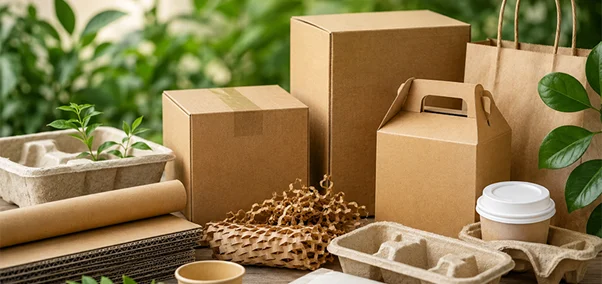
Table of Contents
- Why Eco-Friendly Packaging Belongs in Your Procurement Strategy
- Types of Sustainable Packaging Solutions
- Key Specifications to Check Before You Buy
- Building a Packaging Sourcing Guide for Your Business
- MOQ, Lead Time & Pricing Factors
- Custom Branding on Sustainable Packaging
- Certifications & Sustainability Claims That Actually Matter
- How to Vet Eco-Friendly Packaging Suppliers
- Common Mistakes Buyers Make
- Frequently Asked Questions
1. Why Eco-Friendly Packaging Belongs in Your Procurement Strategy
Packaging used to be a line item nobody thought twice about. That's changed. Retail partners are asking for sustainability documentation before they'll onboard a new SKU, customers are checking packaging materials before checkout, and in some markets, regulation is starting to make single-use plastic packaging a genuine liability rather than just a bad look. For procurement and business development teams, this means an eco-friendly packaging buying guide isn't a nice-to-have anymore — it's becoming part of standard sourcing due diligence.
The good news is that a solid packaging procurement strategy doesn't require ripping up your existing supplier relationships or paying a huge premium. Sustainable materials have matured to the point where they compete on cost and performance with conventional packaging in most categories. What buyers actually need is a clear framework for evaluating sustainable packaging solutions against their product's real-world requirements — weight, fragility, shipping distance, and brand positioning — rather than chasing the greenest-sounding option on a spec sheet.
Buyer Tip: Before requesting quotes, get internal alignment on what "sustainable" means for your business — recyclability, biodegradability, recycled content percentage, and carbon footprint are all different things, and suppliers will price and design very differently depending on which one you're actually optimizing for.
2. Types of Sustainable Packaging Solutions
Eco-friendly packaging isn't one category — it's a spectrum of materials and constructions, each suited to different products and supply chains.
- Recycled corrugated board — Made from post-consumer or post-industrial recycled fiber; the most common starting point for buyers moving away from virgin materials.
- Molded pulp packaging — Formed from recycled paper pulp, often used for protective inserts, trays, and electronics packaging as a plastic foam alternative.
- Biodegradable plastics (PLA, cornstarch-based) — Used where flexibility or moisture resistance is needed but plastic use can't be fully eliminated.
- Kraft paper mailers and void fill — Common for e-commerce, replacing bubble mailers and plastic air pillows.
- Compostable film and pouches — Designed for food, cosmetics, and other products needing a barrier layer without conventional plastic.
- Most businesses end up using a mix — recycled corrugated for outer shipping boxes, paper-based void fill instead of plastic, and biodegradable film only where a true barrier is unavoidable. If you're building out a sustainable packaging buying guide internally for your team, mapping each product category to one of these material types is usually the fastest way to get from "we want to go green" to an actual purchase order.
3. Key Specifications to Check Before You Buy
Sustainability claims mean little if the packaging doesn't perform. Before finalizing an order, confirm the following with any supplier:
- Recycled content percentage — stated as a specific number, not "eco-friendly" as a blanket description
- End-of-life pathway — recyclable, compostable, or biodegradable, and under what real-world conditions (industrial composting vs. home composting matters)
- Strength ratings — ECT and burst strength for corrugated materials, so sustainability doesn't come at the cost of product protection
- Barrier performance — moisture, grease, or oxygen resistance if the packaging holds food, cosmetics, or other sensitive goods
- Print compatibility — whether the material supports water-based or soy-based inks without degrading the sustainability benefit
Buyer Tip: Ask suppliers for third-party test data on strength and degradability rather than taking marketing copy at face value. A box that's technically recyclable but fails in transit isn't actually sustainable — it just creates a return, a reshipment, and double the packaging waste.
4. Building a Packaging Sourcing Guide for Your Business
A practical packaging sourcing guide starts with segmenting your product catalog by weight, fragility, and shipping method, then matching each segment to a packaging type before you even start requesting quotes. This keeps sourcing conversations focused and prevents the common trap of over-speccing every SKU with premium sustainable materials it doesn't need.
For business development teams evaluating packaging as part of a broader supplier or retail partnership, it helps to think in three tiers:
- Primary packaging — direct product contact, where compostable or recyclable materials often carry the most weight with end customers
- Secondary packaging — the shipping box or outer carton, where recycled corrugated typically delivers the best cost-to-sustainability ratio
- Void fill and protective materials — the easiest and cheapest place to switch from plastic to paper-based alternatives immediately
Standardizing box sizes and material specs across SKUs, the same way you would with conventional packaging, remains one of the most effective ways to control cost as you scale a wholesale eco-friendly packaging program.
5. MOQ, Lead Time & Pricing Factors
Pricing for sustainable packaging has narrowed significantly compared to conventional materials, but a few factors still drive cost:
- Material type — recycled corrugated is now close to price parity with virgin board in most regions; compostable films and PLA-based plastics still carry a premium of roughly 10–30%
- Order volume — bulk orders remain the single biggest lever for reducing per-unit cost, same as with conventional packaging
- Custom tooling — non-standard box dimensions or molded pulp shapes may require a one-time die or mold setup fee
- Certification requirements — FSC-certified or compostability-certified materials sometimes carry a modest premium tied to audit and certification costs passed down the supply chain
Lead times run similar to conventional packaging for stock sizes (roughly 3–7 days), while custom printed or molded sustainable packaging typically takes 2–4 weeks. If your volumes are predictable, locking in a rate with a supplier on a quarterly basis tends to be more cost-effective than repeated spot buying, particularly since recycled paper pulp prices can fluctuate with global recycling markets.
6. Custom Branding on Sustainable Packaging
Branding on eco-friendly packaging works largely the same as on conventional materials, with a couple of considerations:
- Ink choice matters more here — water-based and soy-based inks preserve recyclability and compostability; solvent-based inks and heavy foil or plastic lamination can undo the sustainability benefit of the underlying material
- Minimal branding elements — many brands are shifting toward single-color printing or debossing on kraft materials, which reduces cost and reinforces an eco-conscious visual identity
- Avoid plastic-based finishes — glossy laminates and plastic windows are the most common reason a technically recyclable box ends up in general waste, since most recycling streams can't process mixed materials
Buyer Tip: If print quality is a priority, ask for a physical proof on the actual substrate before approving a production run — sustainable substrates like uncoated kraft paper can render colors differently than coated conventional stock.
7. Certifications & Sustainability Claims That Actually Matter
Not all sustainability claims carry equal weight. When evaluating eco-friendly packaging suppliers, look for:
- FSC (Forest Stewardship Council) certification — verifies paper fiber comes from responsibly managed forests
- BPI or industrial compostability certification — confirms a material breaks down under real composting conditions, not just in theory
- ISO 14001 — indicates a supplier has an active environmental management system, not just a compliant product
- Recycled content documentation — a specific, verifiable percentage rather than a general "eco" label
Vague terms like "green," "natural," or "eco" on their own aren't standardized and shouldn't be treated as a substitute for actual certification. If sustainability claims matter to your retail partners or customers, request documentation upfront as part of your sustainable packaging procurement process — retrofitting compliance after inventory has already shipped is far harder than screening for it during supplier selection.
8. How to Vet Eco-Friendly Packaging Suppliers
Before committing to a supplier relationship, verify the following:
- Request physical samples and test them under your actual shipping and storage conditions
- Confirm material specifications and certifications in writing, not just on a product listing
- Check whether the supplier works with recyclable packaging suppliers and biodegradable packaging supplier networks for materials they don't produce in-house
- Ask for references or a verified transaction history if sourcing through a B2B marketplace
- Clarify MOQ, lead time, and payment terms upfront
- Confirm defect and return policy, since sustainable materials can have different tolerance ranges than conventional stock
Working with established sustainable packaging manufacturers rather than resellers often gives you more control over material sourcing and certification transparency, which matters if you'll need to pass documentation along to your own customers or retail partners.
9. Common Mistakes Buyers Make
- Choosing packaging based on sustainability marketing alone, without checking strength or barrier performance
- Assuming "recyclable" and "compostable" are interchangeable — they're not, and mixing them up can create compliance issues
- Skipping a sample run before committing to bulk production
- Overlooking the impact of plastic laminates or foil finishes on an otherwise recyclable material
- Failing to confirm certifications in writing before an order ships to a retail partner with sustainability requirements
Buyer Tip: A small investment in sampling and certification verification upfront is far cheaper than discovering, after a bulk order, that your "green" packaging doesn't actually qualify for a retail partner's sustainability program.
10. Frequently Asked Questions
Is eco-friendly packaging more expensive than conventional packaging?
Not necessarily. Recycled corrugated board is now close to price parity with virgin material in most markets. Compostable films and bioplastics still carry a modest premium, though this gap continues to narrow as demand grows and more green packaging solutions reach scale production.
What's the difference between recyclable and biodegradable packaging?
Recyclable packaging can be reprocessed into new material through existing recycling streams. Biodegradable packaging breaks down naturally over time, though the timeline and conditions required vary widely by material — always check whether a claim applies to industrial composting, home composting, or general biodegradation.
How do I find reliable eco-friendly packaging suppliers?
Start by checking for verifiable certifications (FSC, BPI, ISO 14001) rather than marketing language, request physical samples before committing to volume, and ask for references or transaction history if sourcing through a marketplace platform.
What's a reasonable MOQ for sustainable packaging as a small or growing business?
Many suppliers offer MOQs as low as 100–500 units for stock sustainable packaging sizes, similar to conventional packaging. Custom printed or molded options generally require higher minimums due to setup costs.
How do I know if sustainable packaging will hold up during shipping?
Request strength and barrier performance data specific to the material, and test a sample under your actual shipping conditions before committing to a full production run — sustainability and durability aren't mutually exclusive, but they do need to be verified separately.
 Our Services
 Media Pack Download
 Newsletters
 Industrial Events