


Articles
Recyclable Packaging Solutions Buying Guide for Demand Generation Teams
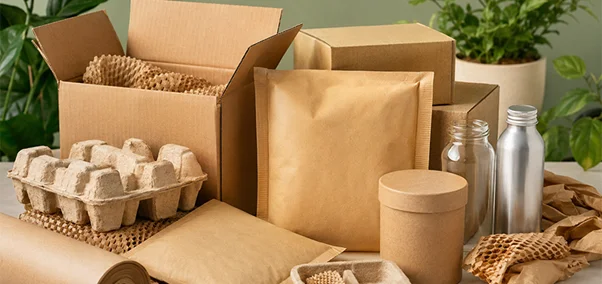
Table of Contents
- Why Recyclable Packaging Matters for Demand Generation
- What Counts as Recyclable Packaging Materials
- Recyclable Packaging Specifications to Understand Before You Buy
- Mono Material Recyclable Packaging Explained
- How to Choose Recyclable Packaging for Your Business
- Recyclable Packaging Cost Comparison
- Recyclable Packaging Procurement: Building a Process
- Recyclable Packaging Supplier Selection & Evaluation
- Measuring Recyclable Packaging ROI
- Frequently Asked Questions
1. Why Recyclable Packaging Matters for Demand Generation
Packaging used to be a back-office procurement decision. It isn't anymore. For demand generation teams, the box, mailer, or pouch a product arrives in is now part of the brand story — it shows up in unboxing videos, influencer content, customer reviews, and social shares. That makes recyclable packaging solutions a marketing asset as much as an operational one.
Sustainable packaging demand generation is becoming its own discipline inside marketing and procurement organizations. Buyers increasingly research a brand's environmental practices before purchasing, and packaging is often the most tangible, visible proof point a company can offer. A recyclable mailer with clear on-pack recycling instructions communicates a commitment that a sustainability page buried on a website simply can't.
At the same time, demand generation teams don't usually own packaging budgets or specs directly — procurement and operations do. That gap is where this guide is meant to help. Whether you're a marketer trying to influence a packaging decision or a procurement lead building a recyclable packaging buying guide for internal stakeholders, the goal is the same: source packaging that performs, ships affordably, and holds up to public scrutiny.
Buyer Tip: Before evaluating suppliers, align marketing, procurement, and sustainability stakeholders on what "recyclable" actually needs to mean for your brand — curbside recyclable, recyclable through a take-back program, or recyclable in most municipal systems are three very different promises.
2. What Counts as Recyclable Packaging Materials
Not every package labeled "eco-friendly" is genuinely recyclable, and that distinction matters both for compliance and for brand credibility. Common recyclable packaging materials include:
- Corrugated fiberboard and paperboard — widely recyclable through standard paper streams, especially when free of plastic laminates or heavy coatings
- Kraft paper mailers and void fill — recyclable and increasingly used to replace bubble mailers
- Recyclable PE and PP films — plastic films that can be recycled through store drop-off programs when kept as a single polymer
- Molded fiber and pulp packaging — used for protective inserts, fully recyclable and often compostable
- Glass and aluminum — infinitely recyclable, though heavier and costlier to ship
- Recycled-content plastics (rPET, rHDPE) — recyclable when the resin remains unmixed and clearly identified
The key distinction buyers need to understand is between materials that are technically recyclable and materials that are practically recyclable in the regions where your customers actually live. A package that requires a specialty drop-off point is far less useful for demand generation purposes than one that works in standard curbside programs, because the latter is what customers can act on immediately.
3. Recyclable Packaging Specifications to Understand Before You Buy
Before requesting quotes, it helps to understand the specifications suppliers will ask about — and the ones you should ask them.
- Resin or fiber type — determines which recycling stream the package belongs to
- Recycled content percentage — post-consumer vs. post-industrial recycled content, since only post-consumer content typically counts toward most sustainability claims
- Barrier and coating type — coatings (wax, plastic laminate, foil) can make an otherwise recyclable material non-recyclable
- Weight and gauge — affects both shipping cost and structural performance
- Certification standards — How2Recycle labeling, FSC certification, or regional recyclability certifications
- End-of-life instructions — whether the packaging needs on-pack disposal guidance for customers
Buyer Tip: Always request recyclability documentation in writing rather than relying on a supplier's verbal assurance. "Eco-friendly" and "green" are marketing terms, not specifications — ask for the specific certification or third-party test backing any recyclability claim.
4. Mono Material Recyclable Packaging Explained
One of the most important shifts in recyclable packaging design has been the move toward mono material recyclable packaging — construction using a single material type rather than mixed layers of plastic, paper, and adhesive.
Mixed-material packaging (think a plastic-laminated paper pouch, or a box with a plastic viewing window glued in) is difficult or impossible to recycle because recycling facilities generally can't separate bonded materials efficiently. Mono material packaging solves this by using one recyclable substrate throughout — for example, an all-PE stand-up pouch instead of a PE/foil/PET laminate, or an uncoated corrugated mailer instead of one with a plastic interior lining.
For demand generation purposes, mono material design also simplifies your sustainability messaging. It's much easier to tell customers "this pouch is 100% recyclable PE — remove the label and drop it in store recycling" than to explain a multi-layer laminate's partial recyclability, which invites skepticism rather than trust.
The tradeoff is that mono material formats sometimes offer less barrier protection (moisture, oxygen, light) than multi-layer alternatives, so they work best for products that don't require extended shelf-life protection. If your product does need a strong barrier, ask suppliers about mono material films with enhanced coatings that preserve recyclability while improving protection.
5. How to Choose Recyclable Packaging for Your Business
There's no single "right" recyclable packaging solution — the correct choice depends on your product, your customer base, and your fulfillment method. A practical approach to how to choose recyclable packaging for your business looks like this:
- Define product protection needs first. Fragility, moisture sensitivity, and shelf life should drive material choice before sustainability preferences do — packaging that fails in transit undermines any environmental benefit.
- Map your customer's recycling access. If most of your customers live in areas with strong curbside paper recycling but limited plastic film recycling, favor paper-based or mono material paper formats.
- Match packaging to your unboxing experience. If unboxing content is part of your demand generation strategy, prioritize recyclable materials with clean, print-friendly surfaces.
- Check regulatory requirements in your markets. Extended producer responsibility (EPR) laws in states like California, Oregon, and Colorado, as well as EU regulations, increasingly mandate recyclability disclosures and fees tied to packaging type.
Pilot before committing volume. Run a smaller batch with real customers to confirm the packaging performs both functionally and as a brand touchpoint before scaling procurement.
Buyer Tip: Loop in customer support early. They often have the clearest picture of which packaging formats generate damage complaints or customer confusion around disposal.
6. Recyclable Packaging Cost Comparison
Recyclable packaging cost comparison is where many buying decisions stall, because sustainable materials have historically carried a price premium. That gap has narrowed considerably, but it hasn't disappeared, and the comparison isn't always straightforward.
- Recycled-content corrugated is now often price-competitive with virgin board, since recycled fiber is the industry default for most corrugated production.
- Mono material films typically cost 5–15% more than multi-layer laminates due to lower production volumes, though this gap continues to shrink as demand grows.
- Molded fiber inserts cost more upfront than foam alternatives but reduce disposal costs and can strengthen brand perception enough to offset the premium.
- Recycled-content plastics (rPET, rHDPE) fluctuate with resin markets and can sometimes cost less than virgin plastic, depending on supply conditions.
Rather than comparing sticker price alone, it's worth calculating cost per shipped unit including damage/return rates, since well-designed recyclable packaging often reduces both. A slightly higher unit cost that lowers return rates or damage claims can still be a net financial win.
7. Recyclable Packaging Procurement: Building a Process
Recyclable packaging procurement works best as a repeatable process rather than a one-off sourcing project. A workable framework includes:
- Specification documentation — a standing spec sheet covering material, recycled content, certifications, and dimensions for each SKU category
- Approved supplier list — a shortlist of vetted suppliers with confirmed recyclability credentials, refreshed annually
- Sample and testing protocol — every new packaging format goes through a physical sample and shipping test before bulk ordering
- Cross-functional sign-off — procurement, sustainability, and marketing all review claims before packaging goes into production, to ensure marketing messaging matches actual material properties
- Reorder triggers and lead time buffers — since recyclable materials sometimes come from a smaller supplier pool, building in extra lead time protects against stockouts
Buyer Tip: Build recyclability claims verification into your procurement checklist the same way you'd verify strength ratings or dimensions — treat sustainability claims as a hard specification, not a soft preference.
8. Recyclable Packaging Supplier Selection & Evaluation
Recyclable packaging supplier selection should go beyond price and turnaround time. A thorough recyclable packaging supplier evaluation typically covers:
- Documented recyclability certifications (How2Recycle, FSC, regional equivalents)
- Recycled content sourcing transparency, including third-party audits where available
- Manufacturing capacity and consistency for your order volumes
- Willingness to provide physical samples and test data before bulk commitment
- Track record with comparable brands or industries
- Compliance support for EPR and other packaging regulations in your target markets
- Responsiveness and flexibility for design iteration, especially useful when marketing wants packaging that doubles as a demand generation asset
Buyer Tip: Ask prospective suppliers how they'd handle a recyclability claim being challenged by a customer or regulator. Their answer reveals how seriously they treat compliance versus how much they treat it as a marketing checkbox.
9. Measuring Recyclable Packaging ROI
Recyclable packaging ROI isn't limited to material cost savings — for demand generation teams, the return often shows up in brand metrics as much as procurement metrics:
- Customer acquisition impact — packaging that customers photograph and share extends organic reach at no additional media cost
- Retention and repeat purchase — sustainability-conscious customers are more likely to reorder from brands whose packaging matches their values
- Reduced damage and return costs — better-performing recyclable materials can lower reverse logistics costs
- Regulatory cost avoidance — proactively meeting EPR and recyclability requirements avoids fines and last-minute redesign costs
- Earned media and reviews — packaging is one of the most commonly mentioned elements in unboxing-style reviews and social content
To calculate ROI meaningfully, track packaging-related mentions in reviews or social content alongside standard procurement metrics like cost per unit and damage rate, so both marketing and procurement stakeholders can see the full picture.
10. Frequently Asked Questions
Is recyclable packaging more expensive than standard packaging?
Not always. Recycled-content corrugated is often cost-comparable to virgin material, while some specialty formats like mono material films still carry a modest premium that continues to shrink as adoption grows.
How do I verify a supplier's recyclability claims?
Request documentation such as How2Recycle labeling, FSC certification, or third-party test results rather than accepting marketing language alone, and confirm the claim applies to standard recycling systems in your customers' regions.
What's the difference between recyclable and compostable packaging?
Recyclable packaging is processed through recycling streams and reused as raw material for new products, while compostable packaging breaks down biologically, usually requiring industrial composting facilities that aren't available everywhere.
Can demand generation teams influence packaging procurement decisions?
Yes — since packaging increasingly functions as a marketing touchpoint, many organizations now include marketing or demand generation stakeholders in supplier evaluation and sign-off, particularly for direct-to-consumer brands.
What's a reasonable timeline for switching to recyclable packaging solutions?
Most transitions take 2–4 months, accounting for supplier evaluation, sampling, and a pilot run before full-volume procurement, though timelines vary based on how customized the packaging design needs to be.
 Our Services
 Media Pack Download
 Newsletters
 Industrial Events