

Robotic Packaging Systems Buying Guide for Scalable Manufacturing
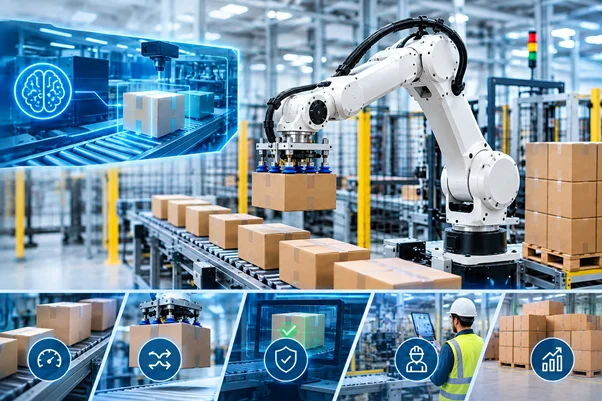
Table of Contents
- What Are Robotic Packaging Systems?
- Types of Robotic Packaging Systems
- Key Specifications to Check
- How to Choose the Right System for Your Product
- MOQ, Lead Time & Pricing Factors
- Automation Levels & Add-On Features
- Safety & Compliance
- Supplier Verification Checklist
- Common Mistakes Buyers Make
- Frequently Asked Questions
1. What Are Robotic Packaging Systems?
Robotic packaging systems are automated work cells that use robotic arms - paired with vision systems, end-of-arm tooling, and control software - to pick, place, pack, or palletize products with little to no manual intervention. Unlike fixed mechanical packaging lines, robotic packaging systems for manufacturing can be reprogrammed on the fly to handle new product shapes, pack patterns, or box sizes, which is why they've become central to any modern packaging automation buying guide.
The category covers everything from a single collaborative robot bolted onto an existing conveyor to fully integrated industrial robotic packaging systems running multiple arms across an entire end-of-line. Because the range is so broad, this robotic packaging system buying guide is useful whether you're a mid-size producer adding your first robotic cell or a plant manager scaling a multi-line facility.
Robotic packaging solutions have become the default choice for manufacturers chasing scalable packaging automation because they combine consistent cycle times with the flexibility to switch SKUs, pack patterns, and box formats without retooling an entire line - a capability traditional fixed automation struggles to match.
Buyer Tip: Before contacting integrators, map out your product's size range, weight, fragility, and pack pattern variability, along with your target throughput. These factors narrow down which robotic packaging automation configuration fits faster than any spec sheet comparison.
2. Types of Robotic Packaging Systems
Robotic packaging equipment is generally grouped by the task it performs in the packaging line.
System Type | Best For | Typical Applications Robotic Case Packing Systems | Loading products into cases or cartons | Bottles, pouches, cartons, multipacks Robotic Palletizing Systems | Stacking cases or bags onto pallets | End-of-line, warehousing, shipping prep Flexible Robotic Packaging Systems | Handling variable products or frequent changeovers | Mixed SKUs, promotional packs, e-commerce
Case Packing vs. Palletizing
Robotic case packing systems sit mid-line, picking individual products - bottles, pouches, bags, cartons - and placing them into shipping cases or trays in a defined pattern, often replacing several manual packers per shift. Robotic palletizing systems sit at the very end of the line, stacking finished cases or bags onto pallets in stable, optimized layers for shipping. Flexible robotic packaging systems, meanwhile, are built around advanced vision and gripping technology so a single cell can handle multiple SKUs, irregular shapes, or frequent pack-pattern changes without hardware swaps.
Which Type Should You Choose?
As a general guideline: robotic case packing systems make sense wherever manual case packing is a labor bottleneck or repetitive-strain risk, robotic palletizing systems pay off fastest in high-volume operations shipping large pallet quantities daily, and flexible robotic packaging systems are worth the added investment when your product mix or pack configurations change often. Most integrators offering industrial robotic packaging systems will run a proof-of-concept trial with your actual product before finalizing a design.
3. Key Specifications to Check
Before finalizing an order, confirm these specifications with your integrator - they determine whether the system will hit your real-world throughput and reliability targets.
Specification | Why It Matters Payload capacity (kg) | Determines which products the arm can safely handle Cycle speed (picks/min or cases/min) | Determines whether the cell meets production targets Reach & work envelope | Confirms compatibility with your line layout Vision & sensing system | Affects accuracy with variable product placement or orientation End-of-arm tooling (grippers) | Impacts handling of different product shapes and materials Controller & changeover time | Affects flexibility across multiple SKUs and pack patterns
Buyer Tip: Always request documented cycle rates tested on your actual product mix, not just the manufacturer's rated maximum speed on an ideal sample. A system's rated speed on a controlled demo line rarely matches performance on a real, variable production run.
4. How to Choose the Right System for Your Product
Choosing the right equipment starts with matching robot type and tooling to product behavior, not the other way around.
Rigid, Uniform Products - Best suited to standard case packers with fixed grippers for repeatable pick-and-place Variable or Irregular Products - Require vision-guided robots with adaptive gripping for reliable handling High-Volume Palletizing - Favor dedicated palletizing robots with layer-forming software for stacking efficiency Multi-SKU Operations - Favor systems with quick-change tooling and programmable recipes to minimize downtime between runs.
When evaluating how to choose a robotic packaging system, weigh product characteristics, required throughput, and floor space, integration with upstream and downstream equipment, and long-term flexibility for future SKUs together, rather than optimizing for any single factor in isolation. A cell that's fast but rigid can become a bottleneck the moment your product line expands.
5. MOQ, Lead Time & Pricing Factors
Robotic packaging system cost varies enormously based on robot count, automation level, and degree of customization.
Factor | Typical Range Single-arm, standard configuration | Lower upfront cost, faster deployment Multi-robot integrated cells | Higher upfront cost, higher throughput and redundancy Custom tooling (grippers, vision) | Added one-time engineering and setup fees Lead time | 8–16 weeks for standard cells; 16–26 weeks for heavily customized systems
Key cost drivers include robot brand and payload class, vision system sophistication, gripper complexity, and the level of integration with conveyors, case erectors, or downstream palletizers. Sizing a system slightly above current throughput needs, rather than upgrading again within a couple of years, is often more cost-effective across the equipment's working life.
Beyond the base system price, a few less obvious factors shape total cost of ownership: spare parts and local service support vary significantly between integrators, software licensing for vision or fleet-management tools may carry ongoing fees, and operator and maintenance training should be budgeted for alongside the machine purchase. If your production volume is predictable, negotiating a service agreement alongside the initial purchase is generally worth the added upfront cost.
6. Automation Levels & Add-On Features
Automation level is one of the biggest differentiators in both cost and labor requirements when comparing automated packaging systems.
Method | Best for Collaborative Robot (Cobot) Cells | Low-to-mid volume, shared human-robot workspaces Standard Industrial Robotic Cells | Mid-to-high volume lines needing consistent throughput Fully Integrated Robotic Lines | High-volume facilities running continuous multi-shift production
Common add-ons worth evaluating include automated case erectors and sealers, checkweighers for regulatory compliance, vision-based quality inspection, label and date coding stations, and layer-forming or stretch-wrap integration for palletizing cells. Each addition increases upfront cost and footprint, so it's worth prioritizing add-ons based on labor-reduction impact first and throughput gains second.
7. Safety & Compliance
Safety requirements are a core part of sourcing decisions for any facility introducing robotic packaging automation onto the floor. A system operating near human workers typically needs to meet specific safety standards.
When safety matters for your sourcing decision, look for the following from suppliers:
Compliance with relevant robotic safety standards (such as ISO 10218 and ANSI/RIA R15.06) Proper guarding, light curtains, or safety-rated monitored stopping for non-collaborative cells Collaborative robots rated for safe human proximity where applicable Documentation supporting risk assessments and safety validation for your specific installation
Buyer Tip: If your facility or insurer requires safety documentation, request risk assessments and compliance certificates upfront — addressing safety gaps after a robotic cell is already installed is far more disruptive than screening for it during sourcing.
8. Supplier Verification Checklist
Before committing to a robotic packaging solutions provider, verify the following to reduce sourcing risk:
Request a live demonstration or video trial run using your actual product and packaging Confirm system specifications (payload, cycle speed, work envelope) in writing Check safety certifications relevant to your facility and region Ask for references or verified installation history with similar production requirements Clarify lead time, integration support, and training included in the purchase Confirm warranty terms, spare parts availability, and after-sales service response times
9. Common Mistakes Buyers Make
Choosing a system based on rated maximum speed rather than tested speed on your actual product mix Underestimating vision or gripper requirements for variable product shapes not requesting a proof-of-concept trial before committing to a full purchase Overlooking changeover time when running multiple SKUs through one cell failing to budget for integration, training, and ongoing maintenance costs
Buyer Tip: A proof-of-concept trial with your own product, even at added cost, is far cheaper than discovering handling or throughput issues after the cell is installed.
10. Frequently Asked Questions
What's the difference between robotic case packing and robotic palletizing systems?
Robotic case packing systems place individual products into cases or cartons mid-line, while robotic palletizing systems stack finished cases or bags onto pallets at the end of the line. Choosing between them depends on where your current bottleneck sits - mid-line packing labor or end-of-line stacking labor - and many facilities eventually deploy both.
How do I know which robotic packaging system size or speed I need?
Start by calculating your required daily or weekly output, then work backward to a picks-per-minute or cases-per-minute target with buffer for downtime and changeovers. Reputable integrators can recommend a suitable configuration based on your product, target speed, and floor space, and most will offer a proof-of-concept run before you finalize an order.
What does a robotic packaging system typically cost?
Pricing ranges widely: single-arm collaborative cells are the most accessible entry point for lower-volume producers, while fully integrated industrial robotic packaging systems with multiple arms, vision, and layer-forming software represent a significantly higher investment. Custom tooling, add-on features, and integration complexity all affect the final quote, so it's worth comparing multiple suppliers against the same specification sheet.
How long does installation and setup take?
Standard robotic cells typically take 8–16 weeks from order to delivery, with additional time for on-site installation, calibration, and operator training. Heavily customized or multi-robot systems requiring integration with existing lines can take considerably longer, so building in buffer time is recommended, particularly for a first order with a new supplier.
Can one robotic packaging system run multiple product types or pack patterns?
Many modern flexible robotic packaging systems support this through vision guidance, programmable recipes, and quick-change tooling, though changeover time and gripper compatibility should be confirmed with the supplier beforehand. If your operation runs multiple SKUs regularly, prioritizing changeover speed during the selection process can meaningfully reduce downtime over the equipment's lifespan.
 Our Services
 Media Pack Download
 Newsletters
 Industrial Events