

Pressure-Sensitive vs. Sleeve Labelling: Application Costs, Shelf Impact, and Brand Differentiation
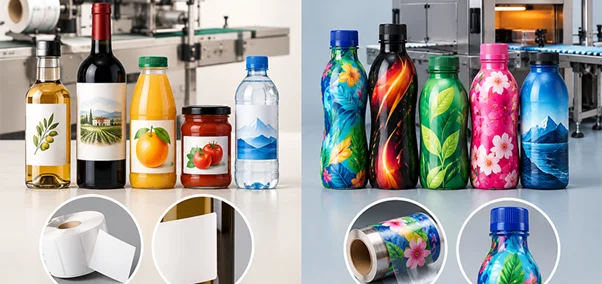
If you've ever stood in a packaging meeting arguing about which label technology to invest in, you already know this decision is rarely simple. The pressure sensitive vs. shrink sleeve labels debate comes up constantly among brand owners, packaging engineers, and procurement teams - and for good reason. Each format changes your production line, your shelf presence, and your bottom line in different ways.
This article breaks down the real differences: what each technology costs to apply, how it performs visually on shelf, and which one actually helps your brand stand out. Whether you're comparing pressure sensitive labels vs. shrink sleeves for a new product launch or reconsidering your current packaging line, here's what actually matters.
The Basics: What Are We Comparing?
Pressure-sensitive labels (PSL) are pre-printed labels with an adhesive backing, applied directly to a container's surface. Peel the liner, stick the label, done. They've been the packaging workhorse for decades because they're flexible, fast to apply, and compatible with almost any container shape or material.
Shrink sleeve labels are printed on flexible plastic film, slipped over the container, and then shrunk into place using heat - usually steam or hot air tunnels. The film conforms tightly to the container's contours, covering it fully or partially, including curves, necks, and unusual shapes that a flat label simply can't wrap around.
Understanding this fundamental mechanical difference is the starting point for almost every decision in the shrink sleeve vs. pressure sensitive labels conversation.
Application Costs: Where the Real Differences Show Up
When people ask about pressure sensitive label vs. shrink sleeve cost, they're usually thinking about the price per label. But the honest answer requires looking at total cost of ownership, not just unit price.
Equipment and Setup Costs
This is where the gap is widest. A shrink sleeve vs. pressure sensitive labeling machine comparison quickly reveals that sleeve application requires more capital investment upfront. You need a sleeve applicator to slide the film over the container, plus a separate heat tunnel to shrink it into place. That's two pieces of equipment, more floor space, and higher energy consumption from continuous heating.
Pressure-sensitive labeling, by contrast, typically needs a single applicator unit. Setup is faster, changeovers between SKUs are quicker, and the learning curve for operators is shorter. For smaller brands or co-packers running multiple product lines, this simplicity often tips the decision entirely.
Material and Per-Unit Costs
On a pure material basis, shrink sleeve film usually costs more per square inch than pressure-sensitive label stock, partly because of the film composition and printing process (typically rotogravure or flexo on a cylinder). However, sleeves often replace multiple labels - front, back, and neck label in one wrap - which can offset the material premium when you calculate cost per container rather than cost per label.
Pressure-sensitive labels tend to win on straightforward, single-panel applications. Shrink sleeve label cost vs. pressure sensitive comparisons typically show PSL as cheaper for basic round or square containers where full-body coverage isn't essential.
Waste and Changeover Costs
PSL production allows for more flexible short runs without significant waste. Digital printing options for pressure-sensitive labels make small batches and frequent design updates far less costly. Sleeve production, tied more heavily to gravure cylinders or larger print runs, tends to favor high-volume, stable SKUs where the tooling cost amortizes over millions of units.
Bottom line on cost: if you're running high-mix, low-volume production, pressure-sensitive labels usually cost less overall. If you're running massive, stable volumes with full-body branding needs, shrink sleeves can become cost-competitive or even cheaper per container once you factor in label consolidation.
Shelf Impact: Which One Actually Grabs Attention?
Cost matters, but shelf performance is often the deciding factor for marketing teams. The shrink sleeve vs pressure sensitive shelf appeal question isn't close in certain categories - sleeves dominate 360-degree visual impact.
Why Shrink Sleeves Win on Coverage
Because the film wraps the entire container, shrink sleeves give brands a continuous, edge-to-edge canvas. There are no visible label edges, no gaps showing the container underneath, and no limitations from bottle curves or tapered necks. This is why you see sleeves dominating categories like beverages, personal care, and novelty products where an immersive, high-impact design matters.
Sleeves also allow for creative shapes that mimic the product itself — think of contoured juice bottles or shampoo containers where the sleeve accentuates the silhouette rather than covering it flatly.
Why Pressure-Sensitive Labels Still Compete
PSL isn't out of the running on shelf appeal. Advances in clear "no-label look" films, textured stocks, embossing, and metallic foiling have made pressure-sensitive labels far more premium-looking than the plain paper labels of the past. For products where only partial coverage is needed - a front panel with a clean, minimalist design - PSL often looks more sophisticated than a full sleeve, which can sometimes appear busy or overly promotional.
There's also a practical shelf consideration: pressure-sensitive labels keep the container's transparency intact where sleeves don't, which matters for products where the consumer wants to see the actual liquid, color, or texture inside - wines, oils, and specialty beverages being common examples.
Brand Differentiation: Beyond Looks
This is where the conversation moves past cost sheets and into strategy. Brand differentiation isn't just about looking good - it's about looking right for your category and your customer's expectations.
Shrink sleeves tend to signal boldness, energy, and full-sensory branding. They work well for brands trying to break category norms, especially in crowded shelves like energy drinks, craft sodas, or cosmetics where visual disruption sells.
Pressure-sensitive labels tend to signal precision, heritage, or premium restraint. Wine, spirits, olive oil, and artisanal food brands often lean toward PSL because it allows the container shape and glass quality to do part of the storytelling, with the label acting as an accent rather than a full wrap.
Neither approach is universally "better" - it depends entirely on what story your packaging needs to tell.
Pressure Sensitive or Shrink Sleeve Labels: How to Decide
If you're still weighing pressure sensitive or shrink sleeve labels for an upcoming project, here's a practical framework:
- Choose pressure-sensitive labels if: you need fast changeovers, run varied SKUs, want lower equipment investment, or your container shape/transparency is part of the branding.
- Choose shrink sleeves if: you need full-body coverage, have irregular container shapes, run high and stable volumes, or want maximum shelf disruption.
- Consider a hybrid approach: many brands use PSL for standard SKUs and reserve sleeves for limited editions, promotional runs, or flagship products where visual impact justifies the extra cost.
Frequently Asked Questions
Which is better, pressure sensitive or shrink sleeve labels?
Neither is universally better - it depends on your container shape, production volume, and branding goals. Pressure-sensitive labels are generally more cost-effective for short runs and simple shapes, while shrink sleeves offer superior shelf coverage for irregular containers and high-volume production.
Is pressure sensitive labeling cheaper than shrink sleeve labeling?
In most cases, yes, especially for smaller production runs and standard container shapes. Shrink sleeves can become cost-competitive at very high volumes where full-body coverage consolidates multiple labels into one application.
Do shrink sleeves require different machinery than pressure-sensitive labels?
Yes. Shrink sleeves need a sleeve applicator plus a heat tunnel for shrinking, while pressure-sensitive labels typically need only a single labeling applicator, making PSL setups simpler and less capital-intensive.
Which option has better shelf appeal?
Shrink sleeves generally offer stronger shelf appeal for 360-degree branding and irregular shapes, while pressure-sensitive labels can look more premium for minimalist or transparency-focused designs.
Final Thoughts
The pressure sensitive vs. shrink sleeve cost and shelf-impact debate doesn't have a one-size-fits-all winner. It comes down to your product, your production scale, and the story you want your packaging to tell. Brands chasing bold, full-wrap shelf presence at high volume tend to gravitate toward sleeves. Brands prioritizing flexibility, cost control, and container transparency tend to stick with pressure-sensitive labels.
The smartest approach is often not choosing one forever, but matching the right label technology to the right product in your portfolio - and revisiting that decision as your volumes, SKUs, and brand positioning evolve.
 Our Services
 Media Pack Download
 Newsletters
 Industrial Events