

Plastic vs. Paper vs. Flexible Packaging: Cost, Sustainability, and Market Performance Compared
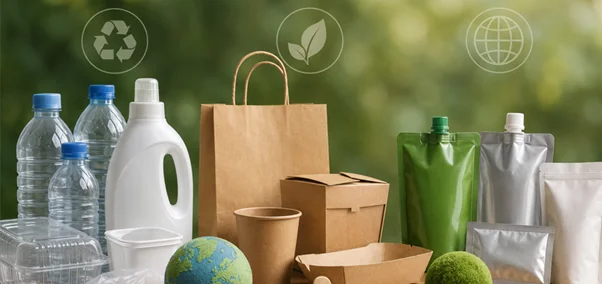
Choosing the right packaging material is no longer just a design decision — it's a business decision that touches your margins, your brand reputation, and your shelf appeal. If you've ever found yourself stuck comparing plastic vs. paper packaging, or wondering whether flexible packaging vs. rigid packaging makes more sense for your product line, you're not alone. Brand owners, procurement teams, and sustainability officers are asking the same question from different angles: which material actually performs best when you weigh cost, environmental impact, and real-world durability together?
This guide breaks down the plastic vs. paper vs. flexible packaging debate in plain terms, so you can make a decision based on data rather than assumptions.
Quick Answer: Which Packaging Material Wins?
There's no single winner. Plastic packaging offers the lowest cost per unit and the best barrier protection for perishable goods. Paper packaging wins on perceived sustainability and recyclability but struggles with moisture resistance. Flexible packaging — pouches, films, and laminates — typically delivers the best balance of cost efficiency, shelf life extension, and reduced material use, which is why it's the fastest-growing segment in the packaging industry today.
The right choice depends on your product type, shipping distance, shelf-life requirements, and how much your customers value visible sustainability cues.
Plastic vs. Paper Packaging: The Core Trade-Offs
The plastic vs. paper packaging comparison usually comes down to four factors: cost, protection, sustainability perception, and end-of-life handling.
Cost
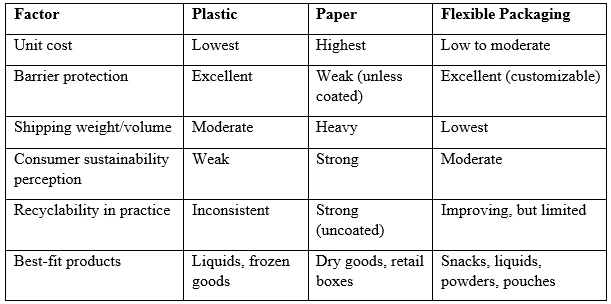
Plastic remains cheaper to produce at scale. Resin costs, lightweight shipping, and mature manufacturing infrastructure keep plastic packaging costs low, especially for high-volume runs. Paper, by contrast, typically costs 15–40% more per unit depending on the grade and coating required to make it moisture- or grease-resistant.
Protection and Shelf Life
Plastic has a natural advantage here. It offers superior barrier properties against moisture, oxygen, and contamination, which is why it dominates categories like frozen food, liquids, and perishables. Paper packaging, unless heavily treated or laminated, is more vulnerable to tearing, staining, and moisture damage — a real limitation for wet or oily products.
Sustainability Perception vs. Reality
Paper is widely seen as the more eco-friendly option because it's biodegradable and easier for consumers to recycle at home. However, the full picture is more nuanced. Producing paper packaging often requires more energy and water than producing plastic, and many paper products are coated with plastic or wax linings to improve durability — which can actually make them harder to recycle, not easier.
End-of-Life and Recycling Infrastructure
Among recyclable packaging materials, plastic recycling rates remain low globally due to inconsistent collection systems and contamination issues. Paper generally has better-established recycling infrastructure, particularly for corrugated cardboard, but food-contaminated or laminated paper often ends up in landfill anyway.
Bottom line: Plastic wins on cost and performance; paper wins on consumer perception and biodegradability — but neither is a clear sustainability leader once you account for full lifecycle impact.
Flexible Packaging vs. Rigid Packaging
This is where the conversation shifts from a two-way fight to a three-way comparison. Flexible packaging vs. rigid packaging isn't just about plastic versus paper — it's about format.
Rigid packaging includes glass jars, metal cans, hard plastic containers, and heavy cardboard boxes. Flexible packaging includes stand-up pouches, sachets, shrink films, and laminated wraps.
Here's why flexible formats are gaining ground so fast:
- Material efficiency: Flexible packaging uses significantly less raw material per unit of product volume than rigid alternatives, often 60–70% less by weight.
- Shipping and storage savings: Lighter, more compact packaging reduces freight costs and warehouse footprint.
- Extended shelf life: Multi-layer flexible films can be engineered with precise oxygen and moisture barriers, often outperforming rigid containers for certain perishables.
- Lower carbon footprint per shipment: Because flexible packaging is lighter and more compact, transportation emissions per unit drop substantially compared to rigid formats.
Rigid packaging still holds its ground where structural protection, premium shelf presence, or refillability matter — think glass cosmetic jars or beverage bottles. But for everyday consumer goods, snacks, and household products, flexible packaging benefits are hard to ignore.
Flexible Packaging Benefits at a Glance
If you're evaluating flexible packaging benefits specifically, here's what tends to matter most to brands and procurement teams:
- Lower material and shipping costs due to reduced weight and volume
- Better product-to-package ratio, meaning less packaging waste per unit sold
- Customizable barrier properties for oxygen, light, and moisture sensitivity
- Resealable and portion-control options that improve customer experience
- Smaller storage and transport footprint, which reduces warehousing and logistics costs
The trade-off is that flexible packaging is often harder to recycle than rigid materials because it frequently combines multiple layers (plastic, foil, paper) that are difficult to separate in standard recycling streams. This is an active area of innovation, with mono-material flexible films now emerging as a more recyclable alternative.
Sustainable Packaging Materials: What "Eco-Friendly" Really Means
When people search for sustainable packaging materials, they're usually picturing biodegradable, plant-based, or fully recyclable options. But sustainability in packaging is really a spectrum, not a checkbox. A fair eco-friendly packaging comparison should weigh:
- Raw material sourcing (renewable vs. finite resources)
- Production energy and water use
- Transportation emissions (weight and volume matter enormously here)
- Recyclability in existing infrastructure — not just theoretical recyclability
- Actual end-of-life outcome (landfill, incineration, composting, or recycling)
By this fuller measure, some plastic-based flexible packaging can outperform paper on total
lifecycle emissions, even though paper "feels" greener. Meanwhile, some paper packaging that looks sustainable on the shelf is actually laminated with non-recyclable coatings.
This is why serious sustainable packaging options increasingly include:
- Mono-material flexible films designed for single-stream recycling
- Post-consumer recycled (PCR) plastic content
- FSC-certified paper and corrugate
- Compostable bioplastics for specific short-shelf-life applications
- Reduced-layer laminate structures that maintain barrier performance with fewer materials
Packaging Material Comparison: Cost, Sustainability, and Performance Side-by-Side
Plastic vs. Paper Packaging Cost Comparison in Real Terms
For a mid-size consumer brand shipping at scale, a realistic plastic vs. paper packaging cost comparison looks something like this:
- Plastic containers or films: Lower per-unit material cost, lower shipping weight, but potential added cost from sustainability compliance fees or plastic taxes in some regions.
- Paper-based packaging: Higher material cost, heavier shipping weight (which increases freight spend), but often lower disposal and compliance costs where extended producer responsibility (EPR) fees favor recyclable materials.
- Flexible packaging: Frequently the lowest total landed cost when you factor in material savings, reduced shipping weight, and smaller storage footprint — even if the film itself costs more per square inch than a plastic bottle.
The real cost comparison should always be calculated on a landed-cost-per-unit-shipped basis, not just raw material price, because freight and storage savings from lightweight flexible formats often outweigh a higher upfront material cost.
Paper Packaging Advantages and Disadvantages
To round out the paper vs. plastic packaging conversation, here's a balanced look at paper packaging advantages and disadvantages:
Advantages:
- Biodegradable and compostable in most uncoated forms
- Strong consumer trust and brand perception
- Well-established recycling infrastructure in most regions
- Easy to print on and customize for branding
Disadvantages:
- Poor natural resistance to moisture, oil, and grease
- Requires coatings or laminates for many applications, which can hurt recyclability
- Heavier than plastic or flexible alternatives, increasing shipping costs and emissions
- Higher production water and energy use in many cases
How to Approach Packaging Material Selection
Packaging material selection should never be a purely aesthetic or trend-based decision. A structured approach looks at:
- Product characteristics — Is it liquid, dry, perishable, fragile?
- Required shelf life — Does the product need a strong oxygen or moisture barrier?
- Shipping distance and method — Longer supply chains favor lightweight materials.
- Regulatory environment — Some regions penalize non-recyclable plastics or reward recyclable paper.
- Brand positioning — Sustainability-focused brands may accept a cost premium for perceived eco-friendly materials.
- End-of-life realities in your target market — Choose materials your customers can actually recycle, not just materials that are theoretically recyclable.
Frequently Asked Questions
Is flexible packaging more sustainable than rigid plastic packaging?
Often yes, because it uses less material and weighs less during transport, which lowers overall carbon emissions per unit shipped. However, multi-layer flexible packaging can be harder to recycle than single-material rigid plastic.
Is paper packaging always better for the environment than plastic?
Not necessarily. Paper is biodegradable and widely recyclable, but it typically requires more energy and water to produce and is heavier to ship, which increases transportation emissions.
Which packaging type is cheapest overall?
Plastic usually has the lowest raw material cost, but flexible packaging often has the lowest total landed cost once shipping weight and storage savings are factored in.
What's the most recyclable packaging material?
Uncoated paper and cardboard have the most consistent recycling infrastructure worldwide. Mono-material flexible films are improving rapidly but still lag behind traditional paper and rigid plastic in recyclability.
Final Thoughts
There's no universal winner in the plastic vs. paper vs. flexible packaging debate — only the right fit for your specific product, supply chain, and sustainability goals. Plastic remains the performance and cost leader, paper wins on consumer trust and biodegradability, and flexible packaging increasingly offers the best middle ground: lower material use, reduced shipping costs, and improving recyclability. The smartest packaging material selection strategy weighs all three against your product's real requirements rather than choosing based on assumptions about what "sustainable" looks like.
 Our Services
 Media Pack Download
 Newsletters
 Industrial Events