

Top 10 Smart Packaging Innovations Procurement Teams Should Evaluate in 2026
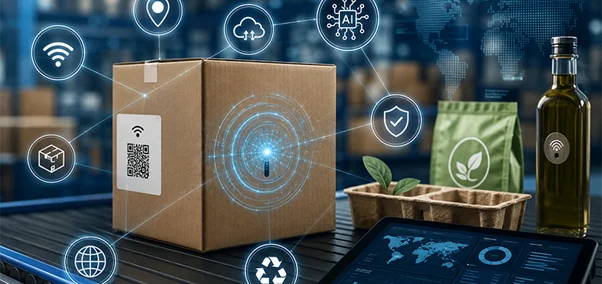
Procurement leaders are no longer buying boxes, labels, and pallets — they are buying data, traceability, and brand protection wrapped around a product. As smart packaging innovations move from pilot projects to mainstream deployment, procurement teams that fail to evaluate them risk higher supply chain costs, compliance penalties, and lost consumer trust. This guide breaks down the ten most important smart packaging innovations 2026 buyers need on their radar, along with the broader packaging technology trends 2026 shaping supplier scorecards.
Why Smart Packaging Matters for Procurement in 2026
Rising regulatory pressure (especially the EU's Digital Product Passport mandate), tightening sustainability targets, and consumer demand for transparency are pushing packaging from a cost-center decision to a strategic one. Smart packaging trends 2026 show three converging forces: connectivity (IoT and RFID), intelligence (AI-driven insights), and accountability (digital passports and traceability). Procurement teams that evaluate suppliers on these dimensions — not just unit price — will be better positioned for audits, recalls, and omnichannel retail requirements.
1. AI in Smart Packaging
AI in smart packaging is now used for real-time quality inspection, shelf-life prediction, and demand forecasting based on packaging sensor data. Machine learning models analyze print quality, seal integrity, and label placement on production lines, flagging defects before goods leave the facility. For procurement, this means fewer returns, lower spoilage costs, and suppliers who can provide predictive analytics rather than static compliance reports. When evaluating vendors, ask whether their AI models are trained on your specific product categories or generic packaging data — accuracy varies significantly between the two.
2. RFID Smart Packaging Solutions
RFID smart packaging solutions remain one of the highest-ROI investments for procurement teams managing high-volume or high-value SKUs. Passive RFID tags embedded in packaging enable automated inventory counts, reduce shrinkage, and speed up receiving and putaway processes in distribution centers. Retailers like large apparel and electronics chains have already normalized RFID at the item level, and 2026 is seeing costs drop enough that mid-market manufacturers can adopt it too. Procurement should evaluate tag durability, read-range consistency, and integration compatibility with existing warehouse management systems before committing to a supplier.
3. IoT Packaging Solutions
IoT packaging solutions embed low-cost sensors directly into cartons, pallets, or containers to monitor temperature, humidity, shock, and location in real time. This is critical for pharmaceuticals, fresh food, and electronics, where condition monitoring during transit determines product viability on arrival. Procurement teams should assess battery life, data transmission reliability in low-connectivity regions, and whether sensor data integrates cleanly with existing ERP or TMS platforms. The best IoT packaging vendors in 2026 offer dashboards that flag exceptions automatically rather than requiring manual log review.
4. Digital Product Passport Packaging
Digital product passport packaging is rapidly becoming non-negotiable for companies selling into the EU, where the Ecodesign for Sustainable Products Regulation requires detailed product lifecycle data accessible via a scannable code. A digital product passport typically discloses material composition, origin, repairability, and recyclability information linked directly to the packaging. Procurement teams should confirm that packaging suppliers can generate and host passport data in a format compliant with evolving EU technical standards, and that the system can scale across multiple product lines without custom engineering for each SKU.
5. QR Code Smart Packaging
QR code smart packaging has evolved well beyond linking to a website. Modern QR implementations support dynamic content updates, batch-level traceability, authentication checks, and consumer engagement campaigns — all without changing the physical packaging. For procurement, the appeal is flexibility: a single QR code format can serve marketing, compliance, and supply chain functions simultaneously, reducing the number of distinct packaging elements that need sourcing and approval. When comparing suppliers, check whether their QR platform supports geofencing, multi-language redirects, and analytics reporting that ties back to specific production batches.
6. Connected Packaging Examples in the Real World
Looking at connected packaging examples already in market helps procurement teams benchmark realistic ROI. Beverage brands use NFC-enabled bottle caps to verify authenticity and share provenance stories. Pharmaceutical companies use connected blister packs that alert patients about missed doses while feeding adherence data back to manufacturers. Consumer electronics brands use smart packaging to trigger onboarding tutorials the moment a box is opened. These examples demonstrate that connected packaging isn't experimental anymore — it is delivering measurable engagement and compliance value across industries, and procurement should treat supplier case studies as a core evaluation criterion.
7. Smart Packaging for Supply Chain Visibility
Smart packaging for supply chain applications is arguably the single biggest procurement priority this year. Combining RFID, IoT sensors, and blockchain-based ledgers, smart packaging now provides end-to-end visibility from raw material sourcing through final delivery. This matters for procurement teams managing multi-tier suppliers, where visibility gaps create risk exposure during disruptions, recalls, or ethical sourcing audits. Evaluate whether a packaging supplier's tracking data can be shared securely with your logistics partners and customers, since siloed data defeats the purpose of supply chain transparency.
8. Sustainable and Biodegradable Smart Sensors
Sustainability requirements are pushing innovation in sensor materials themselves. New biodegradable and paper-based sensor films can monitor freshness or temperature without the e-waste burden of traditional electronic tags. This matters for procurement teams under pressure to hit circular economy targets while still gaining the operational benefits of connected packaging. Ask suppliers directly about end-of-life disposal pathways for any embedded electronics, since regulators are increasingly scrutinizing packaging waste alongside product waste.
9. Anti-Counterfeiting and Tamper-Evident Smart Packaging
Brand protection is a growing line item in procurement budgets, particularly for pharmaceuticals, luxury goods, and electronics. NFC chips, holographic authentication layers, and tamper-evident seals linked to blockchain verification systems allow both retailers and end consumers to confirm authenticity instantly. Counterfeiting costs global brands billions annually, and procurement teams should weigh anti-counterfeiting features as a risk-mitigation investment rather than a discretionary upgrade, especially for products moving through complex or high-risk distribution channels.
10. Predictive Analytics and Demand-Sensing Packaging
The newest wave of innovation combines packaging-level sensor data with predictive analytics to forecast replenishment needs automatically. Smart shelves and connected packaging can detect inventory depletion in real time and trigger automatic reorder signals upstream. For procurement, this reduces stockouts and overstock simultaneously, tightening working capital tied up in inventory. Evaluating a supplier's demand-sensing capability now can meaningfully reduce forecasting error rates heading into 2027 planning cycles.
Broader Packaging Technology Trends 2026 Procurement Should Track
Beyond the individual innovations above, several packaging technology trends 2026 are reshaping vendor selection criteria industry-wide: convergence of compliance and marketing data on a single connected package, growing regulatory harmonization pushing digital passports beyond the EU, and increased demand for interoperable data standards so packaging technology from one supplier works seamlessly with another's logistics systems. Procurement teams should build these trends directly into RFPs rather than treating them as future considerations.
Smart Packaging Trends for Manufacturers
For manufacturers specifically, smart packaging trends for manufacturers in 2026 center on reducing integration friction. Rather than bolting on smart features late in the production process, leading manufacturers are designing connectivity into packaging from the earliest tooling stages. This lowers per-unit costs of RFID and sensor integration and shortens time-to-market for new SKUs. Procurement teams evaluating manufacturing partners should ask how early smart features are integrated into the design process, since late-stage retrofits are consistently more expensive and less reliable.
Frequently Asked Questions
What is smart packaging?
Smart packaging refers to packaging embedded with technology — such as sensors, RFID tags, QR codes, or NFC chips — that can monitor conditions, share data, or interact with consumers and supply chain systems beyond the packaging's traditional protective function.
Why should procurement teams prioritize smart packaging in 2026?
Regulatory requirements like digital product passports, rising counterfeiting risk, and demand for real-time supply chain visibility make smart packaging a compliance and risk-management necessity, not just an innovation nice-to-have.
What is the difference between RFID and IoT packaging solutions?
RFID packaging solutions primarily support identification and inventory tracking through radio tags, while IoT packaging solutions add active sensing — such as temperature, humidity, or shock monitoring — with continuous data transmission.
Is smart packaging cost-effective for mid-market manufacturers?
Yes, increasingly. Tag and sensor costs have dropped significantly, and many suppliers now offer scalable pricing models that make RFID, QR, and IoT packaging accessible outside large enterprise budgets.
Final Takeaway
The smart packaging innovations outlined above are no longer optional experiments — they are becoming baseline procurement requirements across pharmaceuticals, consumer goods, electronics, and food and beverage sectors. Procurement teams that build evaluation criteria around AI-driven insights, RFID and IoT connectivity, digital product passports, and supply chain traceability will be better positioned to manage compliance risk, reduce costs, and support long-term sustainability goals through 2026 and beyond.
 Our Services
 Media Pack Download
 Newsletters
 Industrial Events