

Top 10 Stand-Up Pouch Solutions Perfect for Product Managers and Sales Teams
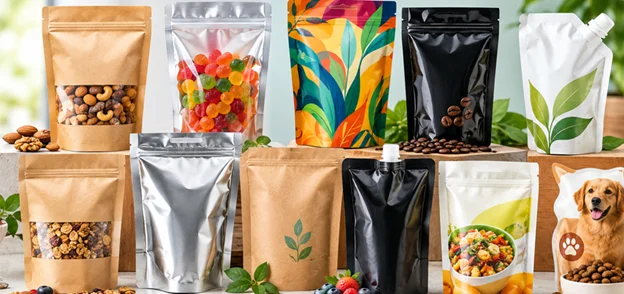
If you're a product manager sourcing packaging or a sales rep trying to explain "why pouches" to a client, you already know the real question isn't "what is a stand-up pouch." It's "which stand-up pouch fits my product, my budget, and my sustainability targets?"
That's the question this guide answers. Below are the 10 stand-up pouch formats that consistently win pitches, close deals, and perform on shelves - with the practical details’ product managers and sales teams actually need before a client meeting.
Quick Answer: Which Stand-Up Pouch Should You Choose?
- Need freshness after opening? → Resealable Stand-Up Pouches with Zippers
- Need shelf visibility? → Stand-Up Pouches with Transparent Windows
- Need brand recall? → Custom Printed Stand-Up Pouches
- Need long shelf life for oily/greasy products? → High-Barrier Stand-Up Pouches
- Need sustainability credentials? → Recyclable Mono-Material or Compostable Stand-Up Pouches
- Need an eco/artisanal look? → Kraft Stand-Up Pouches
- Need liquids or pourable products? → Spouted Stand-Up Pouches
- Need shelf-stable ready meals? → Retort Stand-Up Pouches
- Need coffee or pet food specific features? → Coffee or Pet Food Stand-Up Pouches
- Need shelf standout? → Shaped Stand-Up Pouches
Now let's break each one down.
1. Resealable Stand-Up Pouches with Zippers
Short answer: These pouches use a built-in zipper track so customers can open and reseal the pack multiple times without losing freshness - ideal for snacks, pet treats, coffee, and powders.
For product managers, the zipper isn't just a convenience feature - it's a repeat-purchase driver. Consumers consistently rate resealability as a top factor in repurchase decisions for snack and pantry items. For sales teams, this is an easy value-add to pitch: it reduces product waste for the end consumer, which brand owners love to put on packaging copy.
Best for: snacks, coffee, pet treats, baking mixes, frozen foods
2. Stand-Up Pouches with Transparent Windows
Short answer: A clear film panel (full or partial) lets shoppers see the product before they buy, building trust at the shelf without extra marketing spend.
Transparent windows work especially well when the product itself is the selling point - colorful candy, fresh produce, baked goods, or premium nuts. If a client is nervous about switching from rigid packaging to flexible pouches, a window format is often the easiest "yes" because it keeps the visual merchandising, they're used to.
Best for: confectionery, dried fruit, bakery items, fresh produce, pet treats
3. Custom Printed Stand-Up Pouches
Short answer: Full-color, high-resolution printing (rotogravure or digital) turns the pouch itself into a branding asset - no additional labeling required.
This is where sales teams should lean hardest. Custom printing lets a brand differentiate on-shelf without changing the product inside. Digital printing has also made short-run custom pouches affordable for smaller brands and seasonal SKUs, which is a strong pitch for startups and DTC clients testing new products.
Best for: any brand-forward product - snacks, supplements, beauty, coffee, pet food
4. High-Barrier Stand-Up Pouches
Short answer: Multi-layer laminate construction (often including foil or EVOH) blocks oxygen, moisture, and light - extending shelf life for sensitive products.
If a client's product is greasy, aromatic, moisture-sensitive, or prone to oxidation (think coffee, jerky, powdered supplements, or pet food), this is a non-negotiable spec, not an upsell. Product managers should treat barrier level as a functional requirement first and a cost line second - a product failure from poor barrier protection costs far more than the packaging upgrade would have.
Best for: coffee, jerky, powdered nutrition, pet food, pharmaceuticals
5. Recyclable Mono-Material Stand-Up Pouches
Short answer: Built from a single polymer family (typically all-PE or all-PP) instead of mixed laminates, making the pouch actually recyclable through standard recycling streams.
This is currently the fastest-growing request category in flexible packaging RFPs. Mono-material structures solve the biggest complaint about traditional multi-layer pouches - they can't be separated for recycling. For sales teams, this is a strong compliance angle: EPR (Extended Producer Responsibility) regulations in the EU, UK, and increasingly the US are pushing brands toward recyclable formats.
Best for: brands facing EPR/sustainability mandates, retailers with plastic-reduction commitments
6. Kraft Stand-Up Pouches
Short answer: Pouches made with natural or printed kraft paper (often paired with a compostable or recyclable film liner) that communicate "natural," "premium," or "artisanal" at a glance.
Kraft has become visual shorthand for clean-label and craft positioning. It's particularly effective for coffee, tea, granola, and specialty pet treats - categories where consumers associate texture and earth tones with quality ingredients. Note for PMs: kraft doesn't automatically mean compostable - confirm the film liner separately.
Best for: specialty coffee, tea, granola, bakery, natural pet treats
7. Spouted Stand-Up Pouches
Short answer: A pouch with an integrated spout and cap for pourable, liquid, or semi-liquid products - sauces, baby food, beverages, liquid supplements.
Spouted pouches are a direct replacement for glass jars and rigid bottles in many categories, cutting shipping weight and breakage risk dramatically. This is a strong cost-savings pitch for sales teams talking to clients currently using glass - freight savings alone often justify the switch within a year.
Best for: baby food, sauces, condiments, beverages, liquid detergents
8. Retort Stand-Up Pouches
Short answer: Engineered to survive high-heat sterilization (retort processing), allowing fully cooked, shelf-stable food to be packed without refrigeration.
Retort pouches are the packaging behind the modern ready-meal and MRE (meal-ready-to-eat) category. For product managers evaluating a move away from cans, retort pouches offer faster heat penetration during processing (better product quality), lighter shipping weight, and microwave compatibility.
Best for: ready meals, soups, curries, pet food, military/outdoor food
9. Application-Specific Pouches: Coffee & Pet Food Stand-Up Pouches
Short answer: Coffee and pet food each have category-specific pouch requirements that go beyond generic packaging - and getting them wrong shows up fast in customer complaints.
Coffee Stand-Up Pouches typically need a degassing valve (to release CO2 from fresh-roasted beans without letting oxygen in), a strong aroma barrier, and often a matte or kraft finish to signal premium quality.
Pet Food Stand-Up Pouches need high puncture resistance (kibble is abrasive), strong grease/fat barriers, and increasingly, larger format options as pet owners shift from bags to resealable pouches for portion control.
Treating these as their own category - rather than a generic pouch with a different label - is what separates a good packaging pitch from a great one.
Best for: roasters and pet food brands specifically
10. Compostable Stand-Up Pouches
Short answer: Made from certified compostable films (often PLA or cellulose-based) that break down in industrial or home composting conditions, offering an end-of-life alternative to recycling.
Compostable pouches are the right recommendation when a client's target audience prioritizes zero-waste positioning - think specialty coffee, organic snacks, and premium pet treats. The caveat product managers must flag to clients: compostable claims require certification (like BPI or TÜV Austria), and "compostable" doesn't mean "home compostable" - the distinction matters for legal labeling claims.
Best for: organic/zero-waste brands, premium coffee, eco-conscious snack brands
Bonus: Shaped Stand-Up Pouches
Short answer: Custom die-cut silhouettes - rounded shoulders, gusseted bases, novelty shapes - that make a product instantly recognizable on shelf, even in a sea of competitors.
Shaped pouches are a sales team's best tool against price-only conversations. When a client says "your pouch costs more than a generic supplier," a shaped format shifts the conversation to shelf impact and brand recognition instead of unit cost.
Best for: any brand trying to stand out in a crowded category
FAQ: Stand-Up Pouch Packaging
What is the most cost-effective stand-up pouch format?
Kraft or basic recyclable mono-material pouches without added features (zippers, windows, spouts) are generally the lowest-cost option while still offering strong shelf presence.
Which stand-up pouch is best for food products that need a long shelf life?
High-barrier or retort stand-up pouches are best for extended shelf life, especially for products with fats, oils, or moisture sensitivity.
Are compostable stand-up pouches the same as recyclable ones?
No. Recyclable mono-material pouches are designed to go through standard recycling streams, while compostable pouches break down biologically and require composting infrastructure, not recycling bins.
Do resealable pouches cost significantly more than non-resealable ones?
The zipper adds a modest per-unit cost increase, but it's typically offset by reduced product waste claims and improved repurchase rates, making it a net-positive for most snack and pantry brands.
Can one pouch format work for multiple product lines?
Sometimes, but category-specific needs (like degassing valves for coffee or puncture resistance for pet food) usually mean a "one-size-fits-all" pouch underperforms compared to a tailored format.
Final Take for Product Managers and Sales Teams
The brands winning shelf space in 2026 aren't just picking "a pouch" - they're matching format to function: barrier level to product sensitivity, closure type to usage frequency, and material to sustainability commitments. Use this list as a working checklist in your next sourcing call or client pitch, and lead with the short answer for each format - it's the fastest way to get a client from "what's a stand-up pouch" to "let's move forward."
 Our Services
 Media Pack Download
 Newsletters
 Industrial Events