

Next-Generation Product Labels: Compliance, Consumer Transparency, and Brand Protection
Something has quietly changed on store shelves over the past few years. That plain sticker on the back of a bottle or box isn't so plain anymore. It might carry a scannable code, a hologram, or a tiny chip that tells a story most shoppers never used to ask for. Labels have stopped being an afterthought. They've become one of the most strategic touchpoints a brand has - part legal shield, part trust-builder, part anti-fraud device.
This shift didn't happen overnight, and it isn't happening for one reason alone. Regulators are tightening the rules. Consumers are asking harder questions about what's actually in the products they buy. And counterfeiters have gotten disturbingly good at their craft. Put those three pressures together, and you get the rise of next-generation product labels - smarter, more connected, and far more accountable than anything that came before.
Why Product Labels Suddenly Matter So Much
For decades, a label's job was simple: list ingredients, print a barcode, slap on a logo, done. That's no longer enough. Product Label Compliance has become a genuine legal and financial risk area, not a box-ticking exercise. Miss a required disclosure, get a unit conversion wrong, or fail to update a label after a formulation change, and a company can face recalls, fines, or reputational damage that lingers far longer than the penalty itself.
At the same time, Product Labeling Regulations are multiplying and diverging across markets. What satisfies requirements in the US often falls short in the EU, and what works in the EU may not meet standards in parts of Asia or the Middle East. Add in industry-specific rules for food, pharmaceuticals, cosmetics, and electronics, and it's easy to see why compliance teams are stretched thin. Staying current with Regulatory Labeling Requirements now typically requires dedicated software, legal review cycles, and constant monitoring - not a once-a-year checklist.
The Rise of Smart and Digital Labels
This is where technology has stepped in to do what manual processes can't keep up with. Smart Product Labels use embedded technology - QR codes, NFC chips, RFID tags, or invisible digital watermarks - to turn a static label into an interactive gateway. Instead of cramming every regulatory disclosure onto a few square inches of packaging, brands can print the essentials and link out to a digital layer that holds everything else.
Digital Product Labels solve a real design problem: packaging real estate is limited, but regulatory and consumer information keeps growing. A digital label can carry allergen details, sourcing information, usage instructions in a dozen languages, and even video content, all without redesigning the physical packaging every time something changes. When a formulation is updated or a new market requires a new disclosure, brands can update the digital content instantly rather than reprinting millions of labels.
This flexibility also plays directly into Connected Packaging Technology. Packaging is no longer just a container - it's becoming a communication channel. A single scan can connect a customer to product origin stories, sustainability data, loyalty programs, or customer support, all hosted and updated centrally.
QR Codes: The Quiet Workhorse of Modern Packaging
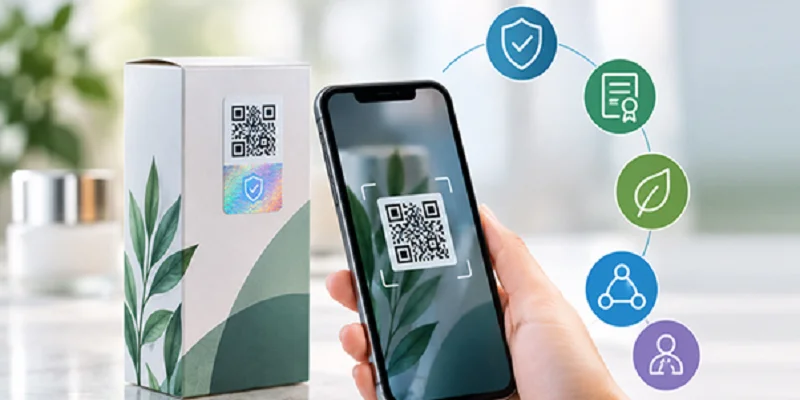
If there's one piece of technology that's done the most to bring next-generation labeling into the mainstream, it's the humble QR code. QR Code Product Labels are cheap to produce, easy to scan with any smartphone camera, and instantly familiar to consumers after years of use in restaurants, payments, and event tickets.
What makes them powerful for labeling specifically is the bridge they create between physical and digital. A shopper standing in an aisle can scan a code and instantly see lab test results, carbon footprint data, or proof of ethical sourcing. That single interaction does more to build trust than any amount of marketing copy printed on the box itself.
Because QR codes can be made dynamic - meaning the destination URL can be updated without changing the printed code - they're also incredibly useful for compliance. A brand can update the linked content to reflect the latest regulatory requirements without ever touching the physical label again.
Fighting Counterfeits with Smarter Labels
Counterfeiting isn't a niche problem anymore. It touches everything from luxury goods and electronics to pharmaceuticals and food, and in some categories, counterfeit products pose genuine safety risks, not just financial ones. This is where Anti-Counterfeit Product Labels and Product Authentication Technology have become essential rather than optional.
Modern authentication methods go well beyond a simple hologram sticker, which counterfeiters have learned to replicate. Today's approach often combines several layers:
- Unique serialized codes that can only be verified once, flagging duplicates instantly
- Tamper-evident seals that show visible signs if a package has been opened
- Blockchain-backed verification that creates an unchangeable record of a product's journey
- Invisible security inks or micro-printing that are difficult to reproduce without specialized equipment
Product Authentication Labels give both brands and consumers a way to check, in seconds, whether a product is genuine. For the brand, this protects revenue and reputation. For the consumer, it protects health, safety, and the money they've spent. Increasingly, this authentication step doubles as a marketing touchpoint too - brands use the verification moment to greet real customers with a welcome message or reward, turning a security check into a positive brand experience.
Traceability: Knowing Where a Product Has Been
Consumers today want more than a confirmation that a product is genuine - they want to know its whole history. Product Traceability Labels make that possible by linking a product to detailed data about its journey: where raw materials came from, how it was manufactured, how it was transported, and when it reached the shelf.
This matters enormously in food and beverage industries, where traceability can be the difference between a contained, well-managed recall and a public health crisis. It matters in fashion and manufacturing too, where buyers increasingly want proof that materials were sourced ethically and sustainably. Traceability labels essentially turn a supply chain into an open book, which is exactly what a growing number of regulators and shoppers are demanding.
Consumer Transparency Is No Longer Optional
Perhaps the biggest cultural shift behind all of this is consumer expectation. People don't just want to buy a product anymore - they want to understand it. Consumer Transparency Labels respond to that demand directly, giving shoppers access to information that used to be buried in supplier contracts or internal documents: sourcing practices, environmental impact, nutritional breakdowns, and ethical certifications.
This transparency builds trust in a way that traditional advertising simply can't match. When a brand willingly shows its sourcing data, its carbon footprint, or its lab results, it signals confidence. Consumers notice that confidence, and it shows up in loyalty and repeat purchases. Brands that resist transparency, on the other hand, increasingly stand out for the wrong reasons.
Connected Packaging as a Two-Way Channel
Connected Packaging Labels take this even further by turning every product into a potential data collection point - with consumer consent, of course. Every scan can tell a brand something: where products are being purchased, which regions show the most engagement, or which product lines generate the most consumer questions. That data feeds back into marketing, product development, and even compliance strategy, creating a feedback loop that traditional packaging never allowed.
This is a genuine shift in how packaging functions. It's no longer a one-way message from brand to consumer. It's a channel that carries information in both directions, and the brands that use it well are gaining a real competitive edge.
Bringing It All Together
None of these pieces exist in isolation. A well-designed next-generation label strategy typically weaves compliance, authentication, traceability, and transparency into a single connected system. A QR code might trigger a compliance-ready information page, verify authenticity, display supply chain data, and collect anonymized engagement analytics - all from one scan.
For brands, the payoff is significant: fewer compliance headaches, stronger protection against counterfeiting, and a much deeper level of trust with customers who increasingly expect this kind of openness. For consumers, it means more confidence in what they're buying and easier access to the information that actually matters to them.
The label on a product used to be the last thing anyone thought about. Now, it might be one of the most important decisions a brand makes.
Frequently Asked Questions
What are next-generation product labels?
They are labels that combine traditional printed information with digital technology - such as QR codes, NFC chips, or blockchain verification - to provide compliance data, authentication, traceability, and transparency in one connected system.
Why is product label compliance important?
Non-compliant labeling can lead to recalls, regulatory fines, and reputational damage. As labeling regulations vary by region and industry, staying compliant protects both consumers and business continuity.
How do QR code product labels improve transparency?
They let consumers scan a code to instantly access detailed information - sourcing, safety data, ingredients, or sustainability practices - that wouldn't fit on the physical packaging.
How do anti-counterfeit labels work?
They typically use serialized codes, tamper-evident seals, security inks, or blockchain records to make products verifiable and difficult to replicate, protecting both brand reputation and consumer safety.
Are digital product labels replacing physical labels entirely?
No. Most brands use a hybrid approach - physical labels carry essential, legally required information, while digital labels expand on that with deeper content accessible through a scan.
 Our Services
 Media Pack Download
 Newsletters
 Industrial Events