

Top 8 Biodegradable & Recyclable Packaging Materials for 2026
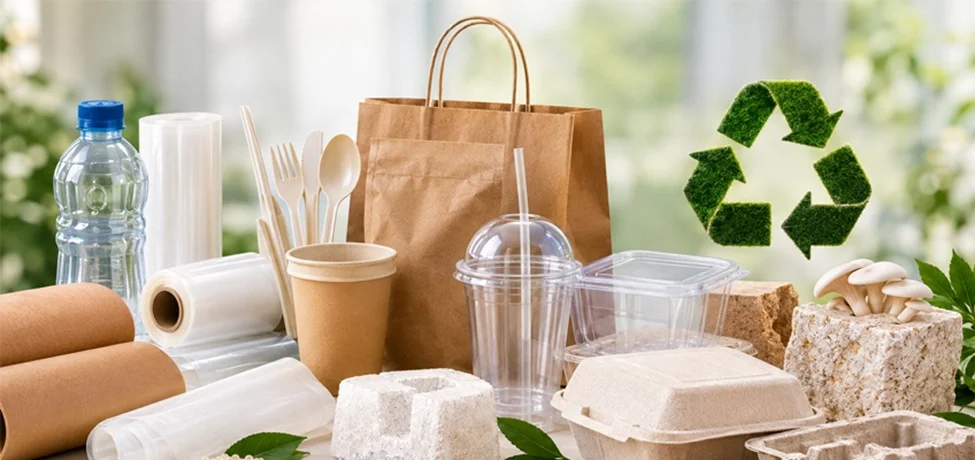
Quick answer: The best biodegradable and recyclable packaging materials for 2026 are PHA, starch-based bioplastics, mycelium, molded fiber, PLA, recycled PET (rPET), mono-material PE/PP, and kraft paperboard. The right pick depends on your product, your shipping conditions, and, most importantly, what happens to the pack after the customer is done with it.
If you've ever sat in a supplier meeting while someone threw "compostable," "biodegradable," and "recyclable" around as if they meant the same thing, this guide is for you. They don't. And choosing the wrong one can cost you money, contaminate recycling streams, or land you in a greenwashing headline.
Below is a practical sustainable packaging materials list built for manufacturers and brand owners, not just a glossy roundup. Let's start with the question everyone gets wrong.
Biodegradable vs Recyclable Packaging: What's Actually the Difference?
Recyclable packaging can be collected, sorted, and reprocessed into new material. It keeps value in the loop.
Biodegradable packaging breaks down through microbial action into water, CO₂, and biomass. But "biodegradable" on its own says nothing about how fast or where. A material that breaks down in a hot industrial facility may sit untouched in a backyard bin.
Think of it this way: recycling is about reuse, biodegradation is about return to nature. Neither is automatically better. A lightweight recyclable pouch can beat a heavy "eco" pack on total footprint.
Biodegradable vs Compostable Packaging Materials
This is where businesses get tripped up.
- Biodegradable: Breaks down eventually, with no guaranteed timeframe or conditions.
- Compostable: Breaks down within a defined time under specific conditions (industrial or home composting) and leaves no toxic residue. Look for recognized certifications.
All compostable packaging is biodegradable. Not all biodegradable packaging is compostable. If you want a defensible claim on your label, aim for certified compostable, or choose a recyclable format and say so clearly.
How to Choose: 4 Questions Before You Shop
Before comparing materials, ask:
1. Where will it end up? Curbside recycling, industrial composting, or landfill?
2. What does the product need? Moisture barrier, impact protection, shelf life, heat resistance?
3. Does your region have the infrastructure? A compostable tray is pointless if nobody collects it.
4. What can you prove? Certifications and supplier documentation protect you.
Keep those in mind as we go through the list.
The Top 8 Materials for 2026
1. PHA (Polyhydroxyalkanoates)
PHA is the quiet star of the bioplastics world. It's produced by microorganisms fermenting plant oils or sugars, and, unlike many alternatives, it can biodegrade in soil, freshwater, and even marine environments.
PHA biodegradable plastic applications include:
- Food service items such as straws, cutlery, and cups
- Flexible films and coatings for paper packaging
- Cosmetic and personal care containers
- Agricultural films
Watch out for: Higher cost than conventional plastics and limited production capacity, though both are improving as more suppliers scale up.
Best for: Brands that want genuine biodegradability, including in uncontrolled environments.
2. Starch-Based Biodegradable Plastic
Starch-based biodegradable plastic is made from corn, potato, cassava, or tapioca. It's often blended with other biopolymers to improve strength and moisture resistance.
You'll see it in loose-fill packaging peanuts, shopping and produce bags, and flexible films.
Pros: Affordable, widely available, renewable feedstock.
Cons: Sensitive to moisture and heat, so it's not ideal for long shelf-life or wet products.
Best for: Short-life, dry-goods packaging and cost-sensitive runs.
3. Mycelium Packaging
Mycelium, the root structure of fungi, is grown around agricultural waste like hemp or corn husks, then dried into a rigid, lightweight form. Mycelium packaging for protective use is a legitimate replacement for expanded polystyrene foam.
It's strong enough to cushion electronics, glassware, furniture corners, and wine bottles, and it's home-compostable at end of life.
Pros: Excellent cushioning, plastic-free, compostable.
Cons: Growth time (days) means longer lead times, and scale is still limited versus foam.
Best for: Premium products where protective packaging is part of the brand story.
4. Molded Fiber (Bagasse, Bamboo, Recycled Paper Pulp)
Molded fiber is made from sugarcane waste (bagasse), bamboo, or recycled paper pulp, formed into trays, clamshells, and inserts.
It's one of the most practical eco-friendly packaging materials for business right now: sturdy, microwave-safe in many forms, and both recyclable (when uncoated) and compostable.
Watch out for: Some molded fiber uses PFAS-based grease coatings. Always ask your supplier for PFAS-free documentation.
Best for: Food packaging, electronics inserts, and retail trays.
5. PLA (Polylactic Acid)
PLA comes from fermented plant sugars and looks and feels like conventional clear plastic. It's common in cold cups, clear containers, and films.
The catch: PLA typically needs industrial composting to break down, and it can contaminate PET recycling if it ends up in the wrong bin. Great material, but only if your customers can actually dispose of it properly.
Best for: Markets with strong industrial composting access and clear labeling.
6. Recycled PET (rPET)
rPET is PET reprocessed from post-consumer bottles and containers. It keeps the clarity and barrier properties people expect while cutting reliance on virgin plastic.
Pros: Established collection and recycling system, strong performance, food-grade options available.
Cons: Supply of food-grade rPET can be tight, and pricing swings with the market.
Best for: Bottles, clamshells, and rigid clear packs where the "recycled content" message matters.
7. Mono-Material PE and PP (Recyclable Plastics)
Multi-layer films are the villain of recycling. Switching to mono-material structures, where the whole pack is polyethylene (PE) or polypropylene (PP), makes packaging far easier to recycle without sacrificing much performance.
This also matters beyond consumer goods. Recyclable plastics in the automotive industry are gaining ground: PP is widely used in bumpers, interior trims, and battery housings, and manufacturers are designing parts for easier disassembly and material recovery. The same logic applies to automotive packaging, such as returnable PP totes, PE protective films, and component trays.
Best for: Manufacturers who want recyclability without changing their supply chain dramatically.
8. Kraft Paperboard and Corrugated Cardboard
Old, reliable, and still hard to beat. Paper-based packaging has some of the highest recycling rates and the most mature collection systems. Choose FSC-certified or high-recycled-content options, and minimize plastic windows and laminates.
Best for: Shipping cartons, secondary packaging, and retail boxes.
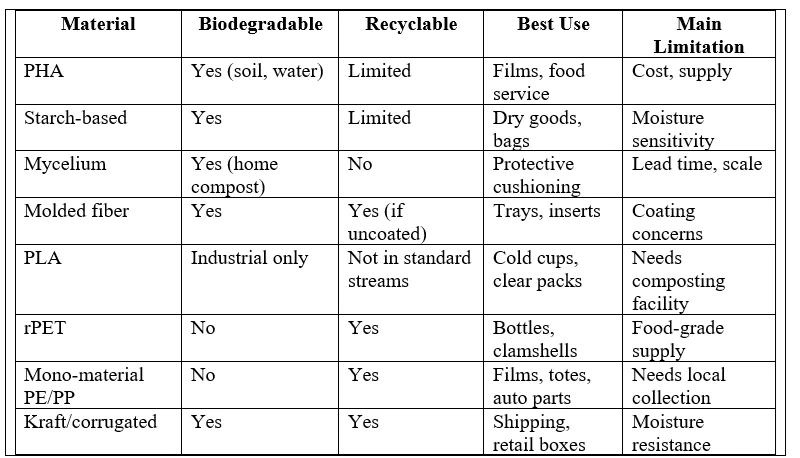
Quick Comparison Table
Building a Sustainable Materials Procurement Strategy
Choosing the material is the easy part. Buying it well is where most programs stall. A solid sustainable materials procurement strategy looks like this:
1. Audit your current packaging. Know weights, materials, volumes, and costs per SKU.
2. Set measurable targets. Recycled content percentage, plastic reduction, or compostability goals.
3. Pilot before you commit. Run small batches and test for shelf life, drop performance, and line speed.
4. Qualify multiple suppliers. Avoid single-source risk, especially with newer materials.
5. Demand documentation. Certificates, test reports, and chain-of-custody records.
6. Review annually. Regulations and materials are moving fast.
What to Look for in Biodegradable Packaging Suppliers for Manufacturers
When vetting biodegradable packaging suppliers for manufacturers, ask:
- Which third-party certifications do your products hold, and can I see them?
- What are your minimum order quantities and lead times?
- Can you scale if my volume doubles?
- Do you provide technical data sheets and end-of-life guidance?
- Can you share references from companies in my industry?
For recyclable packaging materials for manufacturers, add one more: "Is this compatible with the recycling infrastructure in the markets I sell into?" A pack that's recyclable in theory but not in practice isn't really recyclable.
Common Mistakes to Avoid
- Using vague claims. "Eco-friendly" without proof invites scrutiny. Be specific.
- Ignoring the disposal reality. Compostable packaging in a landfill-only market helps nobody.
- Choosing on price alone. The cheapest option often costs more in returns, damage, or reputation.
- Skipping testing. A material that fails in transit isn't sustainable; it's waste.
Frequently Asked Questions
What is the most sustainable packaging material?
There's no single winner. The most sustainable option is the one that protects your product with the least material and has a realistic end-of-life route in your market.
Is biodegradable packaging better than recyclable packaging?
Not necessarily. Recyclable packaging keeps materials in circulation, while biodegradable packaging suits items likely to be contaminated by food or unlikely to be collected. Match the choice to the use case.
Can compostable packaging go in the recycling bin?
Usually, no. Compostable plastics can contaminate recycling streams. Follow the disposal instructions on the pack.
Which packaging material is best for protective shipping?
Mycelium and molded fiber are strong plant-based alternatives to foam, while corrugated cardboard remains the most widely recyclable option.
Are bioplastics always plant-based? Not always. "Bio-based" describes the source; "biodegradable" describes the end-of-life behavior. A material can be one, both, or neither.
Final Thoughts
The best biodegradable and recyclable packaging materials in 2026 aren't the trendiest, they're the ones that fit your product, your customers, and your local waste infrastructure. Start with the end-of-life question, pilot a couple of options from this list, and lean on suppliers who can back their claims with paperwork.
Small, well-documented changes beat big, vague promises every time.
 Our Services
 Media Pack Download
 Newsletters
 Industrial Events