

Top 10 Packaging Trends for 2026–2027: Future Innovations Driving the Packaging Industry
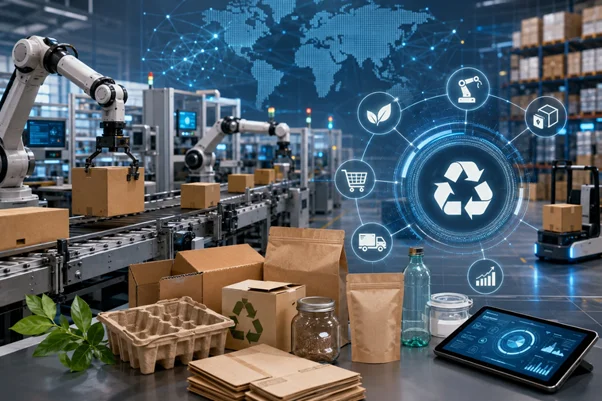
The packaging industry is standing at an inflection point. Rising raw material costs, tightening sustainability regulations, and a wave of automation are reshaping how products move from factory floor to consumer hands. For B2B buyers, manufacturers, and investors, understanding where the industry is headed isn't optional anymore — it's a competitive necessity.
This article breaks down the ten packaging trends set to define 2026–2027, along with the packaging market opportunities they create for businesses willing to adapt early.
Why Packaging Industry Insights Matter Right Now
Before diving into the trends, it's worth asking a simple question that most buyers are already searching for: why does packaging strategy matter more now than it did five years ago?
The short answer: cost pressure, regulation, and customer expectations have converged. Brand owners want packaging that protects margins, meets compliance requirements, and still looks good on a shelf or in an unboxing video. That convergence is exactly what's fueling the packaging business growth we're seeing across converters, machinery manufacturers, and material suppliers alike.
With that context, here are the ten trends worth watching.
1. Sustainable Packaging Trends Move From "Nice to Have" to Mandatory
Sustainability is no longer a marketing checkbox — it's a procurement requirement. Extended Producer Responsibility (EPR) laws are expanding across the EU, parts of Asia, and several U.S. states, pushing brand owners to demand recyclable, compostable, or mono-material packaging from their suppliers.
For B2B packaging trends specifically, this means converters and material producers need to invest in recyclable substrates, reduce virgin plastic content, and offer verifiable lifecycle data. Companies that can prove compliance — not just claim it — will win contracts. Expect certification and third-party verification to become a standard line item in RFPs by 2027.
2. Packaging Automation Solutions Become the Default, Not the Exception
Labor shortages and rising wage costs have pushed automation from a "future investment" to a near-term necessity. Robotic case packing, automated palletizing, and vision-guided quality inspection are increasingly standard on new production lines.
What's changing for 2026–2027 is accessibility. Modular, retrofit-friendly packaging automation solutions now let mid-sized manufacturers automate specific stages — like case erecting or labeling — without a full line overhaul. This democratization of automation is one of the clearest signs of packaging technology adoption accelerating across company sizes, not just among large enterprises.
3. Industrial Packaging Automation Gets Smarter with AI Integration
Beyond basic robotics, industrial packaging automation is increasingly layered with AI-driven quality control, predictive maintenance, and real-time line optimization. Sensors embedded in packaging machinery now flag micro-deviations — a slightly misaligned label, a seal running a fraction of a degree too cool — before they become costly recalls.
This shift matters for packaging machinery manufacturers too. Machine builders are being asked to deliver equipment with built-in data connectivity (often via IIoT platforms) so plant managers can monitor performance remotely and reduce unplanned downtime. Machinery that can't "talk" to a plant's central system is quickly becoming a harder sell.
4. Smart and Connected Packaging Expands Beyond Pharma
QR codes, NFC tags, and RFID-enabled packaging have existed for years in pharmaceuticals and luxury goods, but 2026–2027 will see this technology spread into food, beverage, and industrial B2B shipments. Connected packaging enables real-time supply chain tracking, authentication against counterfeiting, and direct consumer engagement through a simple phone scan.
For B2B buyers, the appeal isn't just marketing — it's traceability. Connected packaging gives supply chain teams visibility into temperature excursions, handling delays, and product authenticity, which is especially valuable for high-value or regulated goods.
5. Lightweighting and Material Efficiency as a Cost Lever
With freight and raw material costs still volatile, lightweighting — reducing the amount of material used per package without sacrificing protection — is back at the top of procurement priorities. Thinner films, optimized corrugate flute structures, and precision-engineered void-fill solutions are helping companies cut both material spend and shipping weight simultaneously.
This trend sits at the intersection of sustainability and cost control, which is exactly why it's gaining traction: it's one of the rare initiatives that satisfies both the sustainability team and the finance team at once.
6. Flexible Packaging Continues to Outpace Rigid Formats
Flexible packaging — pouches, sachets, and film-based formats — continues to grow faster than rigid packaging across food, personal care, and industrial applications. It uses less material, ships more efficiently, and increasingly comes in recyclable mono-material formats that satisfy sustainability mandates.
For manufacturers evaluating packaging investment trends, flexible packaging conversion lines represent one of the more reliable growth bets heading into 2027, particularly as recyclable flexible formats mature and gain broader municipal recycling acceptance.
7. Reusable and Returnable Packaging Systems Gain B2B Traction
While reusable packaging has long existed in industrial contexts (think pallets and crates), 2026–2027 is seeing expansion into reusable shipping containers, returnable totes, and closed-loop packaging systems for e-commerce and business-to-business logistics. Large retailers and logistics providers are piloting deposit-return and pooling models that reduce single-use packaging waste at scale.
This is a meaningful packaging market opportunity for companies that can design durable, trackable, and easily sanitized reusable systems — particularly as regulatory pressure on single-use packaging intensifies.
8. Digital Printing and On-Demand Customization Scale Up
Digital printing technology has matured to the point where short-run, customized packaging is now cost-competitive with traditional offset or flexographic printing for many applications. This enables brands to run regional promotions, personalized packaging, and rapid SKU changes without the lead times and setup costs of traditional printing.
For packaging machinery manufacturers, this shift is driving demand for hybrid digital-analog production lines that combine the speed of conventional printing with the flexibility of digital customization — a capability increasingly requested in equipment RFPs.
9. Packaging Investment Trends Shift Toward Circular Infrastructure
Investors and private equity firms are increasingly directing capital toward companies building circular packaging infrastructure — chemical and mechanical recycling facilities, compostable material innovators, and reverse logistics platforms. This isn't just ESG-driven; it reflects a genuine belief that regulatory tailwinds (like EPR fees) will make circular infrastructure profitable within the next few years.
Businesses looking to attract investment or partnership capital should note this shift: packaging investment trends increasingly favor companies with a credible circularity story backed by real infrastructure, not just recyclable claims on a label.
10. Data-Driven Packaging Innovation Strategy Becomes Standard Practice
Perhaps the most structural shift heading into 2027 is how packaging decisions get made. Rather than relying on trend intuition, leading companies are building a formal packaging innovation strategy grounded in consumer data, shelf-performance analytics, and supply chain simulation. This means testing packaging formats digitally before committing to tooling, and using real-time sales and returns data to refine pack design continuously.
Companies that formalize this process — rather than treating packaging innovation as an occasional project — are consistently outperforming competitors on both cost efficiency and speed to market.
What This Means for the Packaging Market Forecast 2027
Pulling these trends together, the packaging market forecast 2027 points toward an industry that is more automated, more circular, and more data-informed than at any point in the last decade. Growth won't be evenly distributed, though. Companies that treat sustainability, automation, and digital connectivity as isolated initiatives will likely fall behind competitors who integrate all three into a single, coherent strategy.
For packaging machinery manufacturers, material suppliers, and brand owners alike, the businesses that move early on packaging technology adoption — rather than waiting for regulation to force their hand — are the ones best positioned to capture the packaging market opportunities emerging over the next 18–24 months.
Frequently Asked Questions
What is the biggest packaging trend for 2026–2027?
Sustainable packaging, driven by expanding EPR regulations, is widely considered the most influential trend, closely followed by the rapid adoption of packaging automation solutions.
How is automation changing the packaging industry?
Industrial packaging automation is shifting from large-enterprise-only investments to modular, retrofit-friendly systems that mid-sized manufacturers can adopt in stages, often combined with AI-driven quality control.
Where are packaging investment trends heading?
Capital is increasingly flowing toward circular infrastructure — recycling facilities, compostable material innovation, and reverse logistics — rather than traditional single-use packaging production.
Is flexible packaging growing faster than rigid packaging?
Yes. Flexible packaging continues to outpace rigid formats due to lower material use, shipping efficiency, and growing recyclable mono-material options.
Final Thoughts
The next two years will separate packaging companies that are merely reacting to change from those actively shaping it. Whether the priority is sustainability compliance, automation ROI, or building a defensible packaging innovation strategy, the businesses that act on these packaging industry insights now will be the ones setting the pace — not chasing it — by 2027.
 Our Services
 Media Pack Download
 Newsletters
 Industrial Events