


Automation vs. Human Workforce: Finding the Right Balance In Packaging

An unprecedented speed defines the current packaging industry evolution which transforms the entire process of packaging and sealing products before customer delivery. Businesses experience significant improvements in efficiency together with cost efficiency and precision when they use new solutions for automated packaging. Human workforce play a vital role in packaging processes due to the complementary relation of technology and human expertise. What specific point will determine our decision? Companies need to identify the appropriate measure of automation versus human participation in their operations.
The Rise of Packaging Automation Solutions
Sales efficiency needs have accelerated AI-driven packaging system adoption thus speeding up production lines and advancing their accuracy capabilities. The systems examine data patterns to create optimal packaging layouts and cut down errors which leads to better productivity outcomes in packaging lines. Today's manufacturing sector incorporates robots in packaging operations to handle precise repeated tasks thus decreasing production losses and enhancing operational productivity.

The packaging industry operates under novel smart technologies which allow for time-sensitive packaging status monitoring combined with freshness sensors and protective seam detectors. Businesses must answer a fundamental query regarding the future of automation as technology progresses since human involvement maintains its relevance.
The Role of the Human Workforce in Packaging
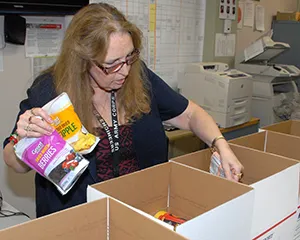
The quick development of AI-powered packaging lines has not removed the essential value of human operators in packaging fields. Human workers possess essential reasoning abilities and combination of adaptability with concrete solution skills which make them superior to automated systems. People remain essential to perform three vital packaging tasks involving product quality evaluation and specific customizations and individual product management.
The presence of trained manufacturing personnel leads to productive innovations. Employees detect areas which need improvement in operations to make fundamental changes before establishing seamless operation of automated systems. Our monitoring along with maintenance tasks and system problem-solving needs operators who possess human expertise despite automation. When it comes to employment of experienced workers, should organizations commit to full replacement or should they opt for a combination approach?
The Shift toward Industry 4.0 in Packaging
Manufacturing floors benefit from Industry 4.0 technology integration in packaging by becoming smarter with better connections and more efficient operations.
The continuous operation optimization provided by machine learning in packaging happens through AI algorithms that detect equipment malfunctions ahead of time and make process adjustments to boost maximum efficiency.
Labor market predictions emerge as the primary concern from this technological change. The shifting workforce patterns show that automated systems decrease some manual positions yet open positions for technical staff to control programmed systems for maximum performance. The modern industry needs to focus on employee upskilling instead of perceiving automation as an employment challenge so employees can collaborate with these advancements.
Collaborative Robots in Packaging: The Best of Both Worlds
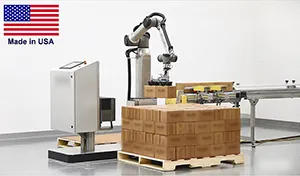
The disagreement regarding industrial robots is being resolved through the increasing use of collaborative robots in production packaging operations. The robotics system operates jointly with labor forces to boost efficiency alongside human operators although it does not completely remove manual work from the production process. Through automation tools workers receive help with repetitive dangerous work which lowers employee strain and creates improved safety standards and increased efficiency.
This method enables organizations to keep human judgment capabilities together with automated systems for managing high-speed production requirements. Packaging may adopt a hybrid system as its future operating approach.
Sustainable Automated Packaging: The Environmental Impact
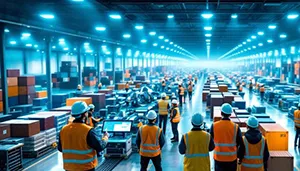
The discourse focuses on sustainability as a main element. The goal of sustainable automated packaging systems consists of multiple components which includes material waste reduction together with material optimization and emission footprint minimization. Through automation companies obtain both precise packaging procedures and exact cuts and seals which minimize waste levels. Manual packaging operations maintain their suitability in dealing with complex eco-friendly items that become challenging for machinery.
Another consideration stems from environmental concerns because businesses need to determine whether automated waste reduction systems outweigh human and technological coexistence for sustainable practices.
The Challenge of Balancing Automation and Human Involvement
The implementation of automation solutions in packaging requires businesses to choose the correct level of integration between machines and human operators because this represents both a technical and strategic issue. The use of AI-powered packaging lines with industrial robotics in packaging enhances operational efficiency but does not match human workers regarding creativity capabilities and adaptability.
An automated system creates less job opportunities in specific roles even though it establishes completely new job descriptions that require understanding robots as well as programming and systems maintenance skills. A gradual shift needs to be implemented using employee training to ensure staff members maintain their value in the transforming industry.
What Lies Ahead? The Future of Packaging Workforce Trends
The current industry demands require both automated systems and human workers to support business success in changing market conditions. The most effective method for packaging success brings together smart packaging technologies with AI-driven systems and machine learning capabilities and maintains human staff in essential areas.
Organizations establishing successful merging of packaging engineering with workforce capabilities will unlock enhanced line productivity and improved sustainability with superior worker engagement. Advanced packaging design seeks harmony between machines and humans rather than forcing an endless choice between them.
Starting with the current automation advancements can we expect a complete automatic system soon or human employees will absolutely remain integral? Business adaptation and innovation together with workforce redefinition of the packaging industry will shape its future labor market needs over forthcoming years.
 Our Services
 Media Pack Download
 Newsletters
 Industrial Events