Eco-Friendly and Safe: The Rise of Sustainable Food Packaging
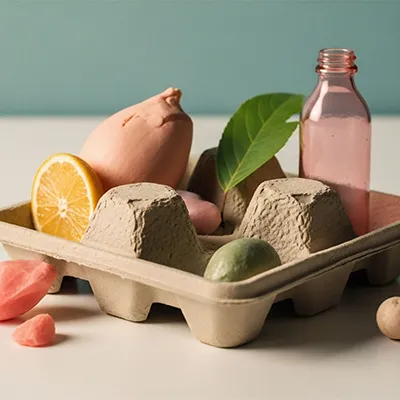
The food business is shifting to a stage where it is no longer a matter of choice whether to be environmentally aware or not. Sustainable food packaging design has become one of the pillars of the concept in this landscape, whereby companies strive to provide quality without causing excessive ecological damage. A shift to safe, functional, and waste-free packaging, and long-term sustainability is being stimulated by businesses, consumers, regulators, and innovators in technology. This increased demand has shifted the world's focus to eco-friendly food packaging materials that not only act as a protective covering of the food but also as the initiator of the change in the environment. This has led manufacturers, small cafes, large restaurants, and food delivery platforms to invest in packaging, which is not only biodegradable and renewable but also reusable and all plastic-free.
A New Era for Responsible Food Packaging
The previous assumption that sustainable solutions undermine the quality of the products has disappeared. Brands today are realizing that sustainable food packaging design can boost customer loyalty, help in meeting regulatory requirements, and as well as brand identity. Consumers are becoming more and more attracted to brands that provide biodegradable take-away food containers, compostable food packaging solutions, and reusable food storage packaging when they perceive the demonstrable waste reductions.
This change is being brought about by the awareness of plastic pollution. The annual numbers of plastic packaging continuously rest in the landfills and oceans in millions of tonnes, which calls to seek an alternative. Companies that use biodegradable food wrappings to package their food to restaurants are now seen as progressive leaders who are ready to invest in the long run environmental welfare. The change is as well in line with international sustainability targets thus making it a strategic step that catalyzes brand equity and customer confidence.
Material Innovations: From Bagasse to Glass
The eco-friendly food packaging materials have created a revolution in the food manufacturing and food retail industries. The bagasse sugarcane fibre, which is eco-friendly food packaging materials, has great potential because it is strong, heat resistant, compostable, and sourced sustainably. Agricultural waste is converted to useful packaging as bagasse, a byproduct of the sugarcane process. Biodegradable takeaway food containers made out of this material have become a common practice in restaurant locations due to their strength despite using greasy or hot food.
Innovations in plant-based polymers, mushroom fibre, cornstarch, and bagasse are in hot pursuit of innovations. All of them can help introduce compostable food packaging solutions because they could decompose naturally at industrial or home composting facilities. This change has also promoted using compostable take away containers by small cafes to facilitate eco-assistance even when small cafes have a tight budget constraint. These solutions are durable and have no environmental guilt as compared to plastic.
Whereas the single-use market incurs biodegradable and compostable solutions, the long-term storage requires reusable solutions. That is where reusable glass food storage containers to the environmentally conscious users have become very popular. Glass is preferred due to its transparency, durability and lack of toxin properties allowing it to be used on many more occasions. Such reusable storage will be aligned with a mentality of a circular economy, which will lower the usage of single-use containers and enable responsible consumption.
Consumer Expectations and Retail Pressures
Buyers have become increasingly aware of their effect on the environment. They critically scrutinize the use of plastic-free food delivery solutions by businesses to the home and the compostability of the materials used. As e-commerce and food delivery grow more popular in every corner of the world, it has become necessary to make sure that brands are avoiding the use of plastics and using alternatives that are truly environmentally friendly.
The need to adopt the use of biodegradable food packaging in restaurants is a combination of consumer perception and regulatory pressure. Single-use plastics are being banned by governments across the world and obligatory rules regarding recycling and compostability are being enforced. There is therefore an opportunity and a compulsion to restaurants. It is the chance to stand out as sustainable brands; it is the responsibility to be able to comply with expectations to prevent fines.
Changing the Packaging Economy: Market Insights
There has been a high growth in global sustainable packaging market. The trend towards the use of environmentally friendly food wrapping resources, especially those based on renewable ones, is expected to increase manifold in the next ten years. This change is notable particularly in the foodservice industry where disposable packaging has long been the major source of waste.
The following is a simplified version of the market trends that have led to the emergence of sustainable food packaging design.
| Trend | Market Insight |
| Growth of biodegradable materials | Increased adoption of biodegradable takeaway food containers due to regulatory bans on plastic. |
| Consumer-driven change | Rising preference for plastic-free food packaging solutions for home delivery. |
| Technology integration | Development of advanced compostable coatings supporting compostable food packaging solutions. |
| Rise of reusable systems | Surging demand for reusable food storage packaging and reusable glass food storage containers for eco conscious users. |
| Café and restaurant sustainability | Small businesses adopting compostable takeaway containers for small cafes to meet eco-conscious trends. |
These observations demonstrate an ever-changing packaging ecosystem. Early adaptive companies will have high competitive advantages.
Why Compostable and Biodegradable Packaging Works
The strength of compostable food wrapping solutions and biodegradable takeaway food wrappings, as one of the most powerful benefits, is that they are biodegradable and can be broken down in a natural environment without residues. This feature decreases the pressure of the landfill and promotes the recycling of the waste. When compostable packaging is properly handled, it can be turned into compost that will enrich the agricultural systems with nutrients.
Hybrid materials like bagasse mixed with plant starch are being tried in industries to be more moisture resistant. The advancement of environment friendly food packaging materials bagasse sugarcane fibre shows how bagasse sugarcane waste could provide high technology packaging applications. These fibres form stiff structures that look physically like plastic and act in an entirely different manner when they are discarded.
The acceptance of compostable takeaway containers with small cafes has been accelerating especially in urban and semi-urban regions, as the local customers are increasingly seeking out environmentally conscious companies. The move towards compostability in the foodservice sector is thus more a social, than a technological movement.
The Rise of Reusability and the Circular Economy
Although biodegradable and compostable solutions minimize waste, the application of the true sustainability appears to be when the packaging lifecycle goes beyond a single use. This is where disposable food storage containers are not necessary. Firms, in particular, meal prep companies, and zero-waste grocery stores, are now encouraging reusable system use to reduce reliance on disposables.
The rise of the reusable glass food storage containers as a popular amongst the eco conscious user is indicative of the increasing popularity of the durable toxin free alternatives. Glass unlike plastic is able to resist leaching of chemicals and is stable to changes in temperature. Consumers are more than ready to spend their money on the glass solutions as they enhance long term usage, efficient cleaning and preservation of food.
This change perfectly follows the ideas of the circular economy, when products are made to last longer, minimizing the resources extraction and creation of waste. The integration of sustainable food packaging design into reusable systems when they are integrated by businesses also increases customer loyalty since it is an added value of ultimately being practical as well as being eco-friendly.
Home Delivery and the Push for Plastic-Free Systems
Millions of people nowadays have made home delivery their daily routine, which has generated a boom in one-use packaging. Plastic-free food packaging solutions as home delivery are now expected by customers, which highlights the importance of reconsidering the material options in the variety of products. Moulded fibre boxes, kraft paper insulated containers and bagasse bowls are some of the new innovations in the delivery system that is eco-friendly.
Trying to use biodegradable food packaging in restaurants is beneficial to restaurants, as it leads to lower waste disposal costs and brand image. Food aggregators and cloud kitchens also claim to experience higher customer satisfaction in case they make use of packaging that makes them feel responsible to the environment. It contributes to the growing shift of the restaurants to the environmentally friendly food packaging materials both in functionality and sustainability.
Prioritizing Safety, Durability and Environmental Impact
The changing food packaging world takes safety seriously. The food packaging materials which are environmentally friendly can be made of plant-based or fibre-based sources, but they must be food grade. This is in terms of opposition to oil, dampness, heat, and microbial pollution. The materials made of bagasse, bamboo, and biopolymers are superior in the following aspects, thus being good alternatives in packaging hot, cold, and greasy foods.
Companies that are considering sustainable food packaging styles are currently considering the application of functional finishes that are made of natural materials, keeping food safe and on shelf without affecting neither compostability. The high durability standards of even compostable takeaway small cafes are now shown in high competition with plastic.
In the meantime, the sector is still at a point where it is between price and environmental effects. Biodegradable and compostable options may be a little more expensive than regular ones, but they have more advantages in the long term, taking into consideration the worth of the brand image and client retention.
Prospective Future: Future of Packaging
Sustainable packaging will only be more promising in the future due to improved technology. Seaweed-based films, edible coatings and smart biodegradable labels are some of the brands that are being pursued. These are created to complement the existing solutions of compostable food packaging and create additional waste streams reduction.
Digital tracking, QR codes and blockchain integration also enable businesses to validate their environmental claims and deliver transparency. This would encourage consumer trust particularly in the case of packaging that is sold as a sustainable food packaging design or a biodegradable takeaway food containers.
The packaging world will remain under the influence of government policies. The nations that are imposing tough restrictions on single-use plastics are developing the incentives that help promote quicker development of eco-friendly food packaging materials among manufacturers. It will probably add more compostable and reusable solutions to the industry.
Conclusion: A Future Built on Responsibility
Sustainable packaging is a trend that cannot be described as a mould due to its impermanence or rather it is a fad since it is determined by an international necessity. The need to design sustainable food packaging, environmentally friendly food packaging materials, biodegradable take-away food packaging, compostable food packaging, reusable food storage containers of eco conscious consumers, plastic-free food packaging, environmentally friendly restaurant packaging, plastic-free small cafes packaging, bagasse sugarcane fibre, glass reusable food storage containers, is a group effort to a cleaner world.
Companies, who adapt such innovations now, are brand future-proofing themselves tomorrow. They are not just cutting waste; they are redesigning the responsible food packaging the way it is supposed to appear in the responsible society. With technology, material science, design innovation and consumer awareness, the food packaging industry is headed to a future whereby sustainability is the order of things and safety is ensured.
 Our Services
 Media Pack Download
 Newsletters
 Industrial Events