
High-Performance Flexible Packaging: Barrier Films and Advanced Materials for Extended Shelf Life
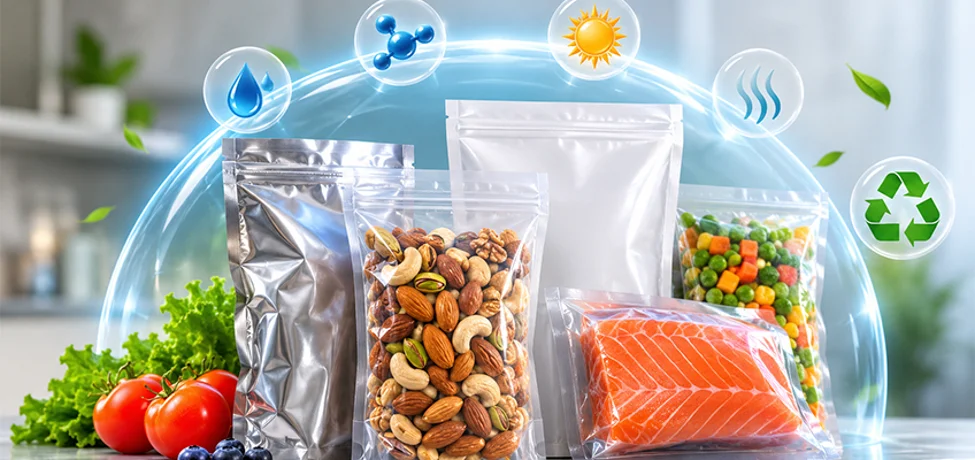
High-performance flexible packaging plays a vital role in protecting products from external factors that cause spoilage. Barrier films are designed to limit the movement of oxygen, moisture, light, and odors, helping products stay fresh and safe for longer periods.
These materials are widely used across the food, pharmaceutical, and consumer goods industries, where product quality and shelf life are critical. As demand for longer-lasting, lightweight, and cost-effective packaging grows, barrier films have become an important focus area for manufacturers and brands alike.
What Is High Barrier Flexible Packaging?
High barrier flexible packaging is a pouch, wrap, lidding or sachet made from thin films engineered to block the passage of oxygen, water vapor, light, and sometimes aromas or mineral oils. “Flexible” means it is not rigid like glass, metal, or thick plastic. “High barrier” means it slows the transfer of gases and moisture to very low levels.
The numbers matter here. Barrier performance is measured as oxygen transmission rate (OTR) and water vapor transmission rate (WVTR). A standard polyethylene film can let through thousands of units of oxygen. A well-designed high barrier structure can bring that down to a fraction of one. That gap is the difference between a product that goes stale in weeks and one that stays fresh for a year.
How Barrier Films Extend Shelf Life
If you’re asking how barrier films extend shelf life, the short answer is that they slow down the chemical and physical reactions that spoil products.
Food and pharmaceuticals degrade mainly through four routes:
- Oxidation: Oxygen turns fats rancid, fades colors, and destroys vitamins.
- Moisture gain or loss: Crackers go soft, powders clump, and fresh produce dries out.
- Light exposure: UV and visible light break down nutrients and pigments, especially in dairy and oils.
- Aroma loss or contamination: Flavors escape, or outside odors seep in.
A barrier film places a controlled wall between the product and each of these threats. Less oxygen means slower oxidation. Less moisture movement means texture stays stable. Combine that with modified atmosphere packaging (flushing the pack with nitrogen or carbon dioxide) and the shelf life can multiply.
This is why barrier films for extended shelf life are not a luxury feature. They directly reduce food waste, returns and recalls. With the world still wasting roughly a third of the food it produces, packaging that buys extra days or weeks has real environmental value, often outweighing the footprint of the packaging itself.
The Layers Behind the Performance
No single plastic does everything. High barrier packaging films are almost always multilayer structures, with each layer assigned a job.
The outer layer gives print quality, stiffness and heat resistance. Think PET or oriented polypropylene.
The barrier layer is the star. This is where the protection actually happens.
The sealing layer on the inside melts at a controlled temperature to form a leak-proof seal, usually polyethylene or polypropylene.
Tie layers and adhesives hold the structure together so it doesn’t delaminate under heat or flex.
The barrier layer is where most of the innovation is happening, so it deserves a closer look.
Advanced Barrier Materials: What’s Doing the Heavy Lifting
Advanced barrier materials packaging draws on several technologies, each with trade-offs.
EVOH (ethylene vinyl alcohol) is a workhorse among oxygen barrier films. It is excellent against oxygen in dry conditions, but it loses performance when humidity is high, so it is typically sandwiched between moisture-resistant polyolefin layers.
PVDC (polyvinylidene chloride) offers strong all-round barrier properties against both oxygen and moisture. Its chlorine content, however, makes recycling difficult, and many brands are moving away from it.
Aluminum foil is the gold standard for total barrier, blocking light, oxygen and moisture almost completely. The downside is that it is opaque and hard to recycle in a laminate.
Metallized films have a micro-thin layer of aluminum deposited under vacuum. They offer a good balance of barrier and cost, and they give snack packs that familiar shiny look.
Polyamide (nylon) adds puncture resistance and a decent oxygen barrier, which suits meat, cheese and vacuum packs.
Oxide-coated films (SiOx and AlOx) are where things get interesting. A glass-like coating only nanometers thick is deposited onto a PET or polypropylene base. These coatings deliver strong barrier performance while staying clear, which brings us to transparency.
Transparent High Barrier Films: Seeing Is Selling
Shoppers trust what they can see. Fresh pasta, nuts, ready meals and medical devices all benefit from windows that show the product. Historically, though, high barrier meant foil or metallization, and both are opaque.
Transparent high barrier films changed that. Coatings such as SiOx and AlOx, along with high-performance EVOH and PVOH (polyvinyl alcohol) coatings, now offer moisture barrier packaging films and oxygen protection without hiding the product. They are also microwave-friendly, since there is no metal to cause arcing, and they are easier for metal detectors on production lines to work around.
For brands, clarity is more than aesthetics. It builds confidence at the shelf and supports premium positioning, all while protecting the product inside.
The Big Shift: Recyclable High Barrier Films
Here is the challenge the industry is wrestling with right now. Traditional high barrier pouches are laminates of different plastics, sometimes with foil. They work brilliantly, but recycling streams cannot separate the layers, so most of this packaging ends up in landfill or incineration.
At the same time, regulation and consumer pressure are rising. Extended producer responsibility (EPR) schemes are expanding, and large brands have made public pledges to make their packaging recyclable or reusable. The result is a race to develop recyclable high barrier films that do not sacrifice protection.
Mono-Material Barrier Packaging
The leading answer is mono-material barrier packaging: structures built almost entirely from a single polymer family, most commonly polyethylene (PE) or polypropylene (PP). Because the whole pouch is one type of plastic, it can be collected and recycled in existing streams.
The engineering difficulty is real. Polyethylene and polypropylene are naturally poor oxygen barriers compared with EVOH or foil. To close the gap, developers are using:
- Thin, recycling-compatible EVOH layers, kept small enough to stay within recycling limits
- Transparent barrier coatings applied to PE or PP films
- Metallized or oxide-coated polyolefin films
- Orientation techniques that improve the film’s natural barrier properties
- Water-based and bio-based barrier coatings that avoid layers which interfere with recycling
Progress has been steady. PE-based stand-up pouches and PP-based snack packs with competitive barrier performance are now in commercial use. They are not yet perfect for every application. Very oxygen-sensitive products, such as some coffees, nutritional powders and long-life ready meals, still push the limits. But the gap is closing, and for many dry and moderately sensitive foods, mono-material is already a practical choice.
A caution worth stating plainly: “recyclable” depends on infrastructure. A pouch may be recyclable by design but only recycled where collection and sorting exist. Brands that communicate honestly about this earn more trust than those that overclaim.
Choosing the Right Barrier: A Practical View
There is no universal best film. The right choice depends on what you are protecting and how it travels.
Know your product’s weakness. Is it oxygen-sensitive (nuts, coffee, oils), moisture-sensitive (crackers, powders, tablets), or light-sensitive (dairy, supplements)? Match the barrier to the threat rather than over-specifying.
Consider the shelf-life target and supply chain. A product sold locally in three weeks needs less protection than one shipped across continents and stored for a year.
Check processing conditions. Retort sterilization, hot fill, freezing and microwave heating each place different demands on a film.
Weigh sustainability early. Redesigning for recyclability late in development is expensive. Starting with a mono-material goal often leads to smarter, lighter structures.
Test, don’t assume. Real-world shelf-life trials, along with OTR and WVTR measurements under actual temperature and humidity, matter more than datasheet numbers.
Where This Technology Is Headed
Several trends are shaping the next few years of extended shelf life packaging.
Thinner, smarter structures are cutting material use while holding barrier performance, reducing both cost and carbon footprint.
Bio-based and compostable barriers are emerging, though performance and end-of-life infrastructure are still being proven.
Active and intelligent packaging, including oxygen scavengers and freshness indicators, is moving from niche to mainstream, giving packs the ability to react to their environment or report on it.
Chemical and advanced recycling may eventually handle multilayer waste that mechanical recycling cannot, though it is not a substitute for good design today.
Better barrier coatings, including nanocomposite and plasma-deposited layers, promise high protection at a fraction of today’s thickness.
Frequently Asked Questions
What is the best material for a high barrier packaging film?
It depends on the application. EVOH and PVDC give strong oxygen barriers, foil offers near-total protection, and oxide-coated films combine barrier performance with transparency. For recyclability, PE or PP structures with thin barrier layers are increasingly preferred.
Can high barrier packaging be recyclable?
Yes, increasingly so. Mono-material designs using polyethylene or polypropylene with compatible barrier technologies make recyclable high barrier films possible, though collection and sorting infrastructure varies by region.
What is the difference between oxygen barrier and moisture barrier films?
Oxygen barrier films limit the passage of oxygen to prevent oxidation and spoilage. Moisture barrier packaging films limit water vapor transfer to keep products dry or hydrated. Many high barrier structures combine both.
Do barrier films make food safer?
They protect quality and slow spoilage, but they do not replace proper food processing, hygiene and temperature control. They are one part of a safety and freshness system.
The Bottom Line
High-performance flexible packaging is one of those technologies most people never notice, which is exactly the point. When it works, the chips stay crunchy, the coffee smells like coffee, and the medicine stays potent, all inside a pouch that weighs a few grams.
The industry’s real test now is doing all of that while becoming genuinely recyclable. Mono-material barrier packaging, transparent coatings, and smarter layer design show that protection and sustainability do not have to be opposing goals. For brands, the winners will be those who treat barrier selection as a strategic decision rather than a line item, matching the film to the product, the supply chain, and the planet.
 Our Services
 Media Pack Download
 Newsletters
 Industrial Events