Minimalist Packaging Redesigns: Combining Style with Sustainability
Simplicity is the art of branding. In the era of clutter, a brand finds its respect in keeping value to the minimum. Packaging which once was a riot of dramatic graphics, snappy slogans and massy material is experiencing a much muted revolution. Minimalist packaging design is one of the results of this change, and it focuses more on simplicity, ecologically friendly products, and a sparse appearance that says more than fancy ever could. What is this minimalist packaging and why are more companies investing in it as they attempt to be eco-conscious and promote branding?
We are going to take a closer look at the universe of sustainable minimalistic packaging, decode its strategic, visual, and strategic value, as well as environmental and customer-centric opportunities - with a closer inspection of the key 2025 packaging trends that are about to roll out.
What is Minimalist Packaging? The Beauty of Less
It is important to first define the meaning of minimalist packaging before delving into the benefits of the same and its execution. Principally, minimalist packaging reduces a product to the bare essentials, that is, it eliminates all non-functional material and design components. It reflects the idea of less is more, it has little color schemes, clear font usage, simple logo and in many cases recyclable materials or biodegradable materials.
Yet, minimalism in packaging design is not only the elimination of the visual clutter, but it is the creation of significant silence. It encourages consumers to look at the core value of the product instead of paying attention to some gimmicks of design.
It would not matter whether you are FMCG or a luxury cosmetics startup, the question is not so much can you afford to go minimalist, but can you afford not to?
The Rise of Sustainable Minimalist Packaging
What is driving the change in packaging to being sustainable minimalist? To begin with, contemporary consumers are calling upon increased accountability and transparency to brands which they patronize. This involves environmental stewardship. Packaging that is overdone and in most cases is done using plastics and laminates is being substituted by paperboard, kraft paper and plant based materials. This recyclability and biodegradable are also supported by reducing inks and coatings.
Businesses are starting to understand that minimalist packaging design can reduce their carbon footprint and the costs of production to unheard areas, all the time, still making their brand attractive (or even more attractive).
Indeed, the mix of minimalism and sustainability may become one of the touching packaging trends 2025, when fine packaging would coincide with eco-friendly activity. Awareness amongst brands is realizing that sustainability does not have to compromise on fashion.
Successful Minimalist Packaging Redesigns
A number of the most memorable packaging redesigns have been reneging on design. You may think of Apple, which has been referred to many times as an illustration of minimalist packaging. Their sleek, white boxes with very little text have come to be the symbol of sophistication. Not only did the redesign win a visual award, it was a breakthrough in facilities where materials per unit were minimized by a large margin.
A similar case can be made concerning Dove which shifted its packaging towards basic curvy white bottles with light pastel touches. This single change in the design minimized the use of plastic and enabled the brand to fit in with the environmentally friendly shoppers without giving out the impression of a lesser value.
Such successful simplification of packaging redesigns are more than surface level improvements, it is a strategic shift in favor of long-term brand equity and goodwill.
Benefits of Minimalist Packaging for the Environment
The advantage of minimalism to the environment is tough to oversee. The environment may have the following benefits of minimalist packaging:
| Environmental Impact | How Minimalist Packaging Helps |
| Waste Reduction | Uses fewer materials; encourages recycling |
| Lower Emissions | Lightweight packaging = reduced transportation fuel |
| Biodegradability | Often relies on compostable or recyclable substrates |
| A reduced amount of Pollution | Slight inks and finishes are easier to process |
As eco-friendly minimalist packaging becomes the new trend, brands will need to calculate and be able to show such benefits and the environment aspect of the brand story will be front and center.
How to Create Minimalist Packaging: The Design Philosophy
Then how do you go about minimalist packaging with a connection to the consumer without losing identity? Purging is not merely about removing things it is about doing this with an intent.
The primary phase in the real process is comprehending the fundamentals of the product's message. What should the consumer know the first thing he sees? Master out all the rest. This means the selection of a low-key color scheme, the exclusion of more than one or two typefaces, and the fact that each graphical element must have a definite purpose.
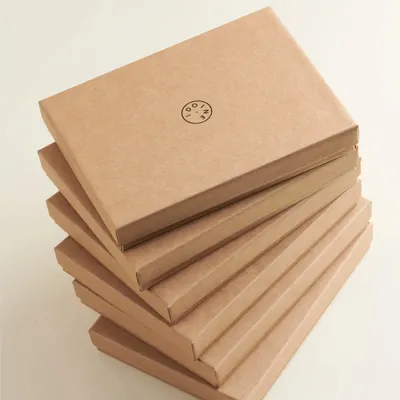
Then, pay attention to materials. Recyclable cardboard or kraft paper, biodegradable wraps are also sustainable features of minimalistic packaging. Do not use gloss coating, inserts of plastics and too much shrink-wraps.
A combination of intelligent visual hierarchy and design constraint is essential for creating elegant minimalist packaging.
Minimalist Packaging Examples to Inspire
Let’s look at some compelling minimalist packaging examples across various industries:
| Brand | Product | Minimalist Elements |
| Muji | Stationery & Household | No branding on packages, neutral colors, eco-materials |
| Aesop | Skincare | Uniform labels, amber glass bottles, minimal text |
| Package Free Shop | Lifestyle Products | Recyclable wrapping, zero branding, no plastic tape |
The mentioned brands have solved the riddle of minimalist packaging design and shown that it is possible to combine the exclusive aesthetic, functionality, and sustainability.
Packaging Trends 2025: The Minimalist Revolution Deepens
With the trends in packaging in 2025 on the horizon, we are likely to see a more widespread use of the concept of minimalism not just on the visuals, but on the structural design as well. This means:
- Foldable cartons based on the origami concept that save space and waste
- Recyclable ones, e.g. bamboo or recycled glass containers
- Modular product refill designs that reduce the need for full-package replacements
The packaging of the future is not only going to be beautiful; they will be intelligent, sustainable and modular as well. And at the depth of this change is the philosophy of sustainable minimalistic packaging.
Minimalist Packaging Tips for Brands
It is difficult to go through the redesigning process, particularly when using a minimalist approach.
To make the trip, the following are some of the useful minimalist packaging tips:
Begin with brand story. Distill it until quiet.
Use less number of fonts and colors. You should never go above 2-3 fonts and one accent color to be consistent.
The negative space should be used smartly.
Give special emphasis to the quality of finishing materials. Texture and material are enough to speak, instead of going overboard with graphics.
Include affectability signs. Value is added without clutter with certifications, recyclability labeling, and QR codes to green impact pages.
Knowing these simple tips of having a minimalist packaging, one can turn a brand into memorable and even ecologically-loyal.
How to Design Elegant Minimalist Packaging without Losing Brand Identity
A typical question when going minimalist is this: will our brand become swallowed in simplicity?
The solution is simple; we just require understanding on how to design classy minimalistic packaging so that our brand voice does not feel suppressed.
Begin by centering your art on a visual/manual mark-a texture, an exclusive texture, an extravagant typographic style. Apple has made the use of pure white boxes their hallmark. Similarly, inferiority can be avoided by use of tactile kraft paper and embossed logos to provide a premium feel without complicating it.
The most focused branding is present in the inexpensive box design rather than being anti-branding. And when it is done correctly it can be much more effective than some tricky packaging that clutters.
Market Insight: Why Consumers are Choosing Minimalism
Nowadays customers - millennials, and Gen Z in particular - care about authenticity, transparency, and responsibility. More than 70 percent of consumers of Gen Z assert that they like those brands that help to maintain environmental sustainability. The latter is satisfied by subtle packaging design.
Those are the things that the current eco-conscious consumer would find most attractive:
| Consumer Preference | How Minimalism Meets It |
| Transparency | Fewer design layers = more trust |
| Eco-Friendliness | Recyclable materials, less waste |
| Visual Appeal | Clean, elegant aesthetics |
| Functionality | Easy-to-open, less hassle |
These principles are directly linked to sustainable impact minimalist wrapping, and it is not the matter of design but rather a business step.
Conclusion: Where Style Meets Substance
When you have a saturated marketplace, the brands that are the loudest are no longer the brands that rise to top-- the clearest ones do. A minimalist style of packaging design enables a product to speak with some form of compact authority which to the consumer says: We value your time, we value what you value and we value your planet.
The shift to sustainable minimal packaging is no flash in the pan. The tendency to minimalism in packaging would probably turn out to be the norm as packaging trends 2025 are evolving. Any brands that adapted this soon will get the advantage of not only being aesthetically differentiated but also enjoy environmental favor.
Eliminating wasteful packaging is the goal of the transformation process, which includes learning how to create minimalist packaging, understanding successful minimalist packaging redesigns, and designing beautiful minimalist packaging.
At the end of the day, as soon as minimalism meets sustainability, it is not only the packaging but also the planet that wins.
 Our Services
 Media Pack Download
 Newsletters
 Industrial Events