

Sustainable Smart Food Packaging: Where Technology Meets Practical Sustainability
The packaging sector is in the midst of change. Historically, packaging development was mainly centered on assuring the safety of the product during storage and transit. If the food is not damaged or contaminated in any way, it is judged to be a successful packaging.
That's the expectation that has developed over the years.
Now-a-days, packaging is required to perform so much more than protection. Food companies are searching for solutions that will allow them to extend their shelf life, improve their traceability as well as reduce their waste and provide support in their sustainability goals. Consumers are growing ever more vigilant about brands of packaging. Today, many consumers are looking to purchase products that are recyclable and re-usable, and are more aware of plastic waste.
For all these, Smart Food Packaging is gaining importance in the field of food industry.
Meanwhile, there are demands from retailers, regulators and consumers for businesses to be more environmentally responsible with packaging. Additionally, consumers, retailers and regulators are demanding that companies become more environmentally responsible when it comes to packaging. This has sparked a demand for Sustainable Food Packaging Solutions that also do a job – whilst being sustainable.
The current trend is different in that technology and sustainability are planned for together, rather than in isolation.
Packaging Is Becoming More Functional
Packaging is no longer considered as a mere cover of the product. This is becoming more of a part of the broader value chain and the customer journey.
Food manufacturers are faced with a number of current issues, including:
- Product spoilage during transportation
- Pressure to reduce food waste
- Growing sustainability expectations
- Supply chain visibility issues
- Food safety concerns
- Demand for transparency from the consumer.
These difficulties have led many companies to invest in Intelligent Food Packaging Technology which can deliver improved monitoring and product tracking.
The purpose is not only to safeguard products, but also increase the efficiency of the supply chain.
The selection of sustainable materials is changing
Many packaging firms have been compelled to reconsider packaging materials due to environmental issues. To a great extent packaging now poses a large problem for consumers, particularly with regard to plastic waste.
The interest in the adoption of Eco-Friendly Smart Packaging solutions is still increasing.
The following materials are being used more often:
- Recyclable paper packaging
- Compostable films
- Plant-based plastics
- Fiber-based packaging materials
- Reusable containers
- Biodegradable food packaging
These materials have the potential to decrease reliance on traditional plastics, but must also be safe for food and durable.
Packaging must continue to protect from damage in the form of handling, oxygen, moisture and contamination while in transit. That's why companies are working to ensure that sustainability and product use are found to be a balance.
Active and Intelligent Packaging Is Expanding
The industry is also seeing increased use of Active and intelligent packaging systems.
Unlike traditional packaging, these systems are designed to either interact with products or provide information during storage and transportation.
Active Packaging
Active packaging can play a role in freshness, by modifying the internal conditions in the package.
Examples include:
- Oxygen absorbers
- Moisture regulators
- Antimicrobial coatings
- Ethylene absorbers for fresh produce
These technologies are normally used for products which require a long shelf life, such as dairy products, meat, seafood, and fresh fruits and vegetables.
Intelligent Packaging
The smart packaging is more about monitoring and communicating. Examples of this include:
- Freshness indicators
- Temperature-sensitive labels
- RFID tracking systems
- NFC-enabled packaging
- Sensor-based labels
These technologies can also play a role in other applications such as Food safety and traceability where it enables businesses to trace products from source to sink in the supply chain.
The Connected Packaging Market is on the rise!
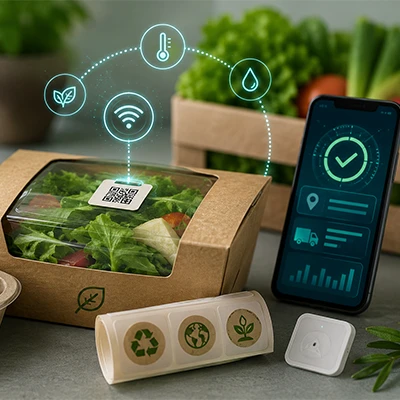
Technology companies also are going into packaging. One area that is being looked at is Connected Food Packaging Systems with IoT technology.
IoT is packaging can be used to track the environment in real time with the use of sensors.
These systems may track:
- Temperature
- Humidity
- Light exposure
- Product movement
- Gas levels inside packaging
This information enables businesses to detect the issues before the product is damaged or spoilt.
For instance, if the temperature of the frozen food products during transport fluctuates, the quality may be affected. The networked systems can alert the operators in real time when the conditions become unstable.
Cold-chain industries have special interest in connected packaging because the quality of the product is dependent on the storage conditions.
The importance of traceability is growing
The modern-day consumer wants a lot more information about the products. Questions about sourcing, the use of manufacturing practices and sustainability is becoming commonplace. This is why, Food traceability solutions are gaining significance in the industry.
Modern packaging may now include:
- QR codes
- NFC tags
- RFID labels
- Blockchain-supported tracking systems
These technologies allow companies to share information such as:
- Product origin
- Ingredient sourcing
- Production details
- Transportation records
- Sustainability certifications
This information may be easily accessible to consumers over a cell phone.
Traceability systems also help during a recall as the affected products can be identified sooner.
Freshness Monitoring is helping to curb food waste
Global food waste is still a significant challenge in the food supply chain. Too much food waste is thrown away because stores and consumers are not sure of product's freshness.
This is where Freshness monitoring packaging is becoming useful.
Traditional expiration dates are calculated on a “best before” basis, but actual storage conditions can differ.
Smart packaging systems can offer more precise freshness data in accordance with the true environmental conditions.
Some systems monitor:
- Temperature fluctuations
- Moisture levels
- Gas release
- pH changes
- Microbial activity
There are several Smart freshness indicators based on colour change from visible to indicate freshness or early signs of spoilage.
Can help to minimize excess waste and increase consumer confidence.
QR Codes, NFC, and Sensors Are Becoming Common
QR codes, NFC technology, sensors are becoming the trend due to their practical and economical use.
QR Codes
Brands use QR codes to share:
- Product information
- Ingredient details
- Recycling guidance
- Sustainability claims
- Promotional content
NFC Technology
NFC-enabled packaging is commonly used for:
- Product authentication
- Anti-counterfeit protection
- Supply chain visibility
- Interactive customer engagement
This is especially useful for premium products where authenticity matters.
Sensors
Sensors help monitor:
- Freshness conditions
- Humidity exposure
- Temperature changes
- Leakage
- Product tampering
These tools enhance the quality control and minimize spoilage.
The biodegradable packaging market continues to expand
In the recent years, efforts have been made to overcome the use of non-biodegradable plastics and demand for biodegradable packaging materials has increased.
Renewable materials are used to make many biodegradable materials including:
- Corn starch
- Sugarcane fibers
- Cellulose
- Bamboo
- Seaweed extracts
The materials used are environmentally friendly and can be naturally decomposed in the right environment, reducing the environmental impact.
Meanwhile, there are technical challenges associated with incorporating biodegradable materials along with smart technologies. Recycling/composting might be more complicated with labels and sensors on electronic products.
Challenges Still Remain
Smart sustainable packaging is evolving – but sometimes not easy to implement. The following are some typical challenges:
- Higher production costs
- Recycling complications involving electronic components
- Dependence on digital infrastructure
- Limited consumer awareness
- Different regulations across regions
However, companies have not given up on the investment in more intelligent packaging systems.
Looking Ahead
Expect more intelligent packaging solutions that are even more sustainable in the near future.
Several developments have been observed that are gaining interest include:
- AI-based freshness prediction
- Compostable smart labels
- Flexible electronics
- Blockchain traceability systems
- Digital product passports
With these technologies becoming more accessible and scalable, it is thought that adoption will reach higher levels in the future.
Conclusion
Food packaging is not just the preservation while in transit and during storage. It is being incorporated in various approaches that encompass freshness, sustainability, traceability, and consumer communication.
Smart Food Packaging is aiding in better product monitoring and waste reduction, and Sustainable Food Packaging Solutions are assisting in the reduction of environmental impact.
The industry is progressing towards packaging systems that integrate technology with sustainability, from Connected Food Packaging Systems and Food traceability solutions to Smart freshness indicators and Biodegradable food packaging.
 Our Services
 Media Pack Download
 Newsletters
 Industrial Events