


The Ultimate Guide to Compostable Packaging: Benefits, Materials & Trends
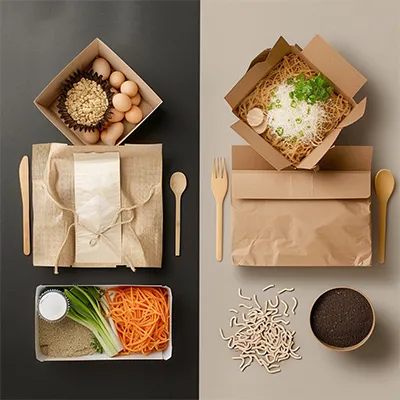
The packaging industry in recent years has gone through a crossroad where the environment is taken into consideration as much as functionality and cost. Food, retail and consumer goods businesses are now reconsidering the effects of their packaging decisions on both brand image and sustainability. Such a solution as compostable packaging is among the most important innovations as they help to protect products as well as reduce ecological footprints.
This is a detailed guide on what is the advantage of using compostable packaging, what the most common compostable packaging materials are, what the new trends of compostable packaging are, and what its use is in areas like compostable food packaging and Compostable Stand Up Pouches. These aspects may be of great importance to manufacturers, retailers and environmentally friendly consumers to keep up with the fast changing market.
Why Compostable Packaging Matters Today
The packaging business across the world is heavily scrutinized with respect to plastic pollution and carbon emission. The conventional plastic packaging, though strong and inexpensive, remains in the landfills hundreds of years where it releases toxic substances into the soil and water. It is against this backdrop that compostable packaging is the alternative changer of the game.
The compostable packaging material as opposed to conventional plastics is constructed to break down into non-toxic natural elements when exposed to industrial or home composting conditions. Compostable packaging is not only beneficial in terms of environmental factors, but also in terms of consumer perception, compliance with the regulations, and cost-saving in the long run. With the increasing numbers of countries following the ban on single-use plastics, businesses that will follow the trend of compostable packaging earlier will have a competitive advantage.
| Also Read: How Compostable Food Packaging Is Transforming the Food Industry |
The Benefits of Compostable Packaging
Discussing the advantages of compostable packaging, one must look further than the apparent environmentally friendly mark. The companies who have embraced this innovation are not only cutting down on waste, but also developing a powerful brand personality which is founded on sustainability.
To begin with, the advantage of less dependence on landfills is one of the largest advantages of compostable packaging. Plant-based materials like corn starch, sugarcane or cellulose naturally back into the soil as compost with a rich supply of nutrients. This cyclic life cycle is very much connected to the present-day environmentally conscious customers.
Secondly, compostable food packaging, deals with important issues of food safety and health. Compostable packaging materials do not contain any harmful chemicals unlike the petroleum-based plastics, which can leech toxic substances into food, and thus, they are safer to the consumers.
Differentiation of the market is another distinct benefit. Companies that implement the Compostable Stand Up Pouches or follow more extensive trends of compostable packaging become the leaders of sustainability. This can be a huge market share increase in industries such as food and beverages where the consumer loyalty is always dependent on trust.
Lastly, governments and other regulatory authorities are becoming more accommodating to compostable solutions across the world. Compostable packaging will be even more beneficial as they will receive subsidies, tax advantages and adherence to green policies ensuring that companies receive both financial and reputational rewards.
| Also Read: Compostable Packaging Materials: Types, Benefits, and How to Choose the Best One |
Understanding Compostable Packaging Materials
The use and efficacy of compostable packaging will highly rely on the materials used. The modern-day compostable packaging solutions are varied, and each of them has certain benefits in terms of durability, flexibility, and compostability.
One of the most common compostable packaging materials is Polylactic Acid (PLA) created out of fermented corn starch. It is light, clear and is applicable in use as compostable food packaging containers and films. Polyhydroxyalkanoates (PHA) is also a material that is widely used; it is made by fermenting plant-based oils through microbes. PHA can be applied especially on things that need durability such as Compostable Stand Up Pouches.
Materials made of cellulose are also very crucial in the market. These compostable packaging materials are made out of wood pulp and are therefore biodegradable, flexible and moisture-resistant hence ideal in wrapping and labeling. Likewise, it is expected that bagasse, a sugarcane by-product, is becoming a popular choice of disposable tableware and compostable food wrappings.
In order to compare some of the most popular compostable packaging materials, the following table is to be considered:
| Material | Source | Application | Compostability |
| PLA | Corn starch | Films, containers | Industrial composting |
| PHA | Plant oils | Pouches, cutlery | Home & industrial |
| Cellulose | Wood pulp | Wraps, labels | Home composting |
| Bagasse | Sugarcane waste | Plates, bowls, boxes | Home composting |
Such variety of compostable packaging materials means that companies can find solutions that match their product requirements and at the same time be sustainable.
Compostable Food Packaging: Driving Consumer Trust
Compostable food packaging has been the most momentum-based application among the rest. One of the biggest sources of small-lots of plastic waste is the food industry where a number of millions of tons of food waste end up in landfills and oceanic areas every year. Compostable food packaging is not only used to address the existing issue but it also satisfies the increasing consumer needs of safe and sustainable food packaging.
Cutlery, plates and Compostable Stand Up Pouches are increasingly being introduced in restaurants, cafes and packaged food brands to show their concern towards the environment. Indeed, research has shown that consumers will be more inclined to trust and stay loyal to such brands that adopt trends of using compostable packaging.
Also, food packaging that is compostable boosts the farm-to-table story due to the correlation of food products with environmental friendliness. Packaged in compostable packaging substances, fresh produce gives a further twist to the sustainability message that goes beyond the farm to all points of interaction with the consumer experience.
Compostable Stand Up Pouches: Redefining Convenience and Sustainability
The concept of packaging innovation has never ceased being a matter of conveniences verses functionality. Design and sustainability can live together and the development of the Compostable Stand Up Pouches demonstrates how to live together.
The Compostable Stand Up Pouches have been of great importance in snack, coffee, pet food and dry goods industries. These pouches are fresh, have good shelf life, and satisfy the eco-friendly packaging expectations of the customers. They are not made of the conventional plastic pouches like the traditional ones but rather the packaging materials used in the creation are compostable such as PLA and PHA which decompose in the presence of compost.
Compostable Stand Up Pouches have a certain mounting power, which consists in their duality. On the one hand, they have the same durability, barrier protection and resealability as traditional pouches. On the other hand, they are completely in line with current trends of compostable packaging materials, meeting the functional and environmental requirements.
With wave of sustainable supply chains into the retailing system, Compostable Stand Up Pouches are likely to take over the flexible pack market in the nearest future.
Compostable Packaging Trends: What Lies Ahead
In order to know the future of the industry, the analysis of current trends in compostable packaging is important. These trends not only point out the way businesses are changing but also give the information on what consumers expect.
The transition to the models of the circular economy is one of the most influential compostable packaging tendencies. Companies are no longer merely coming up with wrappings to be thrown out but rather to be incorporated back into the natural ecosystems. Such circularity is a contributing factor to the use of compostable packaging materials in industries.
The other important trend is the incorporation of smart technologies. QR coded and digital labeling on the compostable food packages and Compostable Stand Up Pouches are assisting consumers to trace the origin of products and disposal processes.
This openness helps to increase the advantages of compostable packaging since customers are aware on how to compost effectively.
The projections of the global market also show an immense growth. Recent studies in the industry show that the compostable packaging market will experience a CAGR in the double digits in the next ten years owing to the rigid regulations and demand by consumers. This upward trend explains why business organisations cannot overlook the trends of compostable packaging in case they want to be relevant.
Market Insights: Compostable Packaging in Numbers
To give some background, we will see some of the visions that are determining the compostable packaging market:
- The international market of compostable packaging material is estimated to be USD 3 billion in 2024, and it will keep expanding.
- The market composition that can be compostable food packaging is near to 40 percent and some of the large manufacturers include the quick-service restaurants and the packaged food brands.
- Compostable Stand Up Pouches are predicted to record the highest growth rate in the flexible packaging segment, as it reflects the growing preference for resealable packages that are environmentally friendly.
These statistics point out that the industry is no longer testing the trends of compostable packaging it is investing in it fully.
Challenges and Opportunities
Although the advantages of compostable packaging are impressive, there are still difficulties. Compostable packaging materials are not as effective because not all areas have an excellent composting infrastructure. Secondly, the concepts of biodegradable and compostable are commonly confused and confuse the consumers, which makes them skeptical.
Nevertheless, innovation is also possible due to these challenges. Companies that handle waste, governments, and the companies are now cooperating to create more robust composting ecosystems. One of the solutions is educating consumers on the methods of disposing of compostable food packaging and labeling. It is also important to give proper guidelines on how to use the compostable stand up pouches.
With the development of the trend towards compostable packaging, the chances of differentiation and leadership in sustainability will increase.
Conclusion: A Future Built on Compostable Solutions
The revolution in the packaging business is no longer a choice but it is a matter of urgency. The emergence of compostable packaging is not only about the change of materials, but also about a more general change of values by business and consumer. Compostable packaging has advantages such as the ability to reduce environmental impact, brand loyalty and compliance with regulations.
The future is promising with a plethora of compostable packaging material, the multitasking nature of compostable food packaging, and innovativeness of Compostable Stand Up Pouches. Staying abreast of the compostable packaging trend will make sure that companies not only survive but actually succeed in the growing market that is beginning to reward business behavior that is more sustainably aware.
After all, compostable packaging is not only a current trend in the industry, but also the guarantee of the cleaner, greener and more responsible future.
 Our Services
 Media Pack Download
 Newsletters
 Industrial Events