

Top Spouted Pouches for Food, Beverages & Household Products in 2026
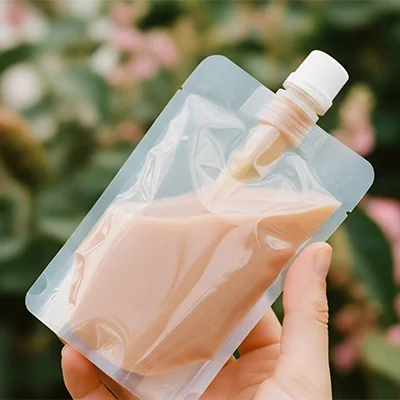
Not a Trend Anymore—Just How Packaging Is Changing
A few years ago, spouted pouches felt like a “new format.” You’d mostly see them in baby food or niche beverage brands trying to stand out.
That’s no longer the case.
In 2026, they’re everywhere—and more importantly, they make sense. For manufacturers, for logistics teams, and for the end user. What started as an alternative has quietly become a default option in many liquid categories.
The shift toward spouted pouches packaging didn’t happen because of one big breakthrough. It happened because multiple small advantages added up—less plastic, lower shipping costs, easier handling, and better usability.
Why Companies Are Actually Switching (Not Just Testing)
It Reduces Friction across the Chain
Rigid containers come with baggage—literally. They take up space, they add weight, and they increase transport costs in ways that are hard to ignore when volumes scale.
| Also Read: The Future of Printed Stand Up Pouches in Flexible Packaging |
Pouches change that equation.
They’re lighter, easier to store, and far more efficient to ship. Even before the product is filled, empty pouch inventory is easier to manage compared to bulky containers.
This is where flexible packaging solutions start making a strong business case—not just a sustainability one.
People Prefer Using Them (And That Matters More Than Ever)
It also has an easy and practical explanation of the increase: they are easier to use.
With liquid packaging with spouts, you don’t deal with awkward pouring or accidental spills. You open, squeeze or pour, and close it again. That’s it.
For products used daily—like sauces, juices, or cleaning liquids—this small improvement actually influences repeat purchases more than brands sometimes realize.
Sustainability Is Driving Real Decisions Now
It’s not just about marketing anymore. Regulations are tightening, and consumers are paying attention.
While spouted pouches aren’t a perfect solution, sustainable spouted pouches reduce overall material usage compared to rigid alternatives. That alone is pushing adoption forward.
In the meantime, brands are experimenting with reusable and recyclable spouted pouches to liquids, especially with refill models. Some of these systems are yet to be developed properly but the trend is evident.
The Formats That Are Working in 2026
Stand-Up Pouches (Still Leading the Pack)
Go to any supermarket and there you will find rows of stand-up spouted pouches, containing anything with fruit pulp, cooking pastes, etc.
They work because they’re stable, easy to display, and don’t require additional support. From a branding perspective, they also give enough surface area without increasing material usage too much.
In most categories, these are still regarded as one of the best spouted pouches to package food and beverages 2026, merely because they offer a balance between cost, usability and visibility.
Refill Pouches Are Gaining Real Ground
Refill systems used to feel like a niche sustainability play. Not anymore.
Refillable pouch packaging is becoming increasingly popular and mainstream with increased costs and awareness, particularly in household products.
Consumers are not purchasing new bottles every time but they are filling the ones that they already have with pouches. It is more affordable, has less space, and it minimizes wastage.
Categories where this is picking up fast:
- Liquid detergents
- Handwash and cleaners
- Cooking oils
It also enables repeating purchasing cycles in the case of brands without having to repackage each time.
High-Barrier Pouches for Sensitive Products
Some liquids are easy to package. Others are not.
Nutritional drinks, dairy alternatives, and certain medical liquids need protection from air, moisture, and light. That’s where advanced flexible spout pouch solutions come in.
These use layered materials to maintain product stability. While recyclability can be more complex here, the trade-off is longer shelf life and better safety.
Where the Growth Is Most Visible
Food and Beverage
This is still the biggest segment—and probably the most diverse.
With liquid food packaging, hygiene is a major factor. Spouted pouches minimize exposure as opposed to jars or bottles that are opened multiple times.
They are also convenient to portion control items, which are increasingly popular in health-sensitive categories.
Portability is being adopted in beverages. A pouch is less bulky to carry, transport, and it is less prone to breaking.
Household Products
This is where the shift seems to be evident, in case there was one.
The use of large plastic bottles is slowly being phased out in favor of eco-friendly spouted pouches used in homes. Not entirely, but sufficiently to announce a definite change.
They’re easier to handle, especially for refill use. They also reduce storage space at home—a small but noticeable benefit for consumers.
Materials Are Silently Revolutionizing
Recyclability has always been one of the largest issues when it comes to flexible packaging.
Mono-Material Experiments
To fix this, manufacturers are developing mono-material structures, which is basically multiple layers of polymer, but of the same type.
It may be easy to say, but technically, it is hard. Nevertheless, it is gaining momentum particularly in those areas where the regulations are stricter.
This is a key step toward sustainable flexible packaging, even if it’s not fully solved yet.
Lightweighting without Compromise
Reducing weight is nothing new, but the difference now is how far it’s being pushed.
Light weight packaging material used today is thinner yet strong enough to be transported and stored without breaking.
This directly affects costs of companies, not only in the material form, but also in the logistics.
Design Is Doing More Work Than Before
Packaging used to be mostly functional. Now it has to communicate, differentiate, and sometimes even justify pricing.
That’s where innovative spouted pouch designs for consumer goods come in.
Brands are experimenting with:
- Slightly unusual shapes
- Partial transparency to show product inside
- Matte, rather than glossy.
None of them is revolutionary per se. However, collectively, they contribute to the products being differentiated- particularly in saturated shelves or web pages.
Trends That Are Actually Sticking in 2026
A few patterns are becoming hard to ignore when looking at spouted pouch packaging trends in 2026:
- Refill systems are no longer optional in certain categories
- Sustainability claims are being questioned more closely
- Packaging is expected to do more with less material
- New product categories are entering the pouch space
What is interesting is that these trends are not region-specific- they can be seen in several markets.
Things Companies Still Need to Figure Out
In spite of all the progress, there are gaps.
Recycling Is Not Completely Resolved.
Even with improvements, not all pouches are easy to recycle everywhere. Infrastructure varies, and that limits how “sustainable” a solution really is in practice.
Switching Isn’t Plug-and-Play
Moving to spouted pouches often requires changes in filling lines, sourcing, and even product formulation in some cases.
That is a strategic move--not a new package.
Performance vs. Sustainability Trade-Off
A pouch can be made in others more recyclable, thus reduced in terms of barrier properties. Finding the balance is also an on-going task.
So, What Makes a Good Spouted Pouch Today?
For businesses evaluating options, the checklist is fairly straightforward:
- Does the material suit the product?
- Is the pouch easy to use and reseal?
- Can it reduce overall packaging costs?
- Is it meaningful to sustainability goals?
It has no one and the best solution. It is highly dependent on the product and market.
Final Thoughts
Spouted pouches didn’t take over overnight. They grew quietly, solving small problems one by one—cost, convenience, storage, and now sustainability.
That’s why they’ve stuck.
From liquid food packaging to refillable pouch packaging in household categories, they’re now part of how products are designed and delivered.
For companies looking at long-term packaging strategies, this isn’t about following a trend. It’s about adapting to a format that fits where the market is already heading.
And at this point, that shift is well underway.
 Our Services
 Media Pack Download
 Newsletters
 Industrial Events