


Stand-Up Pouches vs Rigid Packaging: Branding Power, Shelf Space, and Sustainability Wins
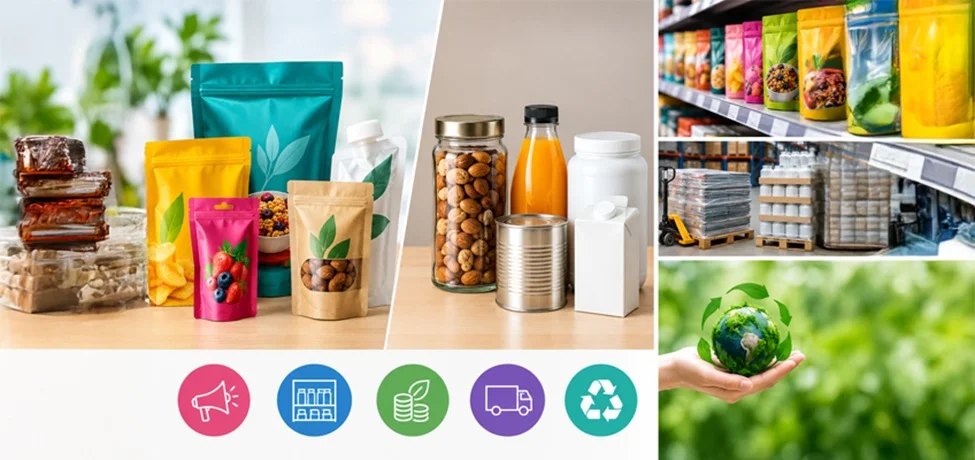
Quick answer: Stand-up pouches usually beat rigid packaging on branding space, shipping cost, warehouse efficiency and carbon footprint. Rigid containers still win for products that need heavy protection, precise pouring or a premium "heft." For most dry foods, powders, snacks, liquids and personal care, pouches are now the smarter default.
Here's an uncomfortable truth for packaging: the jar was never the hero. For decades, brands treated rigid containers as the default simply because that's what the shelf looked like, not because they'd done the maths. The brands doing the maths now are leaving them behind. Pouches cost less to make, less to move and less to store, and they hand your logo a bigger stage. Rigid packaging still has its place, but it's time to stop pretending it's the safe choice by default.
That gap is why the stand-up pouches vs rigid packaging debate has moved from "nice idea" to "boardroom decision." If you're a founder, packaging buyer or marketer, this guide breaks it down in plain language: what changes on the shelf, in the warehouse, on the invoice and in the recycling bin.
What is the difference between flexible and rigid packaging?
Rigid packaging (bottles, jars, tubs, cans, cartons) holds its shape whether it's full or empty. Flexible packaging (stand-up pouches, sachets, flow wraps) is made from films and laminates that take the shape of the product inside. A stand-up pouch has a gusseted base, so it stands upright on the shelf like a bottle while weighing a fraction as much.
That single design difference drives almost everything below.
Why do stand-up pouches give brands more branding power?
Short answer: pouches offer more printable surface, more finishing options and a bigger "billboard" at eye level than most bottles or jars.
The key stand-up pouch branding advantages come down to a few practical things:
- Edge-to-edge canvas. A bottle label wraps a curve and stops at the shoulder. A pouch's front and back panels are flat, so your artwork, ingredient story and QR code all get room to breathe.
- Print quality. High-resolution digital and rotogravure printing handle gradients, photography and full-bleed colour well. Short-run digital printing also lets small brands test designs without huge minimums.
- Finish choices. Matte, soft-touch, gloss, spot gloss, metallic and holographic effects can be mixed on one pouch. Clear windows show off the product itself, which builds trust.
- Shape and function. Zippers, tear notches, spouts, hang holes and euro slots are part of the brand experience, not just features.
- Faster refreshes. Seasonal editions and limited drops are cheaper when you're changing a print file instead of tooling a new mould.
Rigid packaging has its own branding strengths. Embossed glass or a custom-moulded bottle can become an icon (think of the classic soda or perfume silhouettes). But that kind of identity takes expensive tooling and big volumes. For most growing brands, a well-designed pouch delivers more visual impact per rupee or dollar spent.
Tip: Put the product name, key benefit and flavour or variant in the top third of the pouch. That's the zone shoppers see first when pouches hang or lean on a shelf.
Which packaging maximizes shelf space: pouches or rigid containers?
Short answer: pouches. They're slimmer, can be faced tightly, and many retailers can fit more units in the same linear footage, though the exact gain depends on pouch size and the shelf fixture.
Think of packaging that maximizes shelf space as a game of geometry. Round bottles and jars waste the gaps between them. Pouches sit flat and snug, side by side, front to back. A few ways this plays out:
- Higher facings. A slim pouch can often be placed in more rows per shelf than a bulky jar with the same contents.
- Multiple display styles. Pouches can stand, lean, hang on clip strips, or sit in a shelf-ready box. Rigid packs mostly just sit.
- Better stock density. More units per shelf means fewer restocking trips and fewer out-of-stocks, which retail buyers love.
- Space for new variants. A slimmer footprint lets you add a second flavour or size without begging for extra shelf.
One honest caveat: pouches can slump or flop if they're underfilled, too tall for the shelf, or missing a stiffener. Choosing the right gusset, film thickness and fill level keeps them standing proud.
Pouch packaging vs plastic bottles: where does each win?
For pouch packaging vs plastic bottles, bottles are better for thin liquids that need a controlled, repeated pour, and for products shoppers squeeze or pump daily. Pouches are better for refills, sauces, powders, granola, pet treats, detergents and anything sold on the "less plastic" promise. A lot of brands now sell a bottle once and a refill pouch forever after, which gives them the best of both.
Is flexible packaging cheaper than rigid packaging?
Short answer: usually, yes, once you count the whole supply chain and not just the price per unit. The savings show up in freight and storage, not only at the packaging supplier.
When people compare rigid packaging vs flexible packaging cost, they often stop at the unit price. That's a mistake. Look at four lines on the P&L:
1. Material cost. Pouches use far less plastic, glass or metal per pack, so raw material spend tends to be lower.
2. Freight. Because pouches are light and ship nearly flat before filling, flexible packaging shipping cost savings can be significant. Fewer truckloads of empty packaging come in, and lighter filled packs go out.
3. Storage. A pallet of empty pouches holds many times more units than a pallet of empty bottles. That's the core of flexible packaging warehouse space savings: smaller inventory footprint, lower rent and less handling.
4. Damage and waste. Pouches don't shatter, which matters for glass replacements, and they don't need cartons or dividers as often.
Where rigid can still make sense on cost: very high-volume lines already tooled for bottles, products that need heavy protection, or when your filling equipment isn't pouch-ready. Switching to pouches may need new filling and sealing machines, so factor that capex into your payback calculation.
|
Factor |
Stand-up pouches |
Rigid packaging |
|
Packaging weight |
Very light |
Heavy (especially glass and metal) |
|
Empty storage footprint |
Small, flat-packed |
Large, bulky |
|
Freight efficiency |
High |
Lower |
|
Print and branding flexibility |
High, low minimums |
Limited, label-dependent |
|
Shelf presence |
Slim, hangable, flexible display |
Rigid, uniform, premium feel |
|
Product protection |
Good with barrier films |
Excellent |
|
Recycling infrastructure |
Improving, mono-material helps |
Well established |
Is flexible packaging actually more sustainable?
Short answer: often yes on carbon and material use, but only if you design for end of life. The real sustainability win comes from lighter packs and, increasingly, mono-material pouches.
Here's the fair version of the story behind flexible packaging sustainability:
- Less material, lower emissions. A pouch typically uses a fraction of the plastic of a rigid container for the same amount of product, so manufacturing and transport emissions are lower.
- Less product waste. Good barrier films extend shelf life, so fewer products get thrown out.
- Smaller transport footprint. Lighter loads and flat-packed empties mean fewer trips.
The criticism is also fair: traditional pouches are multilayer laminates (for example PET, aluminium foil and PE bonded together). Those layers protect food brilliantly but are hard to separate, so recycling is difficult and often unavailable.
Mono-material pouches vs multilayer packaging: what's the difference?
The mono-material pouches vs multilayer packaging question is where the industry is moving fastest.
- Multilayer pouches combine different materials to maximise barrier performance. Great protection, poor recyclability.
- Mono-material pouches (commonly all-PE or all-PP) are designed so the whole pack is one polymer family, which makes it compatible with existing recycling streams where store drop-off or flexible-film collection exists.
Mono-material films have improved a lot, though very oxygen-sensitive products can still need a high-barrier solution. Ask your supplier for barrier data, shelf-life testing and the recyclability claims they can back up with certification.
A word on greenwashing: don't print "recyclable" unless collection actually exists where your customers live. Phrases like "designed for recycling" or "made with 30% less plastic" are safer, and shoppers trust brands that explain the nuance rather than hide it.
FAQs: stand-up pouches vs rigid packaging
What are the main stand-up pouch packaging benefits?
Lower material use, lower shipping and storage costs, more branding space, lighter weight, resealable options and a smaller carbon footprint per pack.
Are pouches better than bottles for liquids?
For refills, sauces, detergents and juices, yes. For thin liquids that need frequent, precise pouring, a bottle or a pouch with a spout (or a bottle plus refill pouch) works best.
Do stand-up pouches protect products as well as rigid packaging?
With the right barrier film, they protect most foods and personal care products very well. Highly fragile, pressurized or oxygen-critical products may still need rigid containers.
Are flexible pouches recyclable?
Multi-layer ones mostly aren't. Mono-material pouches can be, where flexible-film collection exists. Always check local options before making claims.
What does it cost to switch from rigid to flexible packaging?
Unit packaging cost is often lower, and freight and storage savings add up. Budget for new filling equipment and shelf-life testing, then calculate your payback period.
So, which should you choose?
If your priority is branding power, shelf efficiency and a lower cost-to-serve, stand-up pouches are the stronger pick for most food, beverage, household and personal care products. If you need maximum protection, a premium "feel in the hand" or you're locked into existing bottle lines, rigid packaging still earns its place. Many smart brands run both: a durable bottle to start, a lightweight pouch for refills.
The best next step is simple. Pick one product, request pouch samples (ideally mono-material), run a shelf-life test and compare freight and storage costs against your current pack. Let the numbers and your customers decide.
 Our Services
 Media Pack Download
 Newsletters
 Industrial Events