
Next-Generation Digital Packaging Printing: A Guide for Buyers and Packaging
Is digital printing good enough for packaging, or is flexo still the safer bet? It’s the question buyers and brand teams ask most, and the answer depends on your run size, your number of SKUs, and how often your artwork changes.
This guide breaks it down in plain terms: what digital packaging printing is, when it beats flexo, how the cost per unit compares, and how to pick a supplier who will be straight with you about the trade-offs.
What Is Digital Packaging Printing? (Quick Answer)
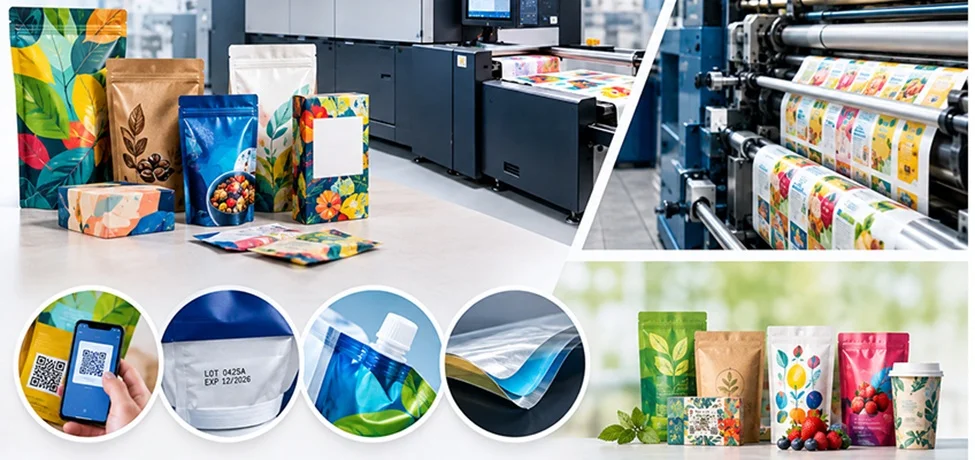
Digital packaging printing applies ink directly to packaging material from a digital file, with no plates, cylinders or physical setup. Most systems use inkjet or digital toner (HP Indigo-style) technology. Because there is no tooling, you can change artwork between runs, or even between individual packs, at almost no extra cost.
In one line: it’s the fastest, most flexible way to print packaging, especially in small and medium quantities.
Digital vs Flexo Printing for Packaging
This is the question buyers ask most, and the honest answer is that neither wins everywhere.
|
Factor |
Digital |
Flexo |
|
Setup |
None (file-based) |
Plates, cylinders, make-ready |
|
Best run length |
Short to medium |
Medium to very long |
|
Lead time |
Days |
Weeks |
|
Artwork changes |
Free between runs |
New plates each time |
|
Personalization |
Native |
Not practical |
|
Cost per unit at high volume |
Higher |
Lower |
|
Color consistency |
Excellent, repeatable |
Good, depends on operator |
|
Waste during setup |
Minimal |
Significant |
Choose digital when you have multiple SKUs, frequent design changes, seasonal runs, test launches, or personalization needs.
Choose flexo when you print one stable design in very high volumes, where per-unit cost is the priority.
Many mature brands use both: flexo for hero SKUs and digital for everything else.
Short Run Digital Packaging Printing: Where It Shines
Traditional printing punishes small orders because setup costs get spread across few units. Short run digital packaging printing removes that penalty. Typical use cases:
- Product launches and test markets: validate demand before committing to inventory.
- Seasonal and limited editions: holiday flavors, festival packs, collaborations.
- Multi-SKU brands: ten flavors at 2,000 units each is painful in flexo and easy in digital.
- Startups and D2C brands: low minimums protect your cash flow.
- Regional or regulatory variants: different languages or label requirements without separate plate sets.
The hidden benefit is lower inventory risk. You stop buying 50,000 packs “because the price per unit is better” and then writing off 30,000 when the formulation or branding changes.
On-Demand Packaging Printing
On-demand packaging printing takes short runs one step further. Instead of stockpiling packaging, you order what you need when you need it, often in smaller, more frequent batches.
This approach helps with cash flow, storage space, and obsolescence. If a regulation changes or you rebrand, you haven’t got a warehouse full of outdated packs. The trade-off is slightly higher per-unit pricing, so the real comparison is total cost including waste, storage, and write-offs.
Digital Printing on Plastic Packaging
Plastic is where digital has improved the most. Modern systems print on films such as PET, BOPP, PE and laminated structures used in flexible packaging, shrink sleeves, labels and pouches.
What to check before you commit:
- Substrate compatibility: not every film accepts every ink. Ask for tests on your actual material.
- Surface treatment: corona or primer treatment often matters for adhesion.
- Durability: if packs face moisture, freezing or abrasion, ask about lamination or overprint varnish.
- Food safety: for food contact, confirm low-migration inks and the supplier’s compliance documentation.
A good supplier will print samples on your film and run basic rub and scratch tests, instead of promising results from a brochure.
Digital Printed Pouches
Stand-up pouches are probably the most popular digital format right now. They suit coffee, snacks, pet food, supplements, spices and cosmetics, categories that often run many SKUs in modest volumes.
Benefits include photo-quality graphics, full-coverage color, quick flavor or size variations, and the ability to launch with real packaging instead of a stock pouch and a sticker. Ask about zippers, tear notches, valves and barrier layers early, because these affect both the print process and shelf life.
Variable Data Printing for Packaging
Variable data printing (VDP) means each pack can carry different content in the same run. This is where digital does something flexo practically cannot.
Examples:
- Unique QR codes linking to authentication, recipes or loyalty rewards
- Batch and serial numbers for traceability
- Personalized packs with names, messages or regional offers
- Campaign mechanics like “find the winning pack” promotions
- Multiple designs in one run, such as 20 different artworks on a single roll
If you want packaging to engage customers or support anti-counterfeiting, VDP is a strong reason to go digital by itself.
Digital Packaging Printing Cost per Unit vs Flexo
Pricing varies by substrate, size, coverage and region, so treat this as a framework instead of a quote.
Flexo cost structure: high fixed costs (plates, setup, make-ready waste) and low variable cost per unit. The more you print, the cheaper each pack gets.
Digital cost structure: near-zero fixed costs and a higher, mostly flat cost per unit.
That creates a break-even point. Below it, digital is cheaper overall. Above it, flexo wins. Where that line falls depends on your design complexity, number of colors and substrate, and a supplier can calculate it from your specs.
What to include when comparing quotes:
1. Plate or tooling charges (and repeat charges for artwork changes)
2. Minimum order quantity
3. Setup waste
4. Storage and inventory carrying cost
5. Cost of obsolete stock
6. Freight and lead-time impact on your launch
A 20% higher unit price can still be the cheaper decision once those are counted. Ask suppliers to quote the same job both ways, so you see the break-even for yourself.
Sustainable Digital Packaging Printing
Sustainability is one of the strongest arguments for digital, with some honest caveats.
The advantages:
- Less setup waste, since no plates or lengthy make-ready runs
- Print only what you need, reducing overproduction and unsold packaging
- Fewer chemicals and solvents in many digital processes, plus no plate-making
- Water-based and low-migration ink options
The caveats: a printed pack is only as sustainable as its materials. Mono-material pouches designed for recycling, recycled-content films and compostable substrates matter more than the print method. Ask suppliers about recyclability of the whole structure, inks that don’t interfere with recycling, and any certifications they hold. Be wary of vague “eco-friendly” claims with no documentation behind them.
Digital Packaging Printing Trends
Several shifts are shaping the market:
- Brands going hyper-local: regional editions and localized campaigns are now realistic for mid-sized companies.
- Smart packaging: QR codes, NFC and serialized codes connecting physical packs to digital experiences.
- Mono-material and recyclable structures becoming the default design brief.
- Faster inkjet speeds and quality, narrowing the gap with flexo at higher volumes.
- E-commerce-ready packaging: designed for unboxing, shipping durability and social sharing.
- Shorter product lifecycles, pushing brands toward agile, small-batch supply.
How to Choose a Digital Packaging Printing Supplier
Most buyers compare price and delivery time. A better checklist:
1. Ask for samples on your material. A great demo on a different film proves nothing.
2. Check color management. Can they match your brand colors and keep them consistent across reorders?
3. Confirm food and safety compliance if relevant: ink certifications, migration testing, audit records.
4. Understand minimums and scalability. Can they handle 2,000 units now and 200,000 later, or will you need to switch?
5. Review file and proofing workflow. Clear artwork specs, digital proofs and physical proofs reduce costly mistakes.
6. Ask about turnaround realities. Quoted lead time versus actual on-time delivery.
7. Look at converting capabilities. Pouch making, lamination, zippers and finishing in-house means fewer handoffs and delays.
8. Talk to references. Ask for customers with similar products and volumes.
9. Evaluate communication. Responsiveness during quoting usually predicts responsiveness during problems.
A red flag is any supplier who pushes digital for everything or flexo for everything. The best partners tell you when the other process suits you better.
Frequently Asked Questions
Is digital printing good for packaging?
Yes. It suits short and medium runs, multiple SKUs, frequent design changes and personalization, with quality that rivals traditional methods.
Is digital printing cheaper than flexo?
For small and medium quantities, usually yes, because there are no plate or setup costs. For very large runs of one design, flexo is generally cheaper per unit.
What is the minimum order for digital packaging printing?
It varies by supplier and format, but digital minimums are typically far lower than flexo, sometimes a few hundred units for labels and pouches.
Can you digitally print on plastic packaging?
Yes. Films like PET, BOPP and PE are commonly printed digitally, though surface treatment and ink choice affect durability.
How long does digital packaging printing take?
Often days instead of weeks, since there is no tooling to produce.
Is digital packaging printing sustainable?
It reduces waste through on-demand production and no plates, but overall sustainability depends on the packaging material and its recyclability.
Final Thoughts
Digital packaging printing isn’t a replacement for flexo. It’s a smarter tool for the jobs flexo handles poorly: small batches, fast launches, variable content and constantly changing portfolios. Start by mapping your SKUs and volumes, request a two-way quote, test samples on your real material, and pick a supplier who is honest about trade-offs.
If your packaging calendar looks more like a series of experiments than a single long run, digital is probably already your better option.
 Our Services
 Media Pack Download
 Newsletters
 Industrial Events