
Anti-Counterfeit Solutions Every Brand Should Consider in 2026
Counterfeiting is no longer a back-alley problem. Fake goods now flow through online marketplaces, social commerce and cross-border shipping, and they cost brands revenue, trust and sometimes customer safety. In 2026, protecting your products is a core business function, not an afterthought.
What is the best anti-counterfeit solution for brands?
There is no single best option. The strongest protection layers several technologies: one to make products hard to copy, one to let customers verify them, and one to track them through the supply chain. Here are the solutions worth considering this year.
1. Secure QR codes and serialization
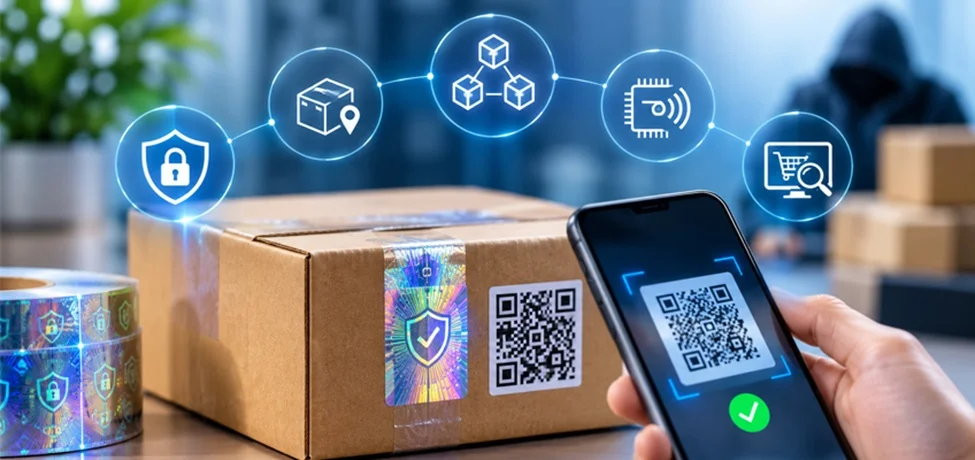
A unique, encrypted code on each unit lets customers scan and confirm authenticity in seconds. Unlike basic QR codes, secure versions can't be duplicated without detection, and every scan gives you data on where and when products are being checked. Repeated scans of one code from different cities are an instant red flag.
2. Blockchain-backed traceability
Blockchain creates a tamper-proof record of a product's journey from factory to shelf. It suits industries where provenance matters most, such as luxury goods, pharmaceuticals, electronics and food. Customers can see the full history of what they bought, which builds trust.
3. NFC tags and smart packaging
Near-field communication tags embedded in labels or packaging let shoppers tap their phone to verify a product. They are harder to clone than printed codes and can also deliver warranty details, loyalty rewards and care instructions, so protection doubles as engagement.
4. Tamper-evident and holographic features
Physical security still matters. Holograms, void labels, micro-text, UV inks and color-shifting features are cheap, visible deterrents. They work best combined with digital verification, because counterfeiters can copy a hologram but not a live database check.
5. AI-powered marketplace monitoring
Much of today's counterfeiting happens online. AI tools can scan e-commerce platforms, social media and ad networks for fake listings, stolen images and look-alike brand pages, then automate takedown requests. Catching fakes before they sell is far cheaper than fixing the damage afterward.
6. Supply chain visibility
Many fakes enter through legitimate channels, such as overproduction or diverted shipments. Track-and-trace systems, supplier audits and authorized-distributor programs close those gaps.
How do you choose the right solution?
Start with three questions:
- Where are fakes entering? Online marketplaces, physical retail or your own supply chain?
- Who needs to verify authenticity? Consumers, retailers or customs officials?
- What is your product's value and risk? A luxury handbag and a medicine need different levels of protection.
Match the technology to the answer rather than buying the most advanced option.
Frequently asked questions
Can small brands afford anti-counterfeit technology?
Yes. Secure QR codes and tamper-evident labels are low-cost and scale easily.
Does anti-counterfeit tech improve customer trust?
Yes. Visible verification reassures buyers and often boosts conversions.
Should it be digital or physical?
Both. Physical features deter casual copying, and digital verification stops sophisticated fakes.
The bottom line
Counterfeiters adapt quickly, so a one-time fix won't last. Brands that combine secure packaging, digital authentication, online monitoring and supply chain transparency in 2026 will protect revenue and earn something fakes can't copy: customer confidence.
 Our Services
 Media Pack Download
 Newsletters
 Industrial Events