

Top 10 Carbon Reduction Packaging Solutions for Net-Zero Goals and Brand Reputation
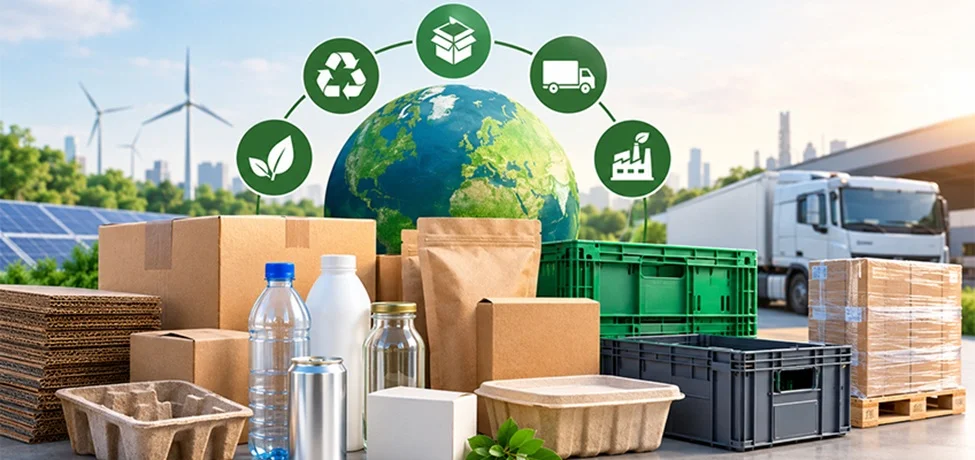
Quick answer: The most effective carbon reduction packaging solutions are right-sizing and lightweighting, switching to recycled or renewable low-carbon packaging materials, using reusable industrial packaging, designing for recyclability, and cutting transport emissions through smarter logistics. Start with a packaging carbon footprint audit, fix the biggest hotspots first, and report your progress honestly.
Why packaging is the net-zero lever most brands overlook
Many organizations assume that transitioning to renewable electricity places them firmly on the path to net zero. Scope 3 inventories frequently tell a different story. Packaging, together with the freight required to move it, can account for a substantial share of a company's total footprint, yet it seldom receives the strategic attention it warrants.
Packaging touches every stage of the value chain: raw material extraction, manufacturing, transport, use and disposal. Consequently, packaging carbon footprint reduction is not a peripheral initiative. It is among the fastest and most visible ways to advance net-zero commitments, and its impact is evident to customers on the shelf, on the pallet and at the doorstep.
Below are ten practical solutions, ordered roughly from "do this first" to "build this into your long-term strategy."
1. Run a packaging carbon footprint audit first
You can't cut what you haven't measured. Map every pack format (primary, secondary, tertiary) and record material weight, recycled content, supplier location, transport distance and end-of-life route. A basic life cycle assessment (LCA) will show your hotspots, which are often not where you'd guess. A heavy-duty crate may look "bad" but outperform a flimsy single-use alternative once you count how many times it's reused.
Tip: Use the same method every year so your progress claims hold up.
2. Use lightweight packaging to reduce emissions
Less material means less energy to make it and less fuel to move it. Lightweight packaging to reduce emissions is usually the quickest win: thinner films, lower-grammage corrugated board, lighter bottles and caps, optimized ribbing instead of extra thickness. Always test for durability, because a pack that fails in transit creates product waste, and wasted product often carries a bigger footprint than the packaging itself.
3. Choose low-carbon packaging materials
Not all materials are equal, and the "greenest" answer depends on your product, supply chain and local recycling infrastructure. Good candidates include:
- Recycled-content paperboard and corrugated: widely recycled, lower virgin-fibre demand.
- Recycled aluminium: recycling uses a fraction of the energy of primary production.
- rPET and recycled HDPE: reduce reliance on virgin fossil-based plastic.
- Certified renewable fibres (FSC or PEFC): responsibly sourced and renewable.
Ask suppliers for product-level carbon data (EPDs or verified LCA figures) rather than relying on generic "eco" labels.
4. Right-size your packaging (and stop shipping air)
Oversized boxes mean more void fill, more pallets, more trucks. Right-sizing, meaning matching the pack to the product, cuts materials and transport emissions at the same time. Automated box-sizing, better pallet patterns and tighter case configurations can raise load efficiency without touching your product. This is a core piece of packaging optimization for carbon reduction.
5. Switch to mono-material, recyclable design
A pack that can't be recycled in practice ends up in landfill or incineration, no matter what the label says. Mono-material pouches, fibre-based trays with minimal coatings, and easy-to-separate components make recycling realistic. Check your target markets' actual collection and sorting systems, then design for those, not for an ideal world.
6. Adopt reusable industrial packaging solutions
For B2B flows, reusable industrial packaging solutions such as returnable plastic crates, steel racks, IBCs, pallets and collapsible bins often deliver the largest lifetime savings. The footprint of making a durable container is spread over dozens or hundreds of trips. The catch is logistics: reuse works best on closed or short-loop routes with reliable return flows, tracking (barcodes or RFID) and a cleaning process. Run the numbers on break-even trip counts before committing.
7. Get sustainable packaging for the automotive industry right
Automotive supply chains move heavy, high-value, sensitive parts across long distances, so sustainable packaging for the automotive industry is a distinct challenge. What tends to work well:
- Returnable, custom-fit racks and totes between plants and suppliers
- Collapsible containers that cut empty return trips
- Recycled-content protective inserts instead of virgin foam
- VCI (vapour corrosion inhibitor) alternatives that keep parts protected without heavy, hard-to-recycle layers
Because OEMs increasingly set supplier emissions targets, packaging is becoming part of tier-one and tier-two scorecards.
8. Cut transport emissions through smarter pack and pallet design
Packaging decisions drive freight efficiency. Stackable designs, higher cube utilisation, lighter pallets and fewer, fuller shipments all reduce fuel burned per unit. Pair this with regional sourcing and, where possible, rail or sea over air. Often the freight saving outweighs the material saving, so it's worth modelling both together.
9. Source energy and materials closer to home
Your supplier's factory energy mix matters. Ask converters and material suppliers about renewable electricity, process efficiency and their own reduction targets. Where it makes commercial sense, shorten the distance between material source, converter and filling site. Supplier engagement is slow, but it's where a lot of Scope 3 reduction actually lives.
10. Build a net zero packaging strategy and talk about it honestly
Individual tactics only add up with a plan. A solid net zero packaging strategy for businesses includes:
1. A baseline and science-aligned targets
2. A prioritised roadmap (quick wins, medium projects, long-term redesigns)
3. Named owners and a budget
4. Annual, third-party-verifiable reporting
Then communicate with specifics. Say "we cut packaging weight by X% and moved to Y% recycled content," not "we're 100% eco-friendly." Vague claims invite scepticism and, in many regions, regulatory trouble.
Transparent progress, including what you haven't solved yet, builds trust faster than perfection ever could.
Packaging material carbon footprint comparison (at a glance)
There's no universal winner, since results depend on weight, recycled content, region and end-of-life. Use this as a directional guide, then validate with your own LCA data.
|
Material |
Typical strengths |
Watch-outs |
|
Recycled corrugated / paperboard |
Widely recyclable, renewable base |
Moisture sensitivity, can add weight |
|
Recycled aluminium |
Highly recyclable, strong barrier |
Primary aluminium is energy-intensive |
|
rPET / recycled HDPE |
Lower virgin plastic use, light |
Quality and food-contact limits |
|
Virgin plastics |
Very light, durable |
Fossil-based, recycling varies by region |
|
Glass |
Inert, infinitely recyclable |
Heavy, so higher transport emissions |
|
Reusable crates and racks |
Lowest per-trip footprint at scale |
Needs return logistics and tracking |
Frequently asked questions
How do you reduce carbon emissions in packaging?
Measure your footprint, then reduce material use (lightweighting, right-sizing), choose recycled or renewable materials, design for recycling, adopt reusables where loops are viable, and optimise transport.
What is the most sustainable packaging material?
It depends on the product and supply chain. Recycled-content materials and reusable systems usually perform best, but a lifecycle assessment is the only reliable way to compare options for your case.
Does lighter packaging always mean lower emissions?
Mostly, yes, but only if protection isn't compromised. A lighter pack that causes more damaged goods can raise your total footprint.
Are reusable packaging systems worth it?
For repeat B2B routes, often yes. The more trips each container makes, the lower its per-use footprint, provided return rates and cleaning are well managed.
How does sustainable packaging help brand reputation?
Customers, investors and OEM partners increasingly expect credible climate action. Verified, specific packaging improvements make your sustainability story easier to believe and easier to defend.
Where to start this quarter
Don't try to do all ten at once. Pick three:
1. Audit your top 20 SKUs or pack formats.
2. Lightweight and right-size the two biggest offenders.
3. Pilot one reusable loop with a single customer or plant.
Small, measured wins create the data, internal support and credibility you need to scale. Net zero isn't one big packaging switch. It's a series of smart, well-documented decisions that your customers can see and your auditors can verify.
 Our Services
 Media Pack Download
 Newsletters
 Industrial Events