
Top 10 Interactive & QR Code Packaging Ideas to Supercharge Marketing Campaigns
Quick Answer
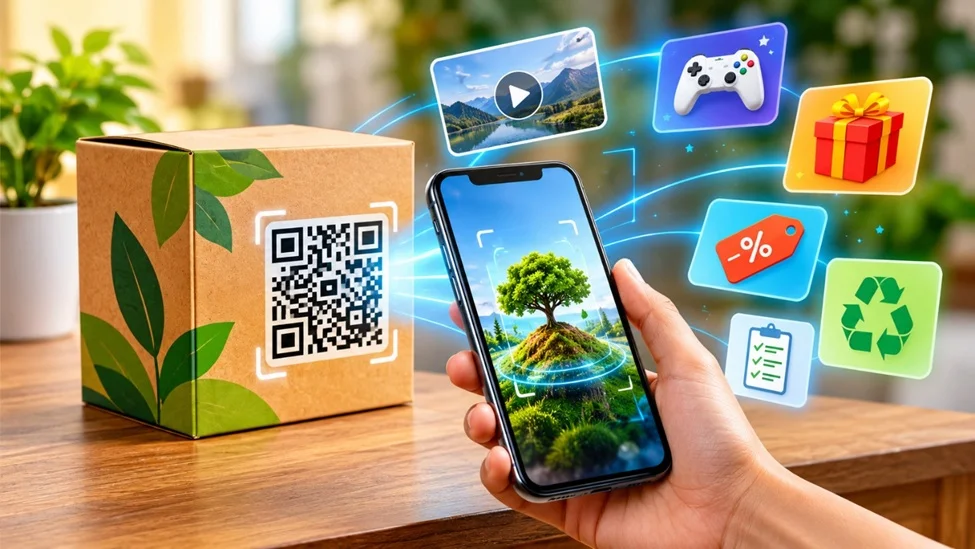
Interactive packaging turns a product box into a two-way marketing channel using QR codes, augmented reality (AR), games, NFC tags and personalized content. The best QR code packaging ideas share one trait: they give the customer something worth scanning for, like a discount, a tutorial, a game or an exclusive story. Pair a clear call to action with a mobile-friendly landing page and you have a campaign that runs from the moment the package is opened.
Here’s a thought experiment. You spend weeks on an ad campaign, and the customer clicks, buys and waits for delivery. Then the box arrives and it says... nothing. Just your logo and a barcode.
That’s the most expensive missed opportunity in retail. Your customer is holding the product, paying full attention and feeling curious. This is the best moment you’ll ever get to start a conversation.
That’s why more brands are investing in smart packaging ideas for businesses of every size. Below are ten ideas you can actually use, followed by a few mistakes that quietly kill scan rates.
Why Interactive Packaging Works for Marketing
Most marketing channels interrupt people. Packaging doesn’t. The customer already chose to buy, and they’re holding your product in their hands.
Connected packaging solutions take advantage of that moment. A single scan can lead to a video, a loyalty program, a game or a review page. For you, it also creates something rare: first-party data from a customer who opted in on their own.
Let’s get into the ideas.
1. Unlock a Behind-the-Scenes Brand Story
People love knowing where things come from. A QR code that opens a short video about your founders, your sourcing or your factory builds trust faster than any tagline.
A coffee brand, for example, could link each bag to the farm where the beans were grown. A skincare label could show how the formula was tested. Keep the video under 90 seconds and make sure it plays well on a phone.
2. Offer an Instant Reward for Scanning
Curiosity gets a scan, but a reward gets a second one. Printing a QR code that promises a discount on the next order, a free sample or entry into a prize draw gives people a reason to act.
This is one of the simplest QR code customer engagement strategies, and it works because the payoff is immediate. Say what they’ll get right next to the code: “Scan for 15% off your next order” beats a bare square every time.
3. Add Augmented Reality Experiences
Augmented reality packaging ideas sound futuristic, but they’re more accessible than most people think. A QR code can launch a browser-based AR experience, so there’s no app download.
Some ways brands use it:
- A cereal box that turns into a playable mini-game
- A wine bottle whose label comes alive with the story of the vineyard
- A furniture box that lets you preview the finished piece in your own living room
- A cosmetics package that lets you try shades virtually
AR works best when it’s fun or genuinely useful. If it’s only a gimmick, people will scan once and forget it.
4. Turn the Box into a Game
Gamification in product packaging taps into something simple: people like to play. Scratch-offs, puzzles, trivia, spin-to-win wheels and collectible codes all turn a scan into a small moment of fun.
A snack brand could print a different character on each pack and let customers collect the full set through scans. A beverage company could hide a prize code under the cap. The collectible angle matters because it pushes people to buy again to complete the set.
5. Provide How-To Videos and Setup Guides
Not every great idea is flashy. Sometimes the most valuable thing you can print is a QR code that leads to a clear tutorial.
For electronics, appliances, beauty tools or anything with a learning curve, a scannable setup guide cuts down on frustration, support calls and returns. It also makes the first experience with your product a good one, which matters more than most brands realize.
6. Collect Reviews and User-Generated Content
Social proof sells. A QR code on an insert or inside the lid can take happy customers straight to a review form, which beats an email asking them to do it a week later.
Go one step further and invite them to share a photo or video for a chance to be featured on your channels. Customers love recognition, and you get authentic content you didn’t have to produce.
7. Personalize the Experience
Generic scans feel generic. Dynamic QR codes let you change the destination without reprinting, so you can tailor what people see by location, language, time of day or product batch.
A customer in Hyderabad could land on a page in Telugu or English, while someone in another city sees a local offer. Personalization is one of the strongest interactive packaging for marketing campaigns tactics because it makes the customer feel seen.
8. Build a Loyalty Program into the Pack
Instead of asking customers to remember a loyalty card, put the program on the package. Each scan adds points, and points unlock rewards.
This works well for repeat-purchase categories like food, personal care and pet supplies. It also gives you real data on how often customers buy and which products they favor.
9. Share Sustainability and Recycling Information
Shoppers increasingly want proof of your claims, not just green buzzwords. A QR code can link to detailed information about materials, carbon footprint, sourcing and how to recycle the pack properly.
It also solves a practical design problem. Packaging has limited space, and a code lets you share the full story without cluttering the label.
10. Create Limited-Edition Drops and Exclusive Content
Make scanning feel like getting access to something special. Exclusive recipes, early product launches, bonus playlists, virtual events or members-only content give customers a reason to keep the packaging, not just toss it.
Limited-edition packaging with a unique QR code per release also creates urgency. Customers learn that there’s always something new behind the scan.
How to Make QR Codes on Product Packaging Actually Get Scanned
A great idea falls apart if the execution is sloppy. A few rules make a big difference:
- Tell people why to scan. A code with no context gets ignored.
- Make it big enough and high contrast. Aim for at least 2 cm by 2 cm, with a quiet border around it, and test it on glossy, curved and low-light surfaces.
- Send people to a mobile-optimized page. If the page loads slowly or looks broken, you lose them instantly.
- Use dynamic codes. You can update the destination, fix mistakes and track performance without reprinting.
- Track everything. Scan counts, locations, devices and conversion rates tell you what’s working.
- Keep it simple. One code, one clear action. Don’t make customers choose between six options.
Mistakes That Quietly Kill Engagement
Even well-meaning campaigns stumble. Watch out for these:
1. Linking to your homepage instead of a purpose-built landing page
2. Printing codes too small or on a dark, busy background
3. Offering nothing in return for the scan
4. Forgetting to test on both iPhone and Android
5. Letting a campaign page expire while the packaging is still on shelves
How to Measure Success
Good QR code marketing on packaging doesn’t end at the scan. Look at the whole journey:
- Scan rate: scans divided by units sold
- Engagement time: how long people stay on the page
- Conversion rate: purchases, sign-ups or reviews that follow
- Repeat scans: a sign the content is genuinely useful or fun
- Customer data captured: emails, preferences and feedback
Compare these across campaigns and keep improving the ones that perform.
Frequently Asked Questions
What is interactive packaging?
Interactive packaging is packaging that lets customers engage with a brand through their phone or the pack itself, using QR codes, NFC tags, AR, games or personalized content.
Are QR codes on product packaging still effective?
Yes. Most smartphones can scan them with the built-in camera, so there’s no app to download. They work best when the scan offers a clear benefit.
How much does QR code packaging cost?
The code itself is usually free or very cheap to generate. Costs come from printing, landing page development and any AR or gamification features. Many brands start small with a simple QR code and a mobile page.
What’s the difference between static and dynamic QR codes?
A static code has a fixed destination. A dynamic code can be edited later and tracks scan data, which makes it the better choice for marketing.
Can small businesses use connected packaging?
Absolutely. A single QR code on a label or insert can deliver a tutorial, a discount or a review request with almost no extra cost.
What is the best QR code packaging idea to start with?
Start with a scan-for-reward offer or a how-to video. Both are cheap, quick to launch and easy to measure.
Final Thoughts
Packaging used to be the last step of the buying process. Now it can be the first step of a relationship. Whether you start with a simple discount code or a full AR experience, the principle is the same: give people a reason to scan, make the experience smooth and use what you learn to improve.
Pick one or two ideas from this list, run a small test on your next batch and watch the data. Your packaging is already in your customers’ hands, so make it say something worth hearing.
 Our Services
 Media Pack Download
 Newsletters
 Industrial Events