A Complete Overview of Sustainable Packaging Solutions and Their Benefits
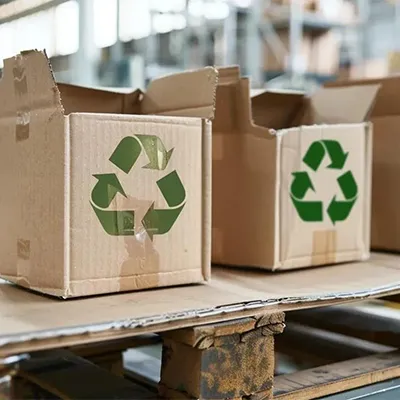
The current trend in the world in favor of environmentally responsible practices has changed the way manufacturers, retailers, and the providers of logistics consider packaging. Instead of using only the traditional plastics, industries nowadays are conducting a broad array of innovative sustainable packaging ideas that not only can benefit the ecology but also the economy. However, the most important question remains how these ambitious sustainable packaging solutions contribute to the contemporary business, consumer behaviour, and the future development of industries. Better still, do companies really have the readiness to incorporate them into their already existing systems without efficiency or cost being compromised?
The answers can be traced in the realization of what is behind this change and the way in which innovations such as eco-friendly packaging materials, biodegradable packaging options, and recyclable packaging options are changing the industrial frontiers.
The origin of green Packaging: Why the shift is unavoidable
The responsibility towards the environment is something even companies in industries are considering. The significance of radical sustainable packaging solutions has increased as governments become stricter and consumers seek clarity. It is not only the ecological considerations that lead to the shift, but also the quantifiable advantages of sustainable packaging to businesses. Even sustainable strategies are no longer seen as luxuries that companies can add but rather as part and parcel of the brand value by companies aiming at long-term growth.
This change is even necessary when the industries examine the effects of sustainable packaging in minimizing waste. Plastic in conventional packaging may take centuries before it decomposes, and this leads to landfill overruns and marine contamination. On the contrary, current inventions such as compostable packaging products, biodegradable packaging alternatives, and recyclable packaging alternatives to plastic offer viable solutions to the cycle of waste build-up.
Understanding the Materials that Drive Eco-Friendly Packaging
Industries should analyze what a material is considered to be sustainable in order to fully understand the potential of eco-friendly packaging materials. It is not only substitution of plastic, but more about renewable resources, less carbon footprint, end-of-life biodegradability or recyclability.
The most promising ones are biodegradable packaging, which is made of plant-based polymers, agricultural waste, algae, or mushroom mycelium. These are aggressive biodegradable packaging materials which can break down naturally hence minimizing the use of fossil fuel-based plastics.
Likewise, radical recyclable packaging systems will provide sustainable solutions in the long-term because they will encourage closed-loop systems. Glass, metals, corrugated cardboard, and some plastics still prevail in the market as daring alternatives of plastic recycling as packaging options, particularly in the FMCG and e-commerce industries.
In the meantime, there are also compostable packaging products, which do not only decompose fast but also enrich soil. Food service, takeaway delivery, and organic product brand industries are especially interested in industries that are experimenting with compostable packaging products.
How Sustainable Packaging Reduces Waste Across the Supply Chain
One of the most important reasons to move towards sustainable practices is to realize how sustainable packaging does minimise the waste in all levels of supply chain. Re-used, recycled or composted packaging will not send post-consumer waste to landfills. This is where the recyclable packaging solutions, biodegradable packaging solutions, eco-friendly packaging material prove their importance.
Interestingly, the industries which thought that such materials would make the operations more complex are the ones that are realizing that it is the opposite. Workflow can be predicted with sustainable innovations, as the number of waste will lessen, the expenses of disposal will fall, and the compliance will become easier.
In the case of e-commerce, transition of aggressive biodegradable packaging of e-commerce brands has been astonishing. The packaging of these brands is minimalistic, lightweight, and made of plants, which decreases transportation costs and improves the perception of the brand and has a minor impact on the environment.
Market Insights: Adoption Trends across Sectors
The packaging world is undergoing a fast-changing time, and various industries are rolling out radical sustainable packs at some pace. Upon a further examination, a curious trend emerges; consumer-facing industries have been the first to be ruled by the latest movement, whereas heavy industries are lagging.
To demonstrate this change the following table provides a table of adoption trends in the key sectors.
Table: Adoption Levels of Sustainable Packaging Across Industries
| Industry Sector | Adoption of sustainable packaging solutions | Most Used Innovation |
| E-commerce | Very High | biodegradable packaging for e-commerce brands, recyclable packaging solutions |
| Food & Beverage | High | compostable packaging products, eco-friendly packaging materials |
| Pharmaceuticals | Moderate | recyclable packaging alternatives to plastic, sterile biodegradable solutions |
| Cosmetics | Very High | eco-friendly packaging materials, reusable glass |
| Manufacturing | Moderate | cost-effective eco-friendly packaging solutions |
| Retail | High | biodegradable packaging options, reusable formats |
Research on Cost-Effective Environmentally-Friendly Packaging
The most ubiquitous myth is that to go green is to incur much higher cost, which is believed to be a misconception by the recent research that indicates that radicalized economical friendly packaging issues are not only accessible, but also cost-efficient, cost-effective solutions based on eco-friendly packaging strategies tend to be more efficient than traditional ones when companies can estimate total costs in the long run: garbage collection costs, optimization of logistics, and brand image.
E.g., lightweight greener packaging materials will lower freight costs, and ecommerce brands opting to use biodegradable packaging for brands claim lower returns since customers are more satisfied. Likewise, firms that embrace the use of recyclable alternatives to plastic packaging realize a decrease in waste during the manufacturing processes and an increase in the margins of the same, which is consequently caused by the reuse of the materials.
This increased affordability is inspiring even small and medium-sized enterprises to consider unafraid of sustainable packaging without spending money on this.
Biodegradable E-Commerce Packaging: A Game-Changer in Contemporary Brands
The e-commerce revolution has increased the interest in responsible packaging. The online shipping of plastic waste has forced the online delivery companies to consider the solution of e-commerce brands being and using biodegradable packaging as a main measure to decrease plastic waste.
Interestingly, consumer surveys reveal that buyers tend to repurchase stress-free packaging materials that are used by the companies. Firms exploiting these novel, biodegradable alternative packaging align themselves with the current customer demands, and therefore, sustainability is a competitive edge and not just a compliance factor.
The introduction of biodegradable e-commerce packaging further shows how sustainable packaging lowers garbage levels by making sure that large volumes of shipments do not end up filling the landfills.
Are Recyclable Packaging Solutions the Future of Circular Manufacturing?
Due to the push across the industries toward circular economy models, innovative approaches to recyclable packaging have been put forward as the building blocks. In contrast to single-use plastics, recyclable packaging solutions allow ensuring the perpetual use of the material, lengthen the lifespan of the product, and reduce the reliance on virgin resources.
Better still, recyclable packaging options to plastic are introduced that would provide similar performance but at a much lower environmental cost. Steel cans, aluminum, PET, and paperboard are currently the most desired recyclable packaging options that are used by many manufacturers in place of plastic.
These developments support the assertion that the requirements of recyclable systems will soon become obligatory in industrial and retail packaging.
Compostable Packaging Products: From Organic Waste to Valuable Soil Nutrients
The use of compostable packaging products in segments such as food delivery, agriculture, and hospitality services has increased exponentially. By composting these materials under controlled conditions, it is possible to convert them into nutrient-rich compost, completing a full circle between the world of packaging and the world of agriculture.
Companies that have taken a risk by trying out the new compostable packaging products are finding alternative ways to fulfill the expectations of the consumer and also comply with sustainability requirements. Compostables are an ideal solution since the world needs instant substitutes to single-use plastic.
Benefits of Sustainable Packaging for Businesses: Why It Matters More Than Ever
The real worth of sustainable change is the quantifiable, audacious gains of sustainable packaging for companies. Such advantages indicate efficiency in operations, brand loyalty, compliance with regulatory standards, and savings in the long run.
Firms document that the audacious advantages of sustainable packaging to business are not restricted to PR-promoting messages. They have a direct impact on financial performance as they improve recyclability, lower the costs of waste management, and improve the use of resources.
Lastly, the radical sustainable packaging is implemented to strengthen the business image and sustainability within a highly dynamic world economy.
A Sustainable Innovation Future
With the changes in industries, the necessity of radical solutions for sustainable packaging appears more evident. eco-friendly packaging materials, biodegradable packaging, recyclable packaging, and compostable packaging products will all make the world cleaner and more efficient.
Still being discovered is the use of sustainable packaging to minimize waste, which continues to expand industries to new horizons. The experimentation of biodegradable packaging by e-commerce brands by brands will probably set a precedent in future regulations and market anticipations. Meanwhile, those companies who integrate high energy, cost effective, and sustainable packaging systems will prove that there is no conflict between sustainability and profitability.
The shift to the responsible decision of the recyclable packaging alternatives to plastic signifies a global tendency of the skill in resources and environmental control.
Summing up, the current industries that are sustainable have their place ahead of innovation, profitability, and responsibility in the world. The question has already become whether sustainability is significant or not, but rather whether a company can afford not to implement such transformative solutions.
 Our Services
 Media Pack Download
 Newsletters
 Industrial Events


.webp)