


The Future of Printed Stand Up Pouches in Flexible Packaging - Overview
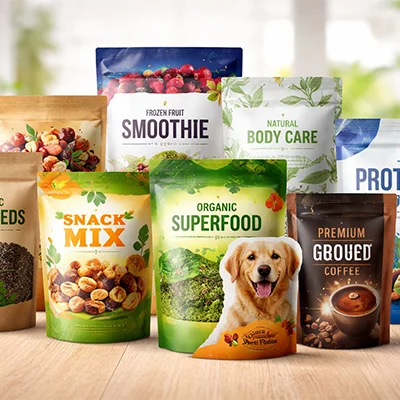
Walk into any modern retail store today and you’ll notice something quietly taking over the shelves—stand up pouches. Coffee, snacks, protein powders, pet food, even detergents. The format is everywhere. And it’s not just convenience driving this shift. It’s branding, sustainability pressure, and the rapid evolution of printing technology that’s reshaping packaging decisions across industries.
What was once considered a “low-cost alternative” in packaging is now becoming the preferred choice for brands investing in performance and visibility. Printed Stand Up Pouches are no longer just functional—they are strategic.
Why stand up pouches are winning quietly but steadily
The move toward flexible formats didn’t happen overnight. Brands were initially drawn to them for cost reasons—less material, lighter weight, easier shipping. And in the long run the benefits accumulated.
Flexible Packaging Solutions can provide a degree of flexibility that traditional formats can never achieve in comparison to rigid packaging. You can scale fast, less storage space and answer faster to changes in the market.
And then came branding.
Once companies realized that Custom Printed Pouch Packaging could deliver 360-degree visual impact, things changed. Suddenly, packaging wasn’t just protection—it became the main advertising surface at the point of sale.
Printing technology changed the entire game
A big part of this transformation comes down to one thing: printing evolution.
Earlier, packaging design changes meant expensive plates, long lead times, and minimum order constraints. That model doesn’t work anymore in a market where product variations, seasonal editions, and influencer-driven launches move fast.
This is where Stand Up Pouch Printing Technology has completely changed the workflow.
Under Digital pouch printing, brands will not have to order large quantities trying out a design. They are able to run smaller batches, experiment on visuals and even localize packaging to various regions without inflating their costs.
And the change is palpable in the marketplace- trends in digital printing of stand up pouch packaging are moving strongly towards agility in short-runs and personalizing over uniformity in bulk.
The concept of sustainability is no longer a peripheral debate
Sustainability is the one thing that may be driving innovation like nothing is.
The consumers might not necessarily know about the structure of packaging, but they know
And brands are being pressured more than ever to demonstrate actual improvement, rather than mere assertions.
That is why Sustainable Flexible Packaging has become a key area of development and no longer a selling line.
One of the most important breakthroughs here is Recyclable mono-material pouches. Instead of complex multi-layer laminates that are difficult to recycle, mono-material structures simplify the entire end-of-life process.
It’s not a perfect system yet. Performance trade-offs still exist in some applications. However, the way out is evident, streamline materials, enhance recyclability and cut down environmental burden.
This is particularly evident in green printed stand up pouches to package food, where brands are aiming to strike a balance between shelf life and green responsibility.
Performance still matters—barrier protection can’t be ignored
Of course, sustainability alone doesn’t sell packaging. If a snack goes stale or coffee loses aroma, no one cares how recyclable the pouch was.
That’s why High-barrier flexible packaging continues to be a critical requirement.
The challenge for manufacturers is obvious: reduce material complexity without compromising protection. Oxygen, moisture, and light barriers still need to perform at high levels, especially in food and pharma segments.
What is evolving is the manner in which these barriers are being attained- old thick structures are being replaced by thinner layers, smarter finishes and more effective material combinations.
Brand storytelling is incorporating packaging.
At one point, packaging merely just sat on shelves. That time is gone.
Today, Smart packaging design is turning pouches into interactive brand touchpoints. QR codes that lead to recipes, product origin stories, authentication tools, even sustainability tracking—these are becoming standard features.
And in crowded retail environments, this matters more than ever.
Brands using Custom Printed Flexible Pouches for Branding and Shelf Impact are no longer just thinking about color and logo placement. They’re thinking about engagement—what happens after the customer picks up the pack.
Packaging is no longer the end point. It’s the beginning of the customer journey.
The logistics advantage nobody talks about enough
While most discussions focus on branding and sustainability, there’s another quiet advantage: logistics.
Lightweight Packaging Solutions like stand up pouches dramatically reduce transportation costs. Less weight means more units per shipment, lower fuel consumption, and improved storage efficiency.
For large-scale FMCG and export-driven businesses, this becomes a serious cost advantage over time.
It’s one of those benefits that doesn’t look exciting on paper—but shows up clearly in annual operating costs.
Where printed stand up pouch innovation is heading
Looking toward 2026, the changes are going to be less about incremental improvement and more about structural shifts.
We’re already seeing movement in several directions:
- More adoption of Recyclable mono-material pouches at commercial scale
- Expansion of digital pouch printing for mainstream production, not just short runs
- Stronger focus on smart packaging design linked to traceability and engagement
- Growth in bio-based films supporting Sustainable Flexible Packaging goals
- Faster customization cycles driven by consumer-led demand
And importantly, brands are no longer asking whether they should switch—they’re asking how fast they can transition.
The demand for innovations in printed stand up pouch packaging 2026 is not coming from one sector. It’s coming from everywhere—food, personal care, health supplements, even industrial goods.
The shift is already here
If you step back and look at the broader picture, printed stand up pouches are not a trend—they are a transition point.
They are at the crossroads of three large forces:
cost efficiency, sustainability pressure, and digital transformation.
And that’s exactly why they are becoming central to modern Flexible Packaging Solutions.
What we’ll likely see over the next few years is not just improvement in pouch design—but a redefinition of what packaging actually does. It will protect, communicate, engage, and in some cases, even collect data.
The pouch is no longer just packaging.
It’s becoming infrastructure.
 Our Services
 Media Pack Download
 Newsletters
 Industrial Events