

How Smart Packaging Is Changing Packaging Beyond Just Protection
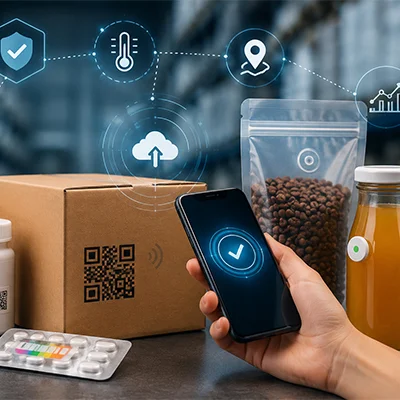
A long time ago, packaging was largely concerned with looks, durability and delivery. If a package looked OK on one of the shelves and didn't get damaged during transport, the job was done.
That mindset is changing.
A lot of companies now see packaging differently. Rather than the end-of-the-chain layer around a product, they are beginning to leverage it as a channel of customer engagement, product tracking and to resolve supply chain issues.
Smart Packaging Technology comes in handy there.
The interesting part is that most consumers already interact with smart packaging without really noticing it. Scanning a QR code for product details, checking authenticity through a phone, or tracking deliveries in real time — all of these are connected to the broader shift toward smarter packaging systems.
Packaging Is Becoming More Interactive
What brands have learned is that traditional labels are not read for much longer by consumers. People tend to skim the surface for the answer and go.
| Also Read: Sustainable Smart Food Packaging: Where Technology Meets Practical Sustainability |
Because of this, companies are trying to make packaging more useful digitally.
Interactive Consumer Packaging is closely associated with the use of a smartphone. Payment, shopping and reviews begin on phones, so brands began to capitalize on packaging as another touchpoint.
For a coffee company, a QR code can be printed on the pouch with the location of the coffee beans. A cosmetics company can instruct viewers on how to use their product or recommend shades in their packaging.
The use of QR codes and NFC in intelligent packaging solutions has become common because it removes friction. Consumers do not need special devices. In many cases, they only scan or tap the package.
Some brands are also using these systems for Digital Consumer Engagement, especially after the product has already been purchased. Loyalty rewards, feedback forms, and limited promotional campaigns are now often tied directly to packaging.
None of this seemed very important a few years ago. Now it is slowly becoming normal.
Safety Issues Drive Companies to Smarter Systems.
Companies are moving towards smarter systems because of security concerns.
The other reason, apart from marketing, for the growth of smart packaging has to do with safety.
In certain industries such as food processing and pharmaceuticals, the products can become unsafe when improperly stored in transit. In the past, firms heavily depended on manual logistical reporting and checks.
For many businesses, that's not sufficient anymore.
Modern Packaging Safety Innovations are playing a major role in assisting companies to monitor conditions as products travel from the warehouse to the transportation network.
For example, some temperature-sensitive packaging labels will show a change of color if the package enters unsafe conditions. This is especially important in the cold-chain pharmaceutical supply chain where it can affect product quality if temperature is too low or too high.
Food companies are also testing new freshness indicators and sensor-based systems which will help to detect spoilage at an earlier stage.
While these technologies are not ready for prime time just yet, businesses consider them as useful tools to complement traditional quality checks, not to replace them.
The problem of counterfeit products is still a huge problem
Industry counterfeiting is still a problem in areas where people wouldn't typically think.
Pharmaceuticals, electronics and luxury goods, cosmetics are being infiltrated by fake products. In some cases, the counterfeit merchandise can be virtually indistinguishable from the authentic.
This is one of the reasons why Anti-counterfeit packaging solutions are receiving increased interest.
Today, many companies are incorporating digital verification into food packaging. The code can be scanned or the package can be tapped with an NFC chip to verify the authenticity of the product for the consumer.
Some of the development of smart packaging for product authentication and traceability takes place as the traditional labels are now easier to copy than ever.
Authentication systems for manufacturers also allow them to monitor product flow on their way through distributors and retailers. That visibility can help to identify grey market activity or unauthorized sellers.
The visibility of Connected Packaging Systems is improving
It has been ten years since the supply chain has become much more complex.
The same product can move through several factories, warehouses, shipping companies and retail channels until the customers. The greater the movement, the harder it will be to keep eyes on the ball.
That's where Connected Packaging Systems and IoT-based packaging come in.
Businesses can track products with greater accuracy in the supply chain thanks to RFID tags and the accompanying sensors.
The growing importance of Real-time product tracking became especially obvious during recent supply chain disruptions. Many companies realized that delayed information creates bigger operational problems than the delays themselves.
Industries that have to deal with sensitive products can greatly benefit from being able to quickly pinpoint the location of the products, if they were exposed to heat or if shipments were delayed.
According to consumers, the demand for transparency is greater than ever before
Things have changed a lot in the customer's expectations over the past few years.
There are more questions asked now. What is the place of origin of the product? Are the ingredients sourced from a responsible source? Will the package be recycled? Was the product opened prior to buying?
Smart packaging can help brands respond to these questions without exceeding the amount of text on the label.
Instead of squeezing everything onto the box itself, companies can provide digital access to more detailed product information.
Consumers may now check:
- Ingredient sourcing
- Manufacturing information
- Sustainability claims
- Recycling guidance
- Certification details
- Product origin data
With brands, it's not a marketing campaign anymore, it's a matter of
Sustainability is part of the discussion, as well.
With brands, it's not a marketing campaign anymore, it's a matter of trust.
Sustainability is part of the discussion, as well.There's also increasing pressure on packaging companies.
This is driven by a demand from consumers to reduce waste, retailers to improve the logistics, and governments to put in place new and tighter environmental laws.
For some businesses, smart packaging is a part of the solution.
Freshness-monitoring systems may help reduce unnecessary food waste. Better inventory tracking can prevent overstocking and product disposal. Digital instruction systems can reduce printed inserts and paper usage.
At the same time, there is still debate around balancing electronic components with recyclable packaging materials.
That challenge has not been fully solved yet.
Not Every Company Is Moving At The Same Speed
Although smart packaging is in the spotlight, it's not widely adopted.
These connected technologies, RFID systems and sensor based monitoring are usually tested by big brands who have the funding to do so. Smaller firms are likely to move slower because they don't have the budget.
The investment in a digital component to the packaging comes in addition to the cost, and companies should take into account the long-term effects of the packaging and whether that is worth the investment.
There are also concerns around:
- Infrastructure compatibility
- Consumer privacy
- Recycling challenges
- Technology integration
- Scalability
Some businesses are experimenting carefully rather than rolling out full smart packaging systems immediately.
Smart Packaging Will Probably Become More Common Quietly
The packaging industry is not a place that can change overnight, but the direction is fairly clear.
From the everyday, consumers are becoming accustomed to digital interactions all around them, so packaging is also following the trend.
Some of these packages might soon be as commonplace to scan for information or authenticity as the payment code is today.
In the business world, Smart Packaging is not as much a novelty as it is a necessity. It does so with the benefit of enhancing visibility, augmenting traceability, enabling customer interaction and minimizing operational risks.
For most consumers, the technology behind packaging may not be a topic of much thought.
Still, they are already interacting with it more often than they probably realize.
 Our Services
 Media Pack Download
 Newsletters
 Industrial Events