


How Smart Packaging Technology Enhances Consumer Engagement and Safety
Visit any supermarket now-a-days and you will find hundreds of products that vie to attract attention. The majority of them are well-dressed. Many claim quality. A few stand out.
What’s changing now is how they stand out.
Packaging is no longer just about shelf appeal or protection. It’s becoming a point of interaction—and in some cases, a point of proof. That is where Smart Packaging Technology is beginning to make an actual difference particularly on those businesses who would like to do something more than merely basic branding.
The Shift: Packaging That Does Something
Until recently, the packaging had a rather straightforward task: to preserve the product, to carry the information and to withstand the logistics.
However, today, using Intelligent Packaging Solutions, that job description has been expanded.
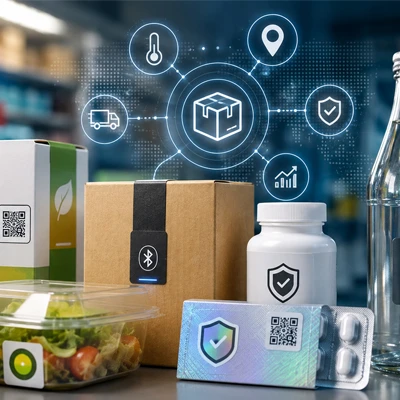
Some packaging can monitor temperature. Some can signal spoilage. Some can connect directly to a consumer’s phone. And increasingly, many can feed data back to the manufacturer.
This is what defines active and intelligent packaging. It is not a matter of sitting there--it is a matter of doing something. There is transforming oxygen silently (as in breathing in and out); and transforming a color visually (as in changing a color).
And when you connect it with connectivity via IoT-enabled packaging, the whole system becomes trackable and responsive.
| Also Read: How Smart Packaging Is Changing Packaging Beyond Just Protection |
Engagement Is Coming closer to the Product
Brands have spent years trying to pull consumers toward apps, websites, and campaigns. Smart packaging flips that approach.
Instead of asking the consumer to go somewhere, the experience starts right on the pack.
That’s the real strength of Interactive Packaging for Consumers.
| Also Read: Sustainable Smart Food Packaging: Where Technology Meets Practical Sustainability |
QR Codes and NFC: Simple but Effective
QR codes and NFC in smart packaging solutions are not a new concept- but what is changing is how companies are using it.
Previously, QR codes were commonly used to direct to the static web pages. Now, they’re being used more thoughtfully:
- A food product might show its sourcing journey
- A cosmetic brand might offer personalized usage tips
- A supplement brand might provide batch-level verification
NFC goes a step further by making the interaction almost effortless—just a tap.
None of this is groundbreaking technology. But when applied well, it changes how consumers relate to the product in their hand.
Data: The Quiet Advantage
One thing companies don’t always talk about openly is how valuable packaging data has become.
With Data-driven packaging, every scan or interaction becomes useful. Not in a vague “insights” sense—but in very specific ways.
You start to see patterns:
- Which regions engage more
- Which products are scanned repeatedly
- Where consumer curiosity drops off
That kind of information is hard to get through traditional packaging. Smart packaging makes it available almost by default.
Safety Is Where the Real ROI Comes In
Engagement is great—but safety is where businesses often see the strongest return.
Food: No Room left to Guess.
Food supply chains are complicated systems, and even minor failures can result in the huge consequences.
This is the reason why intelligent packaging of food safety and traceability is now receiving serious consideration.
Instead of relying only on expiry dates, companies are using indicators that respond to actual conditions. If a product has been exposed to heat, the packaging can show it.
Add Real-time tracking packaging into the mix, and you’re no longer guessing what happened during transit—you know.
This reduces waste, but more importantly, it reduces risk.
Counterfeiting: A Growing Problem
If you’re in pharmaceuticals or high-value consumer goods, counterfeiting isn’t a theoretical issue—it’s an ongoing one.
Digital product authentication is becoming a baseline requirement in some sectors.
A quick scan can confirm whether a product is genuine. More advanced Anti-counterfeiting measures build layers into the system—unique codes, secure chips, even blockchain-backed records.
The goal isn’t just to stop counterfeiters. It’s to make the genuine product easy to trust.
Supply Chains Are Becoming More Transparent
From a B2B perspective, one of the biggest advantages of Connected Packaging Systems is visibility.
In the past, when a shipment had been out of the warehouse, updates were not extensive. However, now, with interconnected systems and IoT-based packaging, this is changing.
You can track:
- Where the product is
- What conditions it’s experiencing
- Whether it has been mishandled
With Real-time tracking packaging, this information is available continuously, not just at checkpoints.
For operations teams, this reduces uncertainty. For management, it improves planning.
Consumer Experience: Not Just a Marketing Term
The phrase Consumer experience packaging gets used a lot—but it’s often misunderstood.
It’s not just about making packaging look premium. It’s about making it useful.
Smart packaging adds value in ways that are easy to overlook:
- Clear, accessible product information
- Easy verification of authenticity
- Guidance on usage or storage
None of these are flashy features. But they build trust—and trust is what drives repeat purchases.
Where It’s Being Used Most
The adoption of smart packaging in various industries at different rates is being adopted.
- Food and beverage companies: Freshness and traceability are the areas of interest.
- Pharmaceutical companies are emphasizing on authentication and compliance.
- Consumer brands are trying engagement and story-telling.
- Logistics players are using it to improve tracking and reduce losses
The technology is the same in many cases. The application is what changes.
What’s Holding Companies Back
If the benefits are clear, why isn’t everyone adopting it?
A few reasons come up consistently.
Cost Still Matters
Smart packaging isn’t always cheap. Sensors, chips, and integration layers add to the cost per unit.
For some products, that cost is justified. For others, it’s still a barrier.
Systems Need to Talk to Each Other
The Intelligent Packaging Solutions implementation is not merely concerning the packaging, but rather linking the packaging to the existing systems.
That can be time consuming, energy consuming and team coordinating.
Data Responsibility
With Data-driven packaging, companies are collecting more information. That comes with responsibility—especially when consumer interaction is involved.
The Direction This Is Heading
Smart packaging is not a finished space. It’s still evolving.
- What’s likely to happen next isn’t just more technology—but better use of it.
- AI will help interpret packaging data more effectively
- Authentication systems will become harder to replicate
- Sustainability will start shaping how smart features are designed
The companies that benefit most won’t necessarily be the ones using the most advanced tech—but the ones using it in a practical, focused way.
Why It Matters for Consumer Goods Companies
The benefits of intelligent packaging in consumer goods industry aren’t theoretical anymore.
They’re showing up in measurable ways:
- Better engagement without increasing marketing spend
- Lower losses from counterfeit products
- Improved supply chain control
- Stronger consumer trust
None of these happen overnight. But together, they create a meaningful advantage.
Final Thought
Packaging was the final process before a product was delivered to the customer.
It is now developing into the first phase of a continual dialogue.
That’s the real impact of Smart Packaging Technology. It transforms the function of packaging, not only in logistics, but also in communication, safety, and decision-making.
The opportunity is evident to businesses. The trick is what to begin with- and how to grow without making it complicated.
 Our Services
 Media Pack Download
 Newsletters
 Industrial Events