

Eco-Friendly Packaging Trends That Influence Buying Decisions in 2026
Open up an online order or unbox a delivery today, and it's rarely just about what's inside anymore. The box itself, the tape, the filler material — all of it is being noticed, judged, and increasingly, remembered. This growing attention is one of the clearest eco friendly packaging trends 2026 has pushed into the spotlight, and it's quietly reshaping how people decide what to buy.
Why Packaging Now Shapes the Sale
For a long time, packaging was an afterthought — something that protected the product but rarely influenced the purchase itself. That's changed. Packaging impact on buying decisions is now measurable, with shoppers actively choosing brands that visibly reduce waste. A jar that can be reused, a box made from recycled cardboard, or a label printed with soy ink can be the tiebreaker between two nearly identical products on a shelf.
This shift is backed by real sustainable packaging consumer behavior. People aren't just saying they care about the planet — they're changing habits because of it. Surveys consistently show that a majority of shoppers, especially younger ones, will pay a little more for a product if the packaging feels responsible. That's sustainable packaging purchase intention in action: intention translating directly into action at checkout.
What's Actually Trending in 2026
So what do these sustainable packaging trends 2026 actually look like in practice?
- Mono-material packaging — using a single type of material instead of mixed plastics and foils, making items far easier to recycle.
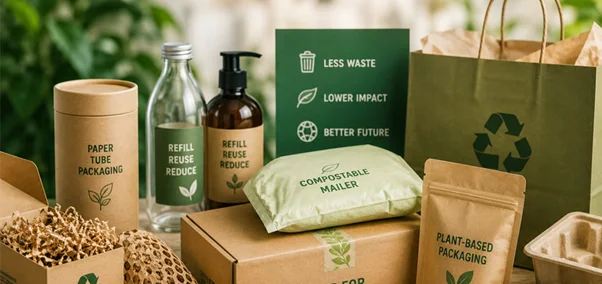
- Compostable mailers and pouches — especially popular with skincare and food brands shipping direct to consumers.
- Refill and reuse systems — from laundry pods to shampoo bars, brands are designing packaging meant to come back, not go straight to landfill.
- Reduced packaging altogether — some companies are simply using less material, stripping away unnecessary layers.
- Plant-based and mushroom-derived materials — replacing polystyrene in shipping and protective packaging.
These aren't just aesthetic choices. They reflect a genuine push within green packaging trends toward measurable environmental impact, not just the appearance of it.
Consumers Are Paying Closer Attention
One of the biggest shifts is in how skeptical shoppers have become. Recyclable packaging consumer demand is high, but so is scrutiny — people are calling out greenwashing faster than ever. A "recyclable" label means little if the material can't actually be processed by local facilities, and consumers are catching on. Brands that back up claims with certifications, clear recycling instructions, or third-party verification tend to earn more trust.
This growing awareness is part of a broader wave of environmentally friendly packaging trends where transparency matters as much as the materials themselves. QR codes linking to sourcing information, honest labeling, and clear end-of-life instructions are becoming standard expectations rather than bonus features.
The Bigger Picture
Ultimately, packaging trends 2026 point toward a simple truth: sustainability isn't a marketing add-on anymore — it's a purchasing filter. Whether it's a small skincare startup or a global retailer, the presence of genuine eco friendly packaging now shapes first impressions, builds loyalty, and often decides which product actually makes it into the cart.
Sustainable packaging isn't just good for the planet — in 2026, it's good business.
 Our Services
 Media Pack Download
 Newsletters
 Industrial Events