

Winning with Mono-Material Packaging: Marketing & Cost Benefits
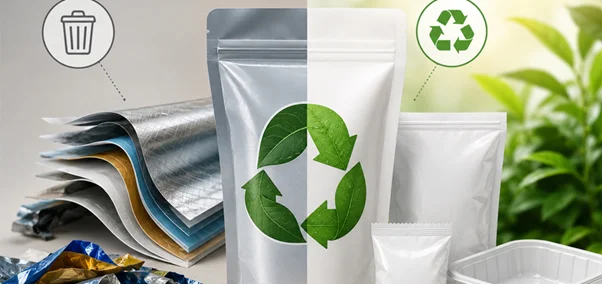
Packaging is having a quiet revolution, and it's built around a simple idea: use one material instead of five. That's mono-material packaging in a nutshell — and in 2026, it's turning into one of the smartest moves a brand can make, both for the planet and the P&L.
Why It Matters Now
Traditional flexible packs often layer PET, foil, and nylon together to get the right strength and barrier properties. The problem? Recycling plants can't separate those bonded layers, so the whole pack ends up in landfill. Mono-material flexible packaging fixes this by using a single polymer family — usually all-PE or all-PP — layered cleverly to match the performance of multi-material packs, without the recycling headache.
That's why mono-material packaging trends 2026 keep showing up at every industry conference. Retailers like Walmart and Tesco now set recyclability targets for suppliers. Extended Producer Responsibility laws are taxing non-recyclable packs. And shoppers are reading labels more critically than ever.
The Cost Case
The mono-material packaging cost benefits go beyond dodging fines. Sourcing one polymer instead of three simplifies your supply chain and often unlocks better bulk pricing. Many mono-material packaging solutions also allow thinner gauges without losing strength, cutting material and shipping costs together. And as plastic taxes tied to recyclability spread globally, sticking with non-recyclable laminates just gets more expensive every year.
The Marketing Win
Here's what brands sometimes miss: this isn't only an operations upgrade — it's a story customers actually respond to. A clean "widely recycled" claim, backed by real recyclable mono-material packaging, builds more trust than vague "eco-friendly" language ever could. For mono-material packaging for FMCG products — snacks, personal care, cleaning goods — that credibility becomes real shelf differentiation in crowded categories.
Real Examples
Some proven mono-material packaging examples: all-PE stand-up pouches replacing PET/foil laminates for coffee and pet food, all-PP snack wrappers, mono-PE shrink sleeves that detach cleanly during recycling, and mono-material packaging for food trays replacing mixed-plastic produce packaging.
Mono-Material vs Multi-Material: Be Honest about Trade-Offs
Comparing mono-material vs multi-material packaging, multi-material still wins on raw barrier performance for ultra-long shelf-life products. But polymer science has closed most of that gap, and for the vast majority of everyday food and FMCG products, mono-material now performs close enough that the recyclability upside easily wins.
Design with Circularity in Mind
Smart mono-material packaging design looks beyond the film itself — compatible inks, adhesive-free seals, and mono-material closures matter too. A recyclable pouch with a non-recyclable zipper defeats the purpose. This whole-pack thinking is what real circular packaging solutions are built on, using genuinely recyclable packaging materials from cap to seal.
Bottom Line
Sustainable mono-material packaging isn't a trend chasing headlines — it's regulation, retail pressure, and consumer expectations pointing the same direction. Brands treating it as both a cost strategy and a marketing opportunity are the ones winning shelf space now.
 Our Services
 Media Pack Download
 Newsletters
 Industrial Events