

Green is the New Black: The Rise of Sustainable Packaging in 2024

More recently, organizations and customers have adopted a new approach towards this particular aspect of good production. Sustainability strategies are gradually coming into focus and now it plays a major role in product revolution involving itself right from manufacturing to designing. Following the trend on the surroundings, the new black, which makes decisions green, necessary and stylish. Till 2024 these trends are even more prevalent and relevant: the customer does not only want beautiful packaging for his product, he also wants his product to be protected like this.
The Eco-Friendly Product Revolution: Why Sustainable Packaging Matters More Than Ever
It is time for the green product revolution and with sustainability emerging as a new cardinal business success factor. This paper examines how consumer consciousness of environmental impact has emerged in the selection of goods that limit wastage of resources. Sustainable packaging practice is no longer associated with a few select brands but is gradually attaining the mainstream level embraced by many organizations. Thus, the expectations for 2024 to recording an even more enhanced packaging concepts such as ecological packaging, revived packing crests, more fundamental packaging that is more of reformed recycle packing, minimalist and numerous reusable designs that are biodegradable packaging reforms.
Sustainable packaging means more than recycling, it means redesigning the way packaging interacts with its audience. When customers pick sustainable products, they send their favorite brands a signal of responsible purchasing. The fact that consumer helps reduce the environmental problems by actively using products with environmentally friendly packaging is also a plus in making them.
Key Trends in Sustainable Packaging for 2024
1. Recycled and Recyclable Materials
In the year 2024, recycled and recyclable packaging material products will be the leading type of sustainable packaging material. By doing this it reduces demand of virgin resources, cuts on energy consumption and lower rates of waste production. Materials which are deemed to be recyclable materials include glass, aluminum, and those types of plastics that enjoy a very high probability of being recycled at industrial processes.
Many companies are also investing in infrastructure to demystify recyclability of plastic, it clears what materials can be recycled and how to recycle them. This added emphasis to recyclability reuses the materials, preventing them from ending up in landfills and oceans.
2. Minimalist, Reusable Design
Another important trend more and more companies consider sustainable packaging is reusable, minimalist design. Not only does it save material to be used in the packaging but also it makes the consumers to reuse it. For example, glass jars or strong boxes can be brought back home for packing or display and this will greatly help in a reduction in the use of single use packaging. As compared to other designs, a very small amount of ink and adhesive is used in minimalistic designs which helps in recycling the outer pack- aging material with less harm to the environment. Some brands are even rewarding customers who return the packing, which is a loop feedback strategy to consumption.
3. Eco-Friendly Labels
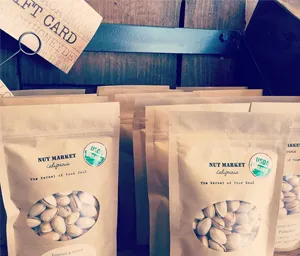
Eco-friendly labels appear to have become the new hallmark of quality packaging. For 2024 goals, biodegradable inks and coatings will be applied to labels not to send toxic compounds into the environment. These, which may be derived from plants, do not pollute the environment when they break down, which happens by themselves. Sustainability considerations continue to be important elements for contending branding efforts, and sustainable branding elements such as eco-friendly labels are important because they assist companies in informing the consumer of proper ways of disposing the packaging. Also, there is a growing number of connected and interactive packaging with QR code hatches that allow buyers to learn more about products and their sustainability details not in the form of additional labels.
4. Compostable Packaging
In 2024, compostable packaging is seen ranking as one of the most rapidly growing forms of green packaging. The polystyrene that is disposably used takes hundreds of years to degrade while biodegradable materials disintegrate very fast and have no adverse effects on the environment. Products like ‘plant based polymers’ and ‘bioplastics’ are being used to produce packaging materials that breaks down in an industrial composter and, in some instances, in home composter.
Companies that have found their way to adopt compostable packaging material are proactively collaborating to solve the problem of plastic and all its ill effects as seen from the consumers’ perspective.
5. Biodegradable Packaging Trends
Tied to compostable packaging are (binomially grouped) biodegradable packaging trends. They are biodegradable products that disintegrate in a certain period of time which may range from months, a year or two. This trend addresses the fact that some types of packaging might be reasonably biodegradable but would otherwise remain in the environment for a long time. One significant quality of biodegradable materials is that they should be used on products that will only be used for a short time or products which should only be packed for a limited time only to reduce their effects to the environment.
6. Increased Consumer Awareness
As it comes to sustainability, the consumers in 2024 are much more conscious and worried about it. This elevated consumer knowledge is pushing the creation of personal and sustainable packaging which communicates a brand’s sustainability. Today, customers trust companies that report their impact on the environment, which means that sustainable packaging is an advantage in the market competition. This awareness is far from just the consumers demanding more ‘green’ products; people want to purchase from brands who care for the environment and can make a change.
Innovative Approaches to Sustainable Packaging
Custom Sustainable Packaging
Increasingly, many brands now know that they cannot make one change fits all for packaging that is sustainable. Custom sustainable packaging enables companies to make packaging that is distinct but sustainable to match their product and their company image. For Instance while luxury brands are trying out packages that are wholly customized with sustainable materials, they are also coming up with limited packages that serve the needed purpose without necessarily being produced and unused.
Connected and Interactive Packaging
Due to the modern advance in the use of technology in the packaging sector, smart packaging is also slowly emerging as common packaging type. Another interesting trend is the inclusion of QR codes or NFC that will lead the customer to more information on the product, including its origin, environmentally friendly credentials, or how best to use it.
In this way it helps to minimize labels and instructions, which is good in terms of minimalism while improving engagement with consumers.
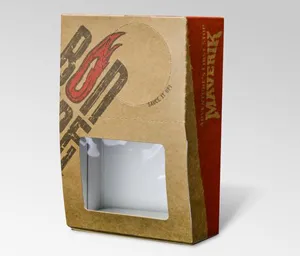
Inclusive Packaging
Sustainable packaging in 2024 is also an inclusive option. Inclusive packaging has the goals of satisfying the needs of the users such as disabled or needy users among the population. This means that aspects like how easy it is to open it, how clear the labelling is and how robust the pack has to be are all taken into account so that sustainable packaging is still easy to achieve. Sustainable packaging is a significant component of packaging as well as environmentalism since inclusive packaging points to the cross-section of environmental and social consciousness.
Challenges and the Future of Sustainable Packaging
However, despite all these developments, sustainable packaging has its unique problems especially in terms of cost and availability. Sustainable materials are sometimes a bit costly or are difficult to procure when compared with conventional products, making it challenging for small firms or firms with lean budgets. However, in congruence with the spiraling or increasing demand for sustainable materials coupled with the progression of technology, the raw materials are anticipated to be more affordable into the future.
Overall, there are concerns for the packaging industry in the year to come to 2024 with greater focus set that there will be innovations to the packaging. Applicants are expecting more than just the commoditized features, guesting innovative approaches and materials which have a lower negative impact in the environment. With such concerns in mind, there has been an increase in efforts by the companies to use compostable packaging, minimalistic designs, and recycled inks as well as coatings among others which has led to a better bell shaped container.
Conclusion: Green is the New Black
The simple saying that has come into vogue – green is the new black – also applies to packaging. Therefore, as more companies go green with their approaches to production and consumers gain knowledge about suitable and responsible consumption, sustainability becomes a norm of packaging. As the consumer becomes more conscious and materials as well as recycled and recyclable, companies should leverage even the innovative techniques to embrace sustainability such as custom sustainable packaging. By including these trends, the companies meet a given demand and positively impact sustainability.
The concept ranges from biodegradable packaging trends, inclusive packaging, and compostable packaging, all point towards the fact that green means business. This growth in sustainable packaging is not a fleeting craze; it is the attempt at giving the next generation a sustainable future.
 Our Services
 Media Pack Download
 Newsletters
 Industrial Events