

Innovations in Labeling Technology: From QR Codes to RFID

Looking at the tendencies which should be prescribed as unavoidable in the development of the packaging sector, labeling technologies are viewed as one of the major components of enhancement of track and trace strategies and their potential effect on client’s perception of the product. Some of these developments are the following: RFID, smart labels or the incorporation of QR code. These technologies are altering the methods of managing the products’ life cycle by observing and regulating them and they are the idea of the connected packaging.
Radio-frequency Identification (RFID)
Radio Frequency Identification (RFID) uses electromagnetic fields to assist identify the objects that are tagged. RFID technology has virtually three components which form the system which are the tag or label, the reader, and the antenna. Due to this, RFID tags can be installed on labels and are therefore significant to new label designs that transform the packaging system. In contrast with normal barcodes, RFID tags can possess much more information and do not demand direct visibility for that information to be read, thus being extremely useful for areas that require efficiency and precision.
RFID is most useful in applications where inventory and supply chain are notable. It provides online monitoring of work, decreases the impact of human factors, and increases data reliability. Businesses now use RFID label printers such as Honeywell PM45 Industrial Printer and Zebra ZT421 RFID Label Printer for developing RFID smart labels that have potential uses in industry including retail and health care industries.
Smart Labels and QR Codes
Smart labels use the next technologies: (Near Field Communication) NFC and RFID. While these labels can store vast amounts of info and can be read by consumers with mobile devices to get the additional information about the product, discounts or an entertainment application.
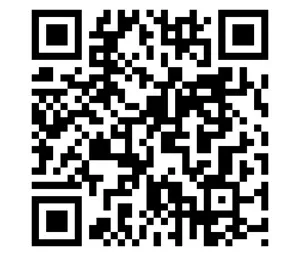
One of the examples of using technology in label printing is the use of QR codes combined with smart labels. Consumers are basically able to use their smart handheld devices to get digital services that help to link the physical/tangible with the intangible use of products such as manuals, discounts, and other relevant information contained in a QR code.
QR codes can be considered as one of the most effective approaches for many brands
Compared to other tools, QR codes can be considered as one of the most effective approaches for many brands. RFID and NFC possess the more refined functions, including the ability to make payments without even coming into contact with the package and the functionality used in the present day packages with better security systems.
NFC and RFID Technology
Specifically, technologies based on the near field communication and radio frequency identification principles are often considered together, but the application protocols can be different. NFC is generally used for communication with another device over a small range while RFID communication can take place over large ranges. They are applied to make smart-labels through which it is possible to achieve smooth interaction between objects and the purchaser. Thus, the implementation of NFC and RFID in labeling is a step forward towards the future of smart packaging to get better facilities and brand recognition among consumers.
Leveraging Technology in Label Printing
The prospects of connected packages are therefore highly dependent on the developments made in RFID label printers, and other technologies used in label printing. Some of the developments in this area have put it in a position where it can manufacture better RFID and smart labels in greater quantity and cheaper price. Global RFID label printer such as Honeywell PM45 Industrial Printer and the Zebra ZT421 RFID Label Printer are the latest RFID label printers that support the production of reliable RFID smart labels.
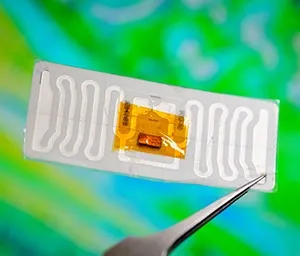
These labeling printers are specifically made for small, medium or large scale production runs as well as for other specific uses. As displayed earlier, these are aspects such as speed, robustness, and connectivity, which are crucial components in modern packaging requirements.
Blockchain for Transparency and Traceability
Coupled with RFID and smart labels, blockchain is one of the technologies that is today greatly advancing the label technology. Blockchain has a secure and efficient way of sharing and authenticating various details of a product. It is by combining the RFID smart labels with blockchain that one can be assured of giving the consumers the best, accurate, and reliable information regarding the products.
This integration helps to promote the concept of connected packaging in the future as it combines the indicators of the product’s path from the production stage to the consumer. It also become useful in the fight against counterfeit goods and in proving that the product is original.
Innovative Label Designs Changing the Packaging
The concepts altering the packaging industry of the innovative label are based on NFC, RFID, and QR code integrated solutions. These designs are not only practical but give products a beautiful outlook. RFID smart labels and QR codes are just one form of the growing importance of immediate access to as much information as possible regarding the product on the packaging itself. Innovations remain high with different techniques on how to address consumer attention and maximize business efficiency, which makes these technologies to remain central to the future of packaging.
Conclusion
Space for such technologies as RFID, smart labels, and QR codes is expanding exponentially in the sphere of packaging. Wearable Electronics or Smart Labels including RFID label printers such as Honeywell PM45 Industrial Printer, Zebra ZT421 RFID Label Printer, and the use of blockchain for more transparency and efficiency of the connected packaging are some of the innovations that keep the future of packaging connected. The relevance of RFID and smart labels is bound to increase with the advancement in technology as it offers solution the challenges in tracking products, communicating with consumers and enhancing operations. The continuous shift in the further advancement on the creation of innovative label designs affecting the packaging environment proves the ability of such technologies to bring about more progressive methods of packaging.
 Our Services
 Media Pack Download
 Newsletters
 Industrial Events