


Next-Generation Anti-Corrosive Packaging for Automotive, Aerospace, and Global Supply Chains
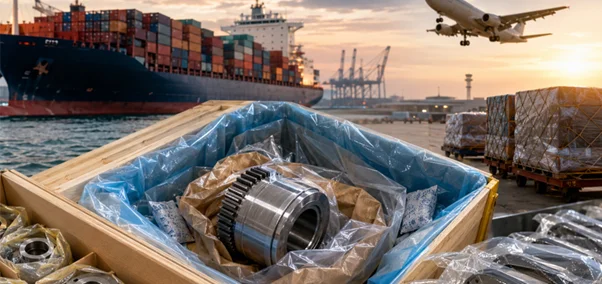
Rust never sleeps. Neither does the global supply chain that moves metal parts across oceans, through humid ports, and into climate-controlled warehouses on the other side of the world. Somewhere between the factory floor and the final assembly line, a shocking number of precision components arrive damaged — not by rough handling, but by something far quieter: corrosion.
For industries like automotive and aerospace, where tolerances are measured in microns and a single pitted surface can mean a rejected part, corrosion isn't just a cosmetic problem. It's a costly one. This is why anti-corrosion packaging has quietly become one of the most strategically important categories in industrial logistics, and why companies are rethinking how they protect metal components from the moment they leave the production line until they reach the end user.
Why Corrosion Protection Packaging Has Become a Boardroom Issue
A decade ago, corrosion protection was largely an afterthought — a bit of oil, some plastic wrap, and a prayer that the shipping container wouldn't sweat too much. Today, it's a line item that finance teams track closely, because the cost of not getting it right is enormous.
Consider what happens when corrosion protection packaging fails on a shipment of engine components or landing gear parts. The part may need to be re-machined, re-coated, or scrapped entirely. Add in the cost of expedited replacement shipping, missed production deadlines, and strained supplier relationships, and a packaging shortcut that seemed like a small savings suddenly becomes a six-figure problem.
This is precisely why industrial corrosion protection has evolved from a packaging afterthought into a core part of product engineering and supply chain design. Companies no longer ask "what box should we use?" They ask "what packaging system protects this specific alloy, under these specific transit conditions, for this specific duration?"
Automotive Corrosion Protection: Precision Parts Need Precision Packaging
The automotive industry runs on just-in-time manufacturing, global supplier networks, and an unforgiving tolerance for defects. Automotive corrosion protection has to account for a huge range of materials — from stamped steel body panels to precision-machined engine components, bearings, fasteners, and electrical connectors.
Corrosion protection for automotive parts typically relies on a layered approach:
- Vapor corrosion inhibitor (VCI) films and papers that release a protective molecular layer onto metal surfaces without direct contact
- Desiccants and humidity indicator cards that manage moisture inside sealed packaging
- Barrier bags and heat-sealed liners that block external moisture and airborne salts
- Custom-molded trays and dunnage that prevent metal-on-metal contact during transit
What makes modern automotive parts packaging different from older methods is that it's engineered around the actual failure mode. A bare steel bracket rusts differently than an aluminum housing or a zinc-plated fastener, so the packaging chemistry and barrier properties are matched to the metal, not applied as a one-size-fits-all solution. This shift toward material-specific protection is a major reason defect rates tied to corrosion have dropped significantly for manufacturers who've invested in it.
Aerospace Corrosion Protection: Zero Tolerance, Zero Shortcuts
If automotive tolerances are tight, aerospace tolerances are almost absolute. A single corroded fastener or pitted turbine blade component isn't just a quality issue — it's a safety issue. That's why aerospace corrosion protection operates under some of the strictest packaging standards in any industry, often governed by military and aerospace specifications that dictate everything from VCI concentration to barrier film thickness.
Aerospace packaging solutions frequently combine multiple protective layers:
- A VCI-treated inner wrap that directly contacts the metal surface
- A moisture-barrier bag, often foil-laminated, that's heat-sealed to create an airtight environment
- Desiccant packs sized to the enclosed air volume to control residual humidity
- Rigid outer packaging or custom crates designed to prevent flexing, puncture, or condensation buildup during temperature swings
Aerospace parts packaging also has to account for something automotive rarely deals with: extreme altitude and temperature variation during air freight, plus long dwell times in storage before parts are installed. A landing gear component might sit in a warehouse for months before it's used, which means the packaging isn't just protecting against a week-long ocean voyage — it's protecting against seasonal humidity cycles, temperature swings, and the slow chemical creep that turns a shiny surface into a corroded one over time.
The Hidden Threat: Corrosion During Shipping and Export
Here's something most people outside logistics don't realize: corrosion protection during shipping isn't just about keeping water out. It's about managing an entire microclimate inside a sealed container.
When a shipping container travels from a cold port to a tropical one, the temperature swing causes condensation to form inside — even in packaging that looks completely sealed. This phenomenon, sometimes called "container rain," is one of the leading causes of corrosion damage in export corrosion protection scenarios. A part can leave the factory in perfect condition and arrive weeks later covered in surface rust, simply because nobody accounted for the dew point shift during transit.
This is why long-distance shipping corrosion protection strategies now factor in:
- Point of origin climate versus destination climate
- Transit time and number of transshipment points
- Whether the shipment will sit in an unclimatized container yard
- Sea freight versus air freight exposure differences
Smart exporters build packaging specifications around the worst-case route, not the average one, because a single humid layover can undo weeks of careful preparation.
Marine Corrosion Protection Packaging: The Toughest Environment of All
If there's one shipping environment that tests packaging to its absolute limit, it's the ocean itself. Marine corrosion protection packaging has to contend with salt spray, high humidity, temperature cycling, and the sheer duration of ocean freight — sometimes four to six weeks for a single trans-Pacific or trans-Atlantic voyage.
Salt is particularly aggressive because chloride ions accelerate the electrochemical process that causes rust, breaking down protective oxide layers far faster than fresh water alone would. Packaging designed for marine transit typically uses higher-grade VCI formulations, thicker barrier films, and more conservative desiccant loading than packaging designed purely for domestic overland shipping.
For manufacturers exporting heavy machinery, marine hardware, or offshore equipment components, this level of protection isn't optional — it's the difference between a part that installs cleanly and one that requires costly rework before it can even be used.
Metal Parts Packaging Solutions: One Size Never Fits All
A common mistake companies make is treating metal parts packaging solutions as interchangeable. In reality, the right packaging depends on:
- Metal type — ferrous metals corrode differently than aluminum, brass, or specialty alloys
- Surface finish — machined, plated, painted, and raw surfaces all have different vulnerability profiles
- Part geometry — complex shapes with recesses trap moisture differently than flat stock
- Transit duration and route — a 3-day domestic truck shipment has very different risk than a 6-week ocean voyage
- Storage conditions after arrival — parts destined for immediate assembly need less protection than those going into long-term inventory
The most effective packaging programs start with a risk assessment rather than a catalog order. That means testing humidity levels, mapping the shipping route, and understanding how long a part might sit before it's used — then building the packaging system around that specific risk profile.
Global Supply Chain Packaging: Designing for the Whole Journey
Global supply chain packaging has to be designed with the entire journey in mind, not just the first leg. A part might travel by truck, then ship, then rail, then truck again before it reaches final assembly — and each transition point introduces new handling risks, temperature changes, and potential for packaging damage.
This is pushing manufacturers and logistics providers toward more standardized, reusable, and trackable packaging systems. Some are integrating humidity sensors and data loggers directly into shipments so they can verify — not just assume — that corrosion-protective conditions were maintained throughout transit. When something does go wrong, that data makes it possible to pinpoint exactly where in the journey the failure occurred, which helps prevent it from happening again.
What's Next for Anti-Corrosion Packaging
The next generation of corrosion protection is moving in a few clear directions: more sustainable, recyclable VCI materials that reduce environmental impact without sacrificing performance; smarter packaging with embedded sensors that provide real-time visibility into humidity and temperature conditions; and increasingly customized solutions built around specific alloys and transit routes rather than generic industry standards.
As global manufacturing networks grow more complex, the companies that treat corrosion protection as a core engineering discipline — not an afterthought — are the ones avoiding costly rework, protecting their reputations, and keeping their supply chains moving smoothly from factory floor to final installation.
Frequently Asked Questions
What is anti-corrosion packaging?
Anti-corrosion packaging refers to specialized materials and systems — such as VCI films, barrier bags, and desiccants — designed to prevent rust and oxidation on metal parts during storage and transit.
How does VCI packaging work?
Vapor corrosion inhibitors release a protective molecular layer that settles onto metal surfaces inside sealed packaging, forming an invisible barrier that blocks moisture and oxygen from triggering corrosion.
Why is corrosion protection critical for aerospace parts?
Aerospace components must meet strict safety and performance tolerances, so even minor surface corrosion can compromise structural integrity, making rigorous, multi-layer protective packaging essential.
How long can VCI packaging protect metal parts during shipping?
Depending on the formulation and barrier quality, VCI packaging can protect metal parts for several months to over a year, making it suitable for long-distance ocean freight and extended storage.
What causes corrosion during long-distance shipping?
Temperature swings between origin and destination cause condensation inside containers, while salt exposure during ocean transit accelerates the corrosion process on unprotected metal surfaces.
 Our Services
 Media Pack Download
 Newsletters
 Industrial Events