The Future of Sustainable Packaging Materials: Trends & Innovations
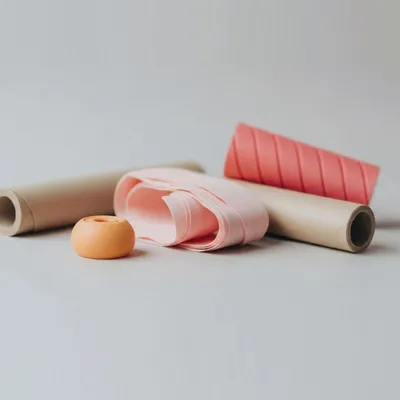
The surrounding world of packaging is undergoing a radical transformation as the industries are transitioning into the realm of the bold and sustainable types of packaging materials and the highly creative and green forms of packaging solutions. What was traditionally only a niche choice based on regulatory push has since morphed to be a trendy business approach, which has been expedited by climate panic, consumer demands, and technology breakthroughs. With organizations competing to implement the newest trends in sustainable packaging materials, there is a question that has been raised that has been dominating boardroom discussions: What will the future of packaging be when sustainability is made the default and not the differentiator?
This article delves into science, innovations, and market dynamics behind the biodegradable packaging trends, recyclable packaging innovations, and compostable packaging materials, and provides some of the ways industries can remain future-proof, as well as adopt materials that are functional and environmentally friendly.
The Rise of a Circular Mindset in Packaging
The industries used to perceive sustainability as a mandate only. Sustainable packaging materials today are viewed as strategic in the brand of FMCG, pharmaceuticals, e-commerce, and industrial manufacturing since sustainable packaging can be used to add value to the product, reduce carbon footprints, and build brand loyalty. The cyclic shift is also on the rise, and companies are rethinking the raw resources, recycling of waste, and end-of-life processes.
The consumers are also more informed and demanding. They would desire the green packaging material that would be as effective as the traditional plastics and would not add to the landfill problem. The trend has seen the emergence of new trends that are shaping the future of sustainable packaging in the next few years due to the growth in material science, biotechnology, and smart manufacturing systems.
Biodegradable Packaging Trends: A Material Science Paradigm Shift
One of the remarkable changes in the industry in the modern day is the fast development of biodegradable packaging trends. Biotechnology is facilitating scientists in the process of substituting petroleum-based plastics with natural polymers of algae, fungi, cellulose, and agricultural wastes. The high-performance biodegradable packaging solutions have strength in terms of mechanics, moisture, and durability - qualities that traditional plastics only had.
With industries considering the recent trends in sustainable packaging material, it is clear to note that biodegradability is not sufficient. Businesses want materials that can both decompose naturally, without generating any microplastics or other dangerous materials. This has resulted in a competition between startups and research laboratories trying to develop next-generation trends of biodegradable packaging that will prove to be superior in their supply chain performance.
The Expanding Universe of Compostable Packaging Materials
The responsible packaging disposal has turned out to be compostability. Compostable packaging products, in contrast to generic biodegradable products, break down under certain composting conditions and cause the residual organic matter to be nutrient-rich. The feature fits perfectly into the trend of soil regeneration and circular waste chains in the world.
Competitive edge is a new possibility that brands that have switched to compostable packaging materials are realizing: not just less waste, but also a kind of environmental contribution. The emergence of home-compostable polymers based on PLA, PHA, and starch blends exemplifies how the most recent tendencies in sustainable packaging materials are in line with performance and environmental responsibility.
The growing popularity of compostable solutions among consumers is due to their provision of reassurance with regard to the end-of-life, and it unravels confusion on where packaging will end up, further generating the need for fully environmentally friendly packaging solutions.
Recyclable Packaging Innovations and the Waste Reduction Imperative
Although the concepts of biodegradability and compostability are the buzzwords, recyclable packaging is one of the main pillars of the sustainability policies in different parts of the world. Companies are rapidly adopting recyclable packaging technologies to ensure that they utilize the resources to their best capacity and reduce the contravention of virgin materials. It is now time to develop materials that can be reused over and over again without compromising their quality.
With industries still experimenting with mono-material systems, advanced sorting strategies and even chemical recycling, the tale now is not the ease of re-use, but how re-useable packaging media can systematically reduce wastage. The current businesses are considering packaging based on the parameters of the recycling efficiency and rate of contamination, and closed-loop.
The development of good-quality recycled PET, HDPE, aluminum, and paperboards is an example of how recyclable packaging technology is becoming smarter and performance-driven systems. The tendency proves that recyclable packaging materials minimize waste and promote long-term circularity.
Table: Comparison of Future-Driven Sustainable Packaging Materials
In a bid to learn the competitiveness of each type of material, below is a clear comparison of how the current innovations are troubling the future.
| Material Type | Key Features | Sustainability Benefit | Industry Examples |
| Sustainable packaging materials (plant-based polymers, bio-compounds) | High strength, low carbon footprint | Renewable sourcing | FMCG, personal care, pharma |
| Eco-friendly packaging solutions (paper films, fibre mouldings) | Lightweight, printable, adaptable | Fully recyclable | E-commerce, food delivery |
| Biodegradable packaging trends (PHA, starch blends) | Break down naturally | No microplastic residue | Food packaging, retail |
| Compostable packaging materials | Converts to compost in controlled conditions | Soil regeneration | Grocery, health foods |
| Recyclable packaging innovations | Mechanical and chemical recyclability | Closed-loop recovery | Beverages, cosmetics |
This analogy brings out the fact that each material category is critical in satisfying the varius market demands, with all the material categories forming a more circular packaging ecosystem.
Market Insights: A Rapidly Growing Demand Curve
Sustainability is no longer a vision - it is a market measure. Industry reports show a growth rate of over 10 percent in the global investment in sustainable packaging material, and the adoption has been mainly in Asia-Pacific and Europe because of the stringent environmental laws and the environmentally friendly consumer behaviour.
Moreover, brands are also spending much money on R&D to seek innovations that can define the future of environmentally friendly packaging, especially compostable films, cellulose-based containers, solvent-free coatings, and recyclable multilayer designs. Analysts are predicting that within five to seven years, the market in eco-friendly packaging solutions will be twice as the infrastructure in the recycling and composting of the same keeps expanding at high rates.
Material Innovations Shaping the Packaging Revolution
The upcoming generation of innovations that will form the future of environmentally friendly packaging will incorporate the new technologies that will combine the field of material science with intelligent automation. High-barrier films produced using seaweed extracts, edible coatings on perishable foods, palm residue-based moulded materials, and enzyme-controlled polymers that degrade only under certain conditions of waste are being developed by researchers.
These inventions not only complement the recent trends in sustainable packaging materials but also offer new sources of revenue to industries that wish to distinguish themselves using sustainability-based design.
Companies that are coming up are patenting high-performance biodegradable packaging solutions that now compete with petrochemical-based plastics on issues of durability, impact resistance, and shelf life. The materials are a step forward towards a point of high performance and circularity, finally converging.
Recycling and Waste Minimization: The Shift toward Smarter Design
Packaging in the future requires design approach that emphasizes on purity of the materials in use, minimization of contamination and easy recycling. Of special interest is the shift to mono-material films, which extends the applicability of the recyclable packaging innovations to complex flexible packaging categories in addition to plain plastics.
Products are being redesigned by brands with the help of recyclable packaging materials that allow waste reduction, excessive lamination to be simplified, and ink systems to be simplified, and digital watermarks, allowing AI-based waste sorting. All these advances are indicators of how technology is strengthening the new trends in sustainable packaging material, besides allowing companies to achieve high sustainability goals.
The Role of Composting, Biodegradation, and Circular Systems
In most of the global markets, the municipal systems are being updated to allow industrial composting and advanced recycling systems. The development of this infrastructure is a key to the full potential of compostable packaging material and biodegradable trends in packaging.
The future is not in picking up material instead of the other, but in the creation of waste management networks in which recycling, composting, and biodegradation will coexist. The industries need such multi-layered systems to gain first-hand experience of how recyclable packaging materials help reduce waste, carbon emissions, and also help recycling resources to recycle efficiently.
The Road Ahead: Where Innovation Meets Responsibility
In the course of their progress, companies need to strike the right balance between innovation and scalability, affordability, and actual impact. Rapid improvements of alternative feedstocks, including agricultural residues, lignin products, mycelium foam, and polymers made out of CO2, will be seen in the next decade. These innovations closely conform to the current trends in sustainable packaging material, but also enhance what industries can do using the concept of circularity.
Companies investing in the technologies of sustainable packaging materials and environmentally friendly packaging solutions will have a greater opportunity to adjust to the changes in the regulations, expectations of consumers, and the reduction of environmental risks. It is also expected that more manufacturers, recyclers, and biotechnology innovators will be ready to unite forces in the industry to remake the modern-day packaging.
Conclusion: A Future Defined by Innovation and Accountability
The world of packaging is coming into a new era - one that is responsible, resource-saving, and material-sensitive. No matter it is recyclable packaging innovations, compostable packaging materials, or high-performance biodegradable packaging solutions, the industry is heading in a cleaner, smarter, and naturally circular future.
Companies are not only embracing superior materials when they look at innovations that are defining the future of environmentally friendly packaging, but they are also re-inventing the concept of creating sustainable packaging. The trend of sustainable packaging material, environmentally-friendly packaging materials, and biodegradable packaging is all pointing to a strong change that will be instrumental in defining the regulatory standards, consumer expectations, and manufacturing in the decades to come.
The world is now aware of how recyclable packaging materials reduce waste, carbon footprint to the environment, and generate long-term value. The future of packaging is no doubt green - and the technologies that are appearing today are establishing the base of a truly sustainable future.
 Our Services
 Media Pack Download
 Newsletters
 Industrial Events