


Top 7 Essential Insights: Circular Economy in Packaging for a Sustainable Future
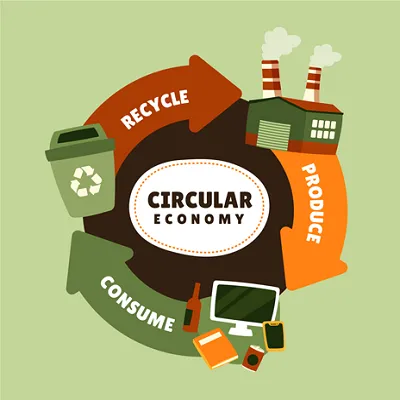
As sustainability takes center stage in today’s business strategies, the circular economy has become a powerful framework for minimizing waste, improving resource efficiency, and promoting environmental responsibility. This approach is particularly important in the packaging sector, which is under growing pressure to address the waste it produces. Moving away from the traditional linear “take-make-dispose” model toward a circular economy provides businesses with a valuable opportunity to cut costs, boost their brand image, and satisfy consumer demand for greener solutions. In this blog, we dive into the top 7 key insights on the circular economy in packaging, backed by data and real-life examples.
1. What is the Circular Economy in Packaging?
Put simply, the circular economy does a reinvention of the packaging lifecycle, which also seeks to make materials useful as long as possible, eliminate waste, and environmental damage. Rather than disposing the packaging materials after use, a circular economy promotes reuse, recycling and the use of sustainable materials in designing the packaging. This will not only help the environment but it will also slash on the amount of virgin material needed and therefore cut down the expenses of the business.
By 2030, the circular economy would open up the potential of $4.5 trillion of worldwide economic growth and the packaging system is the heart of this process.
2. Benefits for Businesses: Lower Costs and Higher Efficiency
The direct impact of the circular economy on businesses is that it proposes the efficient use of resources and lowers the costs of waste management. Companies that use recyclable or returnable packaging materials will greatly reduce their costs of raw materials. In addition, some packaging system that is durable and reusable may need fewer production and transportation, which result in the saving of costs in logistics and handling of materials.
Example: Coca-Cola was launching a returnable glass bottle program in Mexico and this enabled the company to save 20 percent of packaging expenses and meet local sustainability objectives, which was accompanied by an increase in brand loyalty.
3. Circular Packaging Enhances Brand Image and Consumer Trust
Sustainability is becoming a big concern in the modern consumer and brands that adopt the principles of the circular economy will benefit. Going green in their packaging could help business establishments appeal to green consumers, enhance their brand image and differentiate them in competitive markets.
Stat: A recent survey conducted on consumers across the world revealed that 73 percent of consumers worldwide are ready to alter their consumption pattern to minimize their environmental impact, thus making sustainable packaging a critical brand aspect.
4. Waste Reduction and Pollution Control
A radically decreasing amount of waste and pollution is one of the most obvious outcomes of a circular economy in packaging. In contrast to conventional packaging which usually gets into landfills, circular packaging materials are to be recycled, reused, or composted. This minimizes business environmental impacts and assists in achieving regulatory standards that minimize wastes.
5. Innovations in Recyclable and Reusable Packaging
Due to the business transformation into a circular model, new technologies and innovations in packaging materials were observed. Packaging materials are also made in recyclable aluminium, glass and biodegradable plastics which are easier to handle in the recycling systems. The solution to this is through reusable packaging or refillable containers or returnable packaging whereby businesses can greatly save on packaging wastes.
6. Digital Innovations Supporting Circular Economy in Packaging
Increased use of digital solutions such as QR codes, smart labels, and blockchain technology is contributing to the circular economy due to transparency in the packaging lifecycle. With these tools, businesses can trace the progress of their packaging, and check whether they can be recycled, and even make people recycle in a better way.
Fact: The digital solutions have the potential of improving packaging recyclability by 20 percent, which would enable businesses to engage in the circular economy in addition to informing consumers on sustainable practices.
7. Circular Packaging’s Impact on the Global Packaging Industry
The packaging industry is being transformed world over by the circular economy. Due to the attention paid by businesses to the sustainability of the materials and the efficiency of the resources, the demand of the environmentally-friendly packaging is increasing at enormous rates. An example of such is the increased use of lightweight and recycling materials by the companies in Europe and North America to comply with the regulatory requirements and consumer demands. This change also leads to innovation in design of packaging that is pushing the industry towards minimalism and utilization of fewer resources.
Statistics: The sustainable packaging market is projected to grow by 6.1 percent annual average growth rate to reach $413.8 billion worldwide as companies go green and switch to circular packaging models.
Conclusion: The Future of Packaging Circular Economy.
The packaging industry is a game-changer with the circular economy as the one that provides solutions to the business profitability as well as the environmental issues. With more companies becoming circular, packaging waste will decrease by a wide margin, more recyclable materials will be used, and more attention will be paid to innovation. The need to adopt the principles of the circular economy is no longer a choice, but a necessity to companies that seek to remain competitive, and to be in line with the demand of the consumers.
The future of packaging is shifting towards a more circular approach, and the businesses, which prioritize the concept of circularity, will be at the forefront of sustainability, efficiency and customer retention.
 Our Services
 Media Pack Download
 Newsletters
 Industrial Events