Why Robotic Packaging is the Future of Smart Manufacturing

The manufacturing sector experiences a fundamental change driven by efficiency gains, speed up and precision-based improvements to industry standards. Dynamic industrial changes have produced smart manufacturing robotics as an industry-transforming technology which leads through robotic palletizing solutions and smart packaging integration. Organizations need to implement advanced manufacturing robotics as a fundamental necessity to obtain market leadership positions in industry.
The Role of Robotics in Smart Packaging
Manufacturers utilize packaging as an essential business process instead of merely placing items inside protective materials. The technology has transformed into a complex chain of operations that integrates modern packaging automation technologies to boost productivity as well as guarantee safe and reliable results. The incorporation of AI in industrial packaging leads to intelligent systems which perform live decision-making processes and maximize packaging performance together with production requirement adjustments. The implementation of machine learning in packaging enables robotic systems to acquire data patterns which enhances the accuracy level and decreases operational waste.
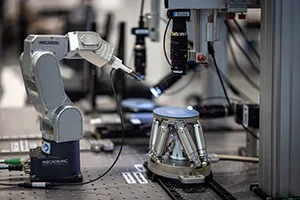
Future-ready packaging robots demonstrate a unique trait through their complex packaging capabilities under reduced supervision from human operators. Such robots integrate vision-guided packaging systems to identify products determine their orientation and perform exact packing functions with total precision. Modern manufacturing trends toward flexible packaging automation because robotic systems now adjust with ease to various product dimensions as well as materials and shapes.
Enhancing Logistics with Robotics
Robots have an indisputable effect on the operations of the logistics sector. Low delivery times and expanding online shopping create a market-wide need for packaging and shipping automation systems to become essential operations. The establishment of automated case packing systems represents a critical business tool which optimizes warehouse procedures so manufacturers can satisfy product requirements at maximum operational speed. Robotics optimizes all logistics chain phases by performing tasks including sorting and labeling from the beginning to the end process through sealing and palletizing.
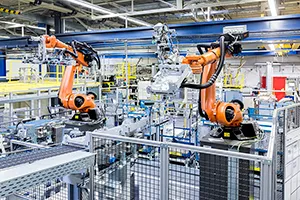
The core capability of end-of-line packaging robots gives organizations the ability to enhance production speed alongside precision so they can avoid wasteful mistakes in their operations.
AI-powered packaging solutions increase this transformation by enabling robots to foresee bottlenecks which allows them to minimize their occurrence. The predictive functionality provides both better operational efficiency and uninterrupted process sequences in high-volume manufacturing areas.
Sustainability and Efficiency in Robotic Packaging
Sustainable robotic packaging positions itself as a leading innovation because sustainability has emerged as a fundamental focus point in present-day manufacturing practices. Regular commercial packaging creates unnecessary material waste as well as excessive material consumption. Robotics provides accurate control over materials that reduces waste levels while upholding quality standards of products. The implementation of packaging robotics allows industries to lower their carbon emissions and decrease their energy usage numbers.
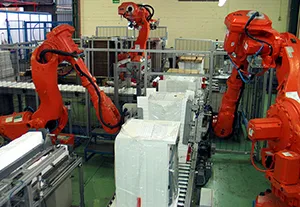
Collaborative packaging robots lead to new ways of interaction between humans and robots in manufacturing operations. The operating style of these innovative robots enables them to assist staff members during work tasks which generates improved output while continuing to protect personnel safety. These robots provide great value to high-mix low-volume production environments since they can adapt to package operations.
High-Speed and AI-Driven Packaging
The necessity for fast robot-based packaging processes has reached an all-time critical point. Manufacturers must embrace quick and efficient robotic systems to meet growing customer requirements about fast order delivery which mainly affects e-commerce and pharmaceutical production. Intelligent machines complete complex packaging duties beyond human abilities and run them at much faster rates than humans do which results in reduced downtime and enhanced production output.
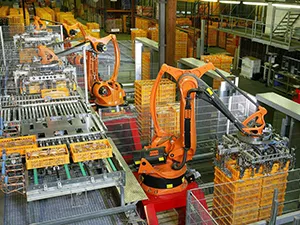
Artificial intelligence and machine learning systems in packaging facilitate delivery of better automated operations. AI robots evaluate extensive data to find manufacturing irregularities and make the most out of resources while forecasting service needs. The implementation of artificial intelligence-powered packaging systems enables continuous operation of packaging lines at their highest potential causing lower mistakes and better productivity levels.
Robotics in the Food and Beverage Industry
Modern food packaging through robotic technologies leads to safer and cleaner processing at faster speeds in the present food industry. Food handling standards demand perfect precision and consistency so robotics can provide such performance effortlessly.
Modern production systems equipped for sorting and sealing and labeling capabilities achieve maximum operational speed and minimize contact between workers and products thus decreasing contamination risks.

Food manufacturers benefit from smart packaging in smart factories because it enables operation scalability without sacrificing quality standards. Food products achieve accurate sorting and packaging with vision-guided packaging systems which check weight measurements and identify shape while assessing freshness quality. Food safety maintenance alongside production of fine consumer products heavily depends on this level of accuracy.
The Future of Robotic Packaging
Smart manufacturing robotics development will promote rapid market penetration of intelligent packaging solutions during forthcoming years. Advanced AI systems will enhance the combination between robotics data analytics and machine learning to enable new business opportunities for producers. Next-gen packaging automation uniting with IoT-enabled smart factories develops a synchronized system that optimizes packaging operations automatically in real-time.
Robotics have advanced palletizing technology to such a degree that manufacturers can process products faster and deliver them more precisely. Automation in case packing and end-of-line packaging allows robots to develop deep learning capabilities which optimize their decision systems and maintain equipment autonomously. The increase of collaborative packaging robots will enable manufacturers to establish productive manufacturing environments by combining human and robotic cooperation.
Packaging technology will certainly become robotic in the years to come. The adoption of smart packaging systems by industries will increase the visibility of automation benefits including operational efficiency and speed and accuracy and sustainability stability. Modern robotic solutions in high-speed packaging along with sustainable robotic packaging and flexible packaging automation systems will transform manufacturing operations during the upcoming generation. Robotic packaging stands as a mandatory implementation for manufacturers since there's no debate about its necessity but manufacturers must determine the timeframe for their systemic integration.
 Our Services
 Media Pack Download
 Newsletters
 Industrial Events