Top 10 Trends Shaping the Future of Packaging and Labelling

There is a tectonic change in packaging. Packaging is no longer simply a tool to design or add continuity to a product, it is the center of technological, sustainable, personalization, and innovation. With an ever-changing consumer behavior around the world and the hyper regulation that is forcing companies to be more innovative, the responses have seen creative ideas that alter how the products should be presented, shipped, stored, and experienced. The future is not only interesting; it is transformative, and it goes all the way to sustainable packaging materials and AI in packaging design.
We must go a long way down to review the top 10 trends of future of packaging and labelling along with the way these trends are changing the face of any industry, label by label.
1. The Rise of Sustainable Packaging Materials: A Response to Global Environmental Challenges
With the climate change issue on the table, the industry is moving bolder than ever before in turning towards sustainable packaging materials. Raw plastics are made out of plants, mushrooms as packages, compostable films, etc., brands are abandoning traditional petroleum-based materials. The consumer pull is what is most interesting about this transformation - the surveys show more than 70% of millennials are ready to spend more on products with a biodegradable packaging or an eco-friendly alternative.
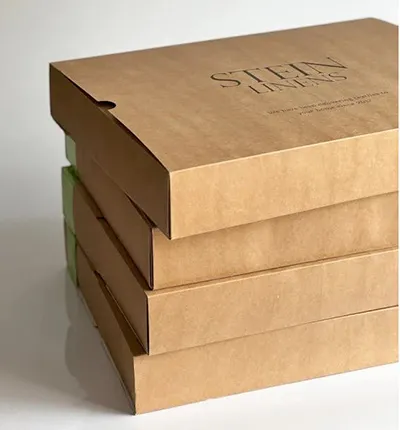
The switch is not purely a case of going green to have good marketing considerations. Due to the increasing strictness of regulations regarding single-use plastics and waste control, governmental pressure has forced companies to identify appropriate instances of sustainable packaging material that minimizes its burden on the environment. Interestingly, such an increase is accompanied by the demand of reusable packaging, which also introduces the circular economy aspect to this movement.
2. Biodegradable Packaging: Breaking Down the Waste Crisis
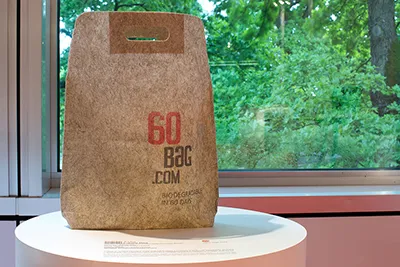
On the one hand, sustainability remains a much wider objective; on the other hand, biodegradable packaging is its greatest prospect. In contrast with recyclable substances that usually enter a land fill through contamination or lack of infrastructure, biodegradable packaging biodegrades in the environment. This is particularly being adopted by brands in the food, cosmetic and care industries, which is in line with consumer preferences regarding safety and being environmentally aware.
The interesting thing is the change in innovation, now the companies are coming up with the high-tech sustainable packaging materials with the embedded degradation schedule and moisture-resistance capabilities.
The combination of the environmental awareness and design is actually transforming the packaging lifecycle.
3. Smart Labeling Technology: Beyond Barcodes
We have long ceased the use of simple barcodes and entered the smart labeling technology. Imagine RFID tags that monitor logistics in real-time, NFC chips that open an AR experience or QR codes that provide the transparency and provenance of ingredients. Smart labeling technology is becoming a vital segment of the customer experience, providing more than identification.
The retail and pharmaceutical companies are especially high on the use of smart labeling technology because it can facilitate in the anti-counterfeiting, real time tracking of inventory and compliance control. The growth of e-commerce becomes increasingly global and, thus, the requirements of smart systems combining reality and the digital world.
4. Personalized Packaging Design: Making the Consumer Feel Seen
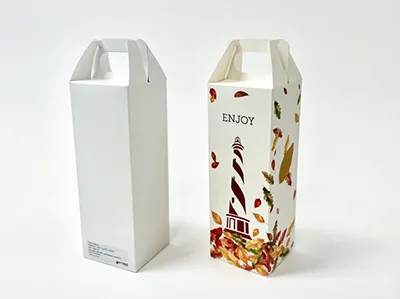
Personalized packaging design is taking off and soon will be the rule and not the exception since we are survivors into the period of individualization. Even Coca-Cola with its current campaign of Share a Coke has been using data to create a personal and emotive package.
With such packages as AI, it is possible to produce thousands of different variations of a pack- each suited to a demographic, an event or a location, all made automatically without any human involvement in the production of such products. The sentimental attachment that consumers have when they are introduced to a product that resonates to them cannot be exaggerated. This customization has the effect of ensuring brand loyalty and social sharing - which makes customized packaging design a form of engagement as well as product marketing.
5. E-commerce Packaging Solutions: From Warehouse to Doorstep
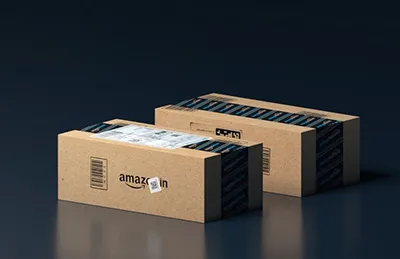
Present day take off of e-commerce business has changed the face of package designing. Millions of parcels go out every day and the task of e-commerce packaging is to strike the right balance between protection, branding, sustainability, and cost-efficiencies. Large package cartons and bulky fillers are a thing of the past - thinner, slicker, and zero-waste delivery is what the consumers now want.
In this case, the simplicity of packaging as well as the use of reusable packaging intersects with utility. Boxes which fit to size and are easy to fold as well as easy in-return mechanisms are becoming the norm. Besides, smart labeling technology is being incorporated into the process of last-mile shipping to enhance traceability, security, and accuracy of delivery across the logistics companies.
Now, we can have a look at the way the market has been reacting to this change:
| Year | Growth in E-Commerce Packaging Market | Top Priority for Brands |
| 2022 | $48 billion | Reduce damage during transit |
| 2023 | $55 billion | Improve unboxing experience |
| 2024 | $62 billion | Incorporate sustainable packaging materials |
As it can be seen, the priority is fast changing to sustainability and customer experience rather than mere logistics of cutting cost.
6. Minimalist Packaging Design: Less Is the New Luxury

Days are gone that it was measured in terms of more, was necessarily and better. In the modern world, minimalism in a packaging design language refers to high quality, eco-friendliness, and authenticity of the brand.
Ironically, minimalist packaging design identically matches well with sustainable packaging materials, which provide an environmentally aesthetic that the current high-end consumers now seek. Removing those extraneous layers, brands do not only save on the consumption of materials, but also make the given packages simpler to recycle or compost, which serves as yet another stimulus towards biodegradable origins of packages.
7. The Resurgence of Reusable Packaging: Circular Economy in Action
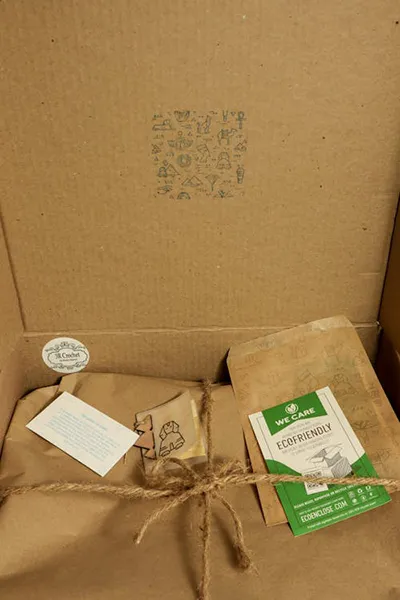
Single-use options are no longer the only parameter of sustainability. Companies are also getting in a position to move to the reusable packaging so that they can seal the loop. Other companies such as the Loop and Algramo are breaking new ground with their refillable products whereby consumers can use the same packaging several times.
The economic incentive is also attractive. Startup costs are likely to be higher but reusable packaging leads to substantial savings in packaging cost over a long run with a heavy reduction in environmental burden. With combinative technology of smart labels, such packages can also track the usage and filling cycles which makes the system smarter and even more efficient in the course of time.
8. Edible Packaging: A Taste of the Future
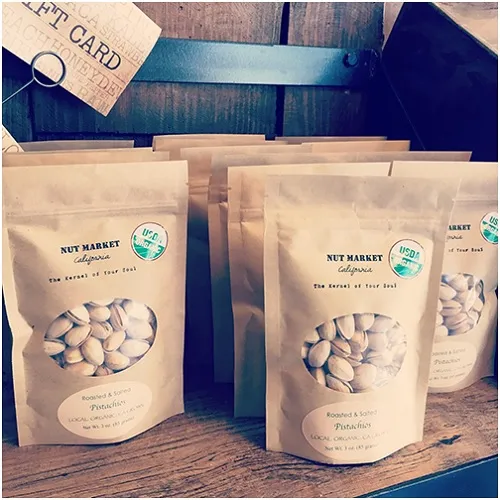
Of all trends, maybe the most futuristic one would be that of edible packaging. Just imagine that you have to go to the store and purchase water in a capsule made of sea weeds or consuming the paper of your snack bar. Edible package is no more science fiction, but still the reality is an emerging one, more so in the food and beverage industry.
The concept of edible packaging is proving inspiring among innovators and eco-activists, even though it is still in experimental stages as far as mass production of the items is concerned. It can provide zero wastage, an additional nutritional content and has the aspect of being novel, which might prove commercially beneficial.
The companies also invest in AI in the packaging design, and their interest lies in the idea of how these edible elements could be altered depending on flavors, textures, and liking of consumers in order to make packaging a part of the consumer experience itself.
9. AI in Packaging Design: Automating Creativity and Efficiency
The scope of AI in packaging-design is not limited to making it beautiful. Today, artificial intelligence has the ability to process the market trends, the preferences of customers, the environmental effect, and the delivery data in order to provide the most appropriate and the best optimized packaging solution.
At the micro level, AI is being used in packaging design so that not only can packaging get smarter but including issues related to AI in packaging design as used in predictive design models to heat-map consumer gaze on shelf displays, AI in packaging design will make packaging more strategic as well. It enables firms to integrate customized designing of packaging, cost savings, and eco-friendly packaging material in an integrated data-intensive procedure.
There are also positive changes in prototyping and real-time concept testing by AI-related improvements boosting time-to-market and innovation speed.
10. Blending Trends: The Future is Convergent, Not Linear
The future of packaging is exciting and not in the sense of having isolated trends but in the fact that many trends will merge into a single solution. A package must be a biodegradable package that is created with the help of sustainable packaging material, designed through an AI based in packaging design, having a smart part labeling system, and one having minimalism in the approach to the packaging design. Throw in a bit of custom packaging, packaging design, and functionality to e-commerce packages and you end up with next-generation packages.
The following is a conceptual description of the ways in which the trends tend to overlap:
| Packaging Element | Trends Blended |
| Eco-friendly subscription box | Minimalist packaging design, biodegradable packaging, e-commerce packaging solutions |
| High-end skincare jar | Reusable packaging, personalized packaging design, AI in packaging design |
| Smart beverage bottle | Smart labeling technology, sustainable packaging materials, edible packaging |
These hybrid packaging strategies are also on the rise as brands are aiming at gaining differentiation, compliance and consumer loyalty at the same time.
Conclusion: Designing the Future, One Package at a Time
The evolution of packaging and labeling is happening in a cross road of sustainability, technology, and consumer interactions. Be it the demand of sustainable packaging substrates, the innovation of edible packaging, or the smartness of product or smart labeling technology all these trends are taking a revolutionary shape.
Those brands which will adopt AI in their responsible packaging design, invest in packaged goods that can be biodegraded, and those who will consider meeting the new world demand of custom packaging design will carry this new era. On the other hand, design solutions such as e-commerce packaging solutions and minimalist packaging design are streamlining logistics on the one hand and looks on the other.
Just looking into the future, one can tell that the ultimate victors in the packaging game will be the ones who will fully adopt the challenge of innovation without forgetting the importance of environmental and consumer demands. The world is unboxing - and more precisely, it is watching.
 Our Services
 Media Pack Download
 Newsletters
 Industrial Events